Self-Employment Tax in 2026: Rate, $400 Threshold, and $184,500 Base
Self-employed? Here is the 15.3% self-employment tax, the $400 threshold, and the 2026 Social Security base from the IRS.
Key takeaways:
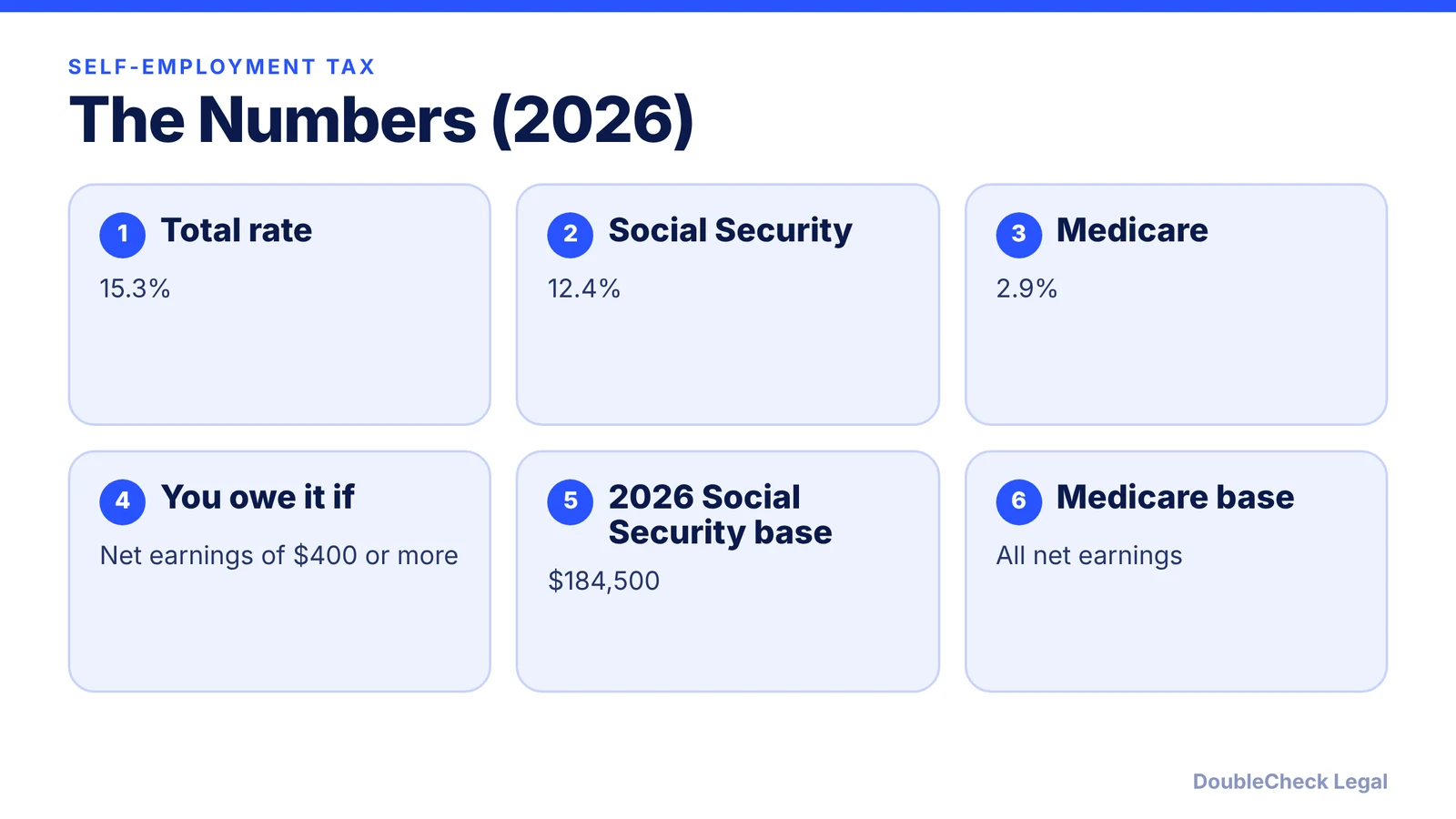
- The self-employment tax rate is 15.3%: 12.4% Social Security plus 2.9% Medicare.
- You owe it at $400 or more in net self-employment earnings.
- For 2026, the Social Security portion applies to the first $184,500.
- You can deduct the employer-equivalent portion when figuring AGI.
1. The quick answer
Quick answer: The self-employment tax rate is 15.3%, made up of 12.4% for Social Security and 2.9% for Medicare, per the IRS. You owe it if your net earnings from self-employment were $400 or more. For 2026, the Social Security portion applies to the first $184,500 of combined wages, tips, and net earnings; the 2.9% Medicare portion applies to all net earnings.
2. How you calculate it
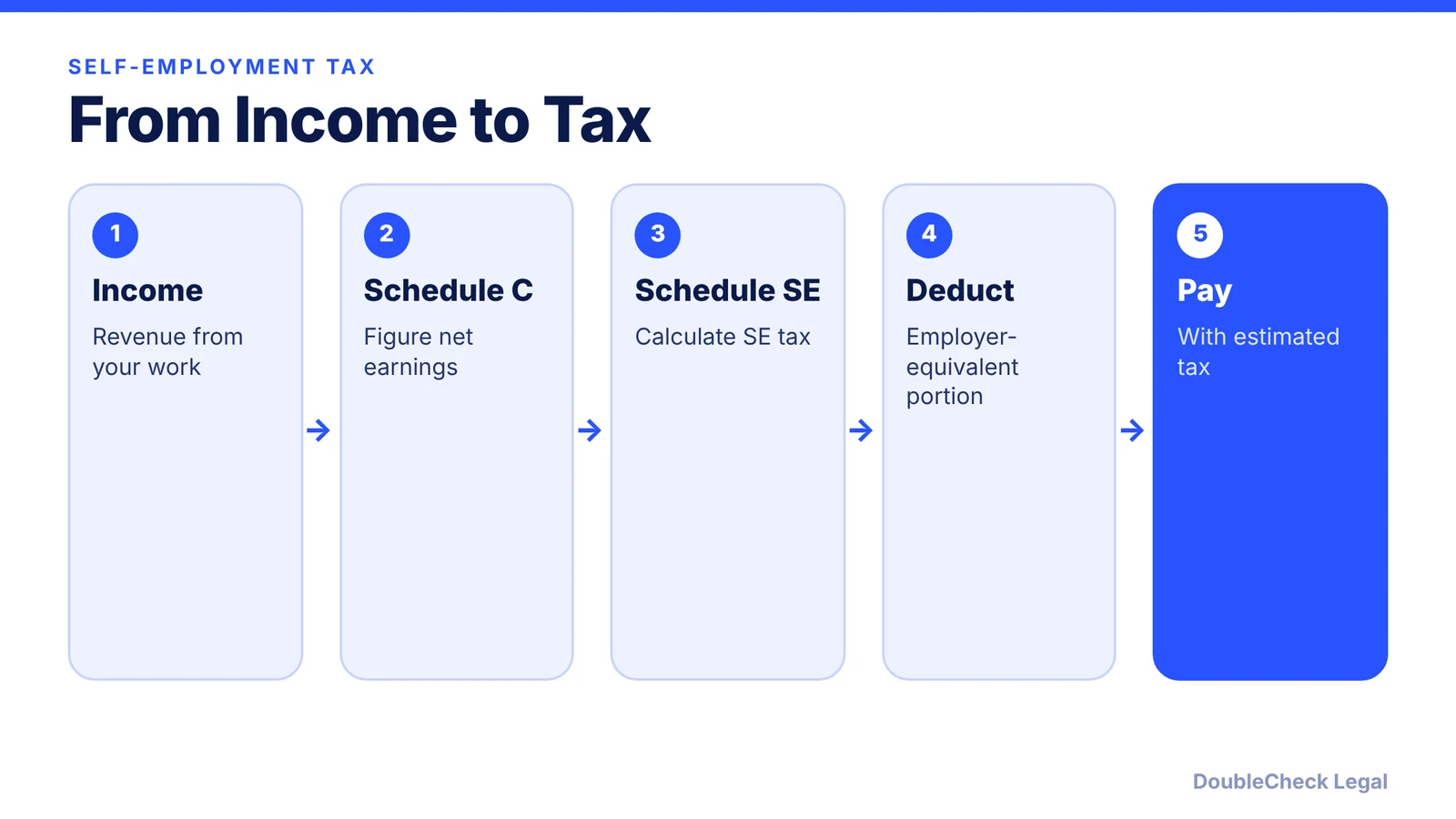
You calculate self-employment tax on Schedule SE (Form 1040). Sole proprietors and independent contractors generally use Schedule C to figure net earnings first. You can deduct the employer-equivalent portion of your SE tax when figuring adjusted gross income; the deduction affects income tax only, not your net earnings or SE tax.
3. Paying it during the year
The IRS says you may need to pay estimated taxes quarterly and can use those payments to cover your SE tax. See quarterly estimated taxes for solo business owners.
4. Does an LLC change it?
Not by default. A single-member LLC’s net earnings are subject to SE tax like a sole proprietorship’s; see single-member LLC taxes. Some owners consider an S corporation election; see the Form 2553 guide and ask a tax professional before deciding.
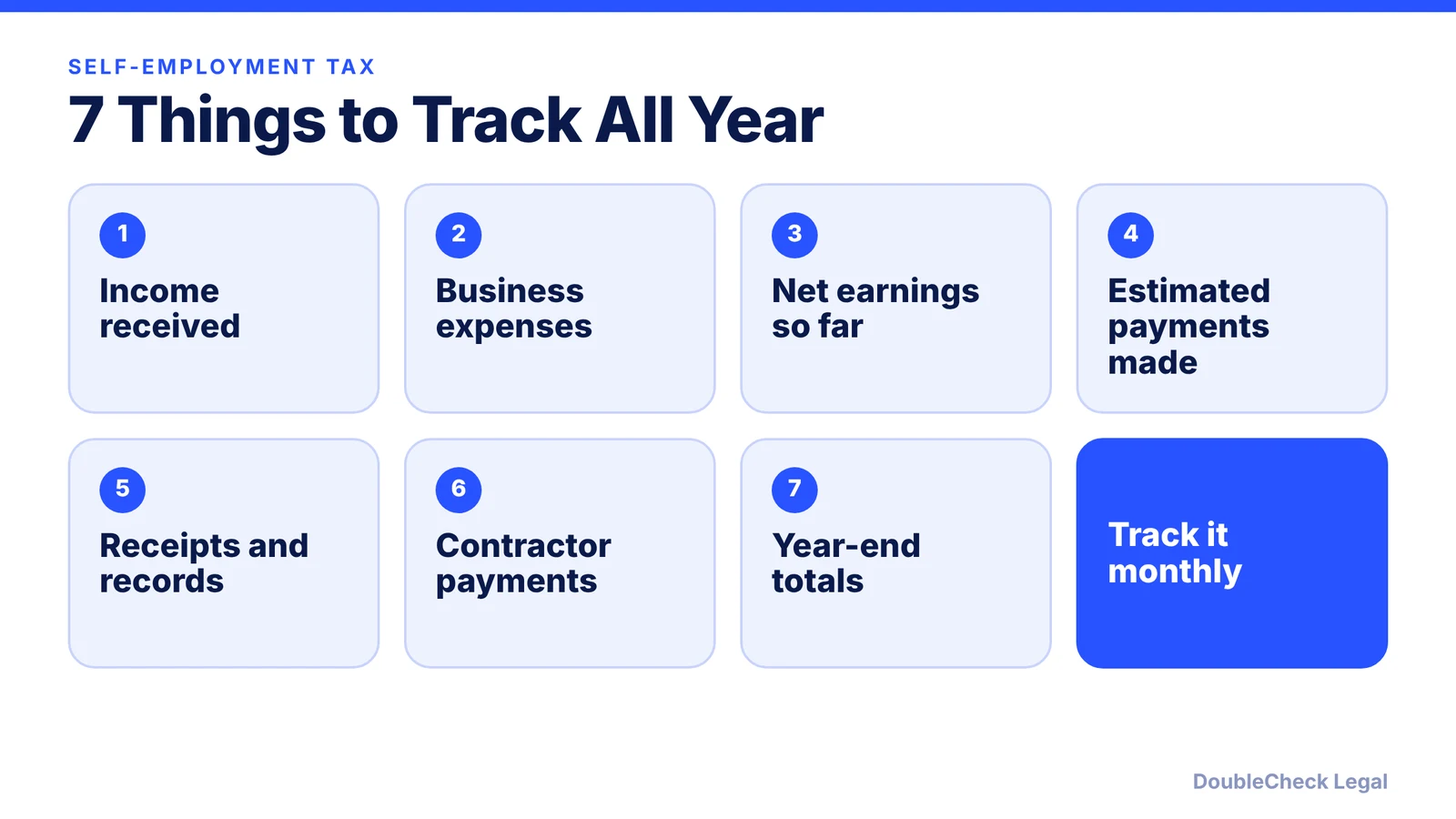
5. Seven things to track
Where DoubleCheck fits
DoubleCheck is built for businesses that start legal work with AI. Bring your question or draft, use an AI-first workflow to understand and verify it, and when professional advice is warranted, you can connect with an independent attorney. Attorneys on DoubleCheck are independent professionals; an attorney-client relationship forms only if an attorney accepts your engagement.
Sources: IRS: Self-employment tax.
FAQ
What is the self-employment tax rate?
15.3%: 12.4% for Social Security and 2.9% for Medicare, per the IRS.
What is the 2026 Social Security wage base?
$184,500 of combined wages, tips, and net earnings, per the IRS.
What is the minimum to owe it?
Net earnings from self-employment of $400 or more.
What form do I use?
Schedule SE (Form 1040), after figuring net earnings, usually on Schedule C.
General information only. This article is not legal, tax, investment, or accounting advice.