Texas Franchise Tax for LLCs and Corporations: Who Files, Rates, Threshold, and May 15
Texas has a franchise tax on many businesses. Here is who files, the rates, and the deadline.
Key takeaways:
- The Texas franchise tax report is due May 15 each year.
- Rates are 0.375% for retail or wholesale and 0.75% for other businesses.
- Zenind reports a $2,650,000 no tax due threshold for reports due in 2026 and 2027, but entities below it may still need to file.
- Sole proprietorships are generally not taxable entities.
1. What it is
Texas has no personal income tax but it does have a franchise tax on many business entities. Per a CPA Practice Advisor summary, it applies to taxable entities formed in or doing business in Texas, including LLCs, corporations, partnerships, S corporations, and trusts; out-of-state businesses can owe it too.
Formation basics are in Texas certificate of formation fees and forms.
2. Who is included
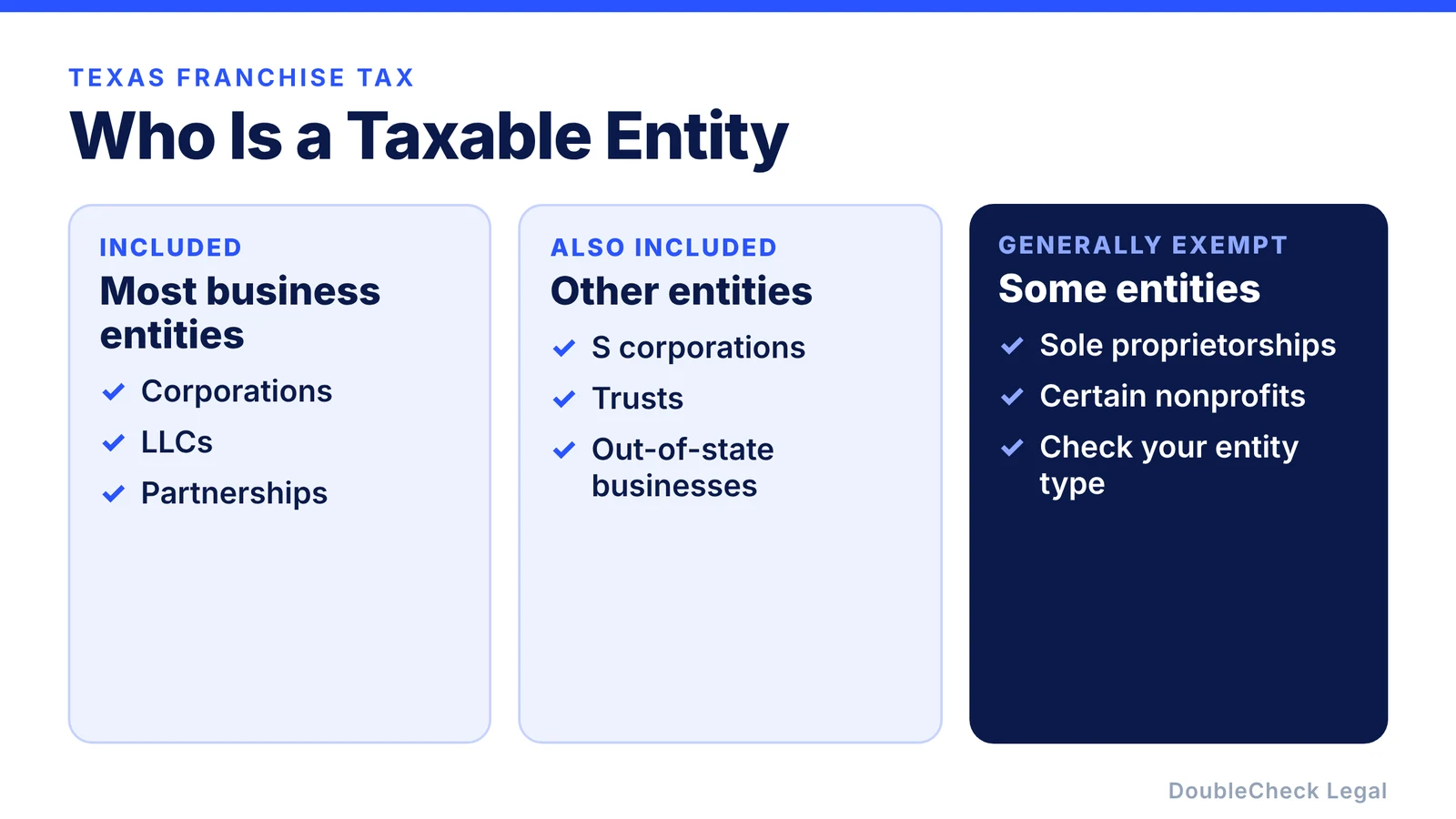
Sole proprietorships are generally not taxable entities (the summary notes an exception for single-member LLCs), as are certain trusts, estates, and nonprofits. Your exact status depends on your entity and activities, so confirm with the Comptroller or an accountant.
3. The numbers
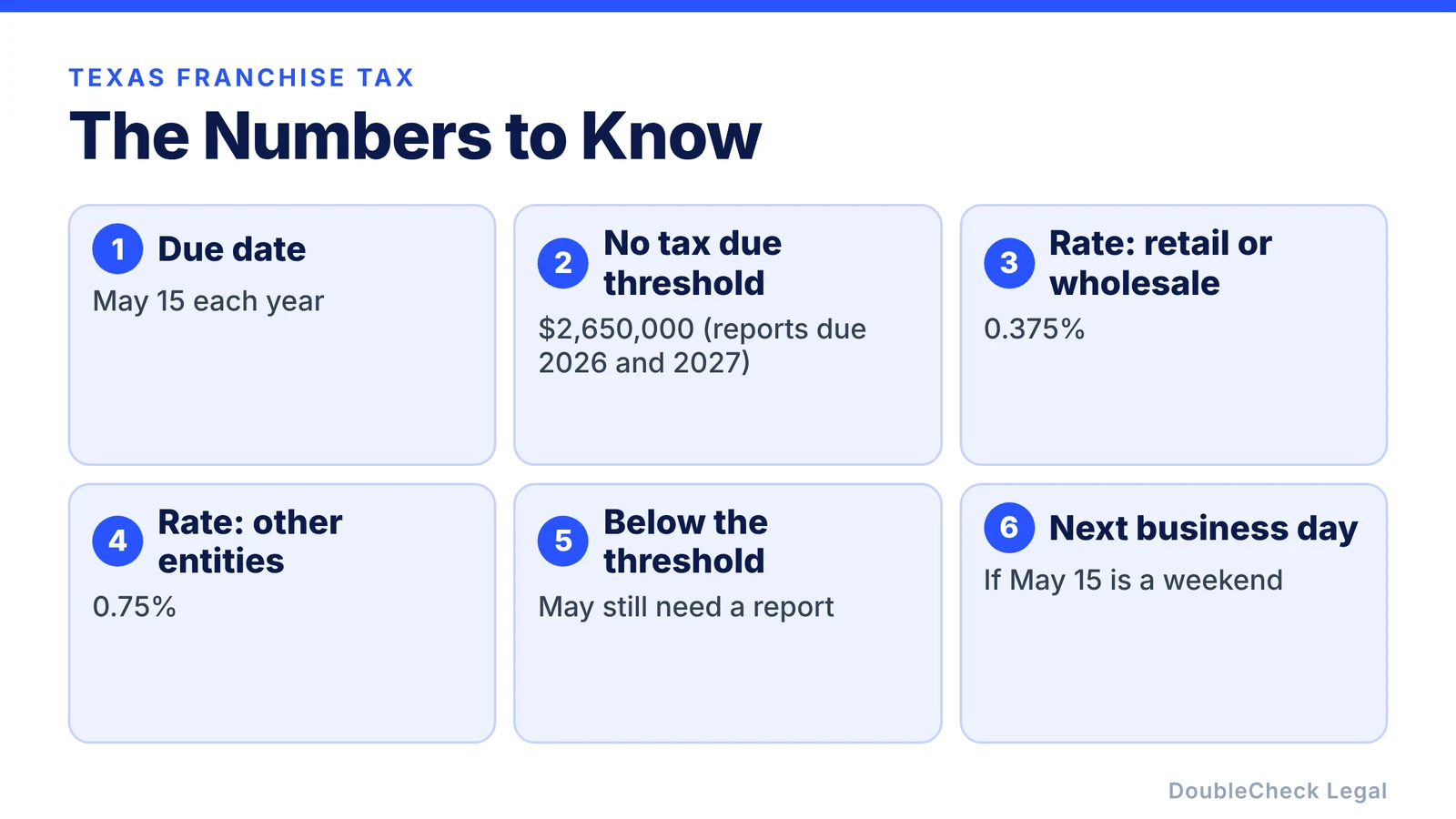
- Due date: May 15 each year, or the next business day if it falls on a weekend or holiday.
- Rates: 0.375% for retail or wholesale businesses and 0.75% for other businesses.
- No tax due threshold: Zenind’s guide reports $2,650,000 for reports due in 2026 and 2027. Entities below it owe no tax for that period, but may still need to file a report.
- Taxable margin: generally the greater of 70% of total revenue, revenue minus cost of goods sold, revenue minus compensation, or revenue minus $1 million.
Thresholds change by period, so confirm the number for your report year.
4. Your yearly routine
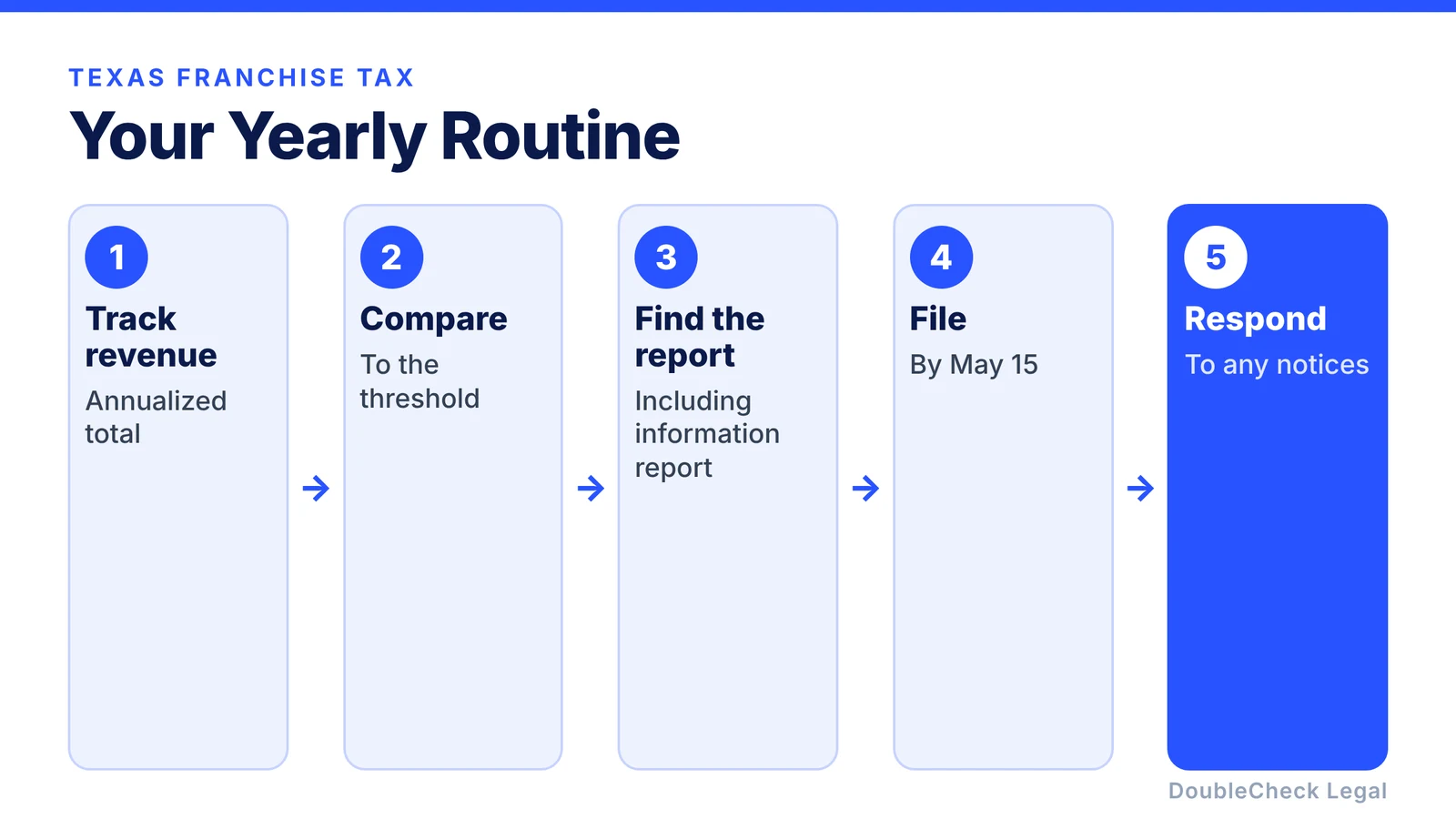
Track annualized revenue, compare it to the threshold, identify the correct report, and file by May 15. Ask your accountant to own the date.
5. Related
See how much it costs to form an LLC in different states for the ongoing costs side by side.
Where DoubleCheck fits
DoubleCheck is built for businesses that start legal work with AI. Bring your question or draft, use an AI-first workflow to understand and verify it, and when professional advice is warranted, you can connect with an independent attorney. Attorneys on DoubleCheck are independent professionals; an attorney-client relationship forms only if an attorney accepts your engagement.
Sources: CPA Practice Advisor: What to know about Texas franchise tax; Zenind: Texas franchise tax guide.
FAQ
When is the Texas franchise tax due?
May 15, or the next business day if it falls on a weekend or holiday.
What is the Texas franchise tax rate?
0.375% for retail or wholesale businesses and 0.75% for others, per a CPA Practice Advisor summary.
Do small LLCs owe Texas franchise tax?
Entities below the no tax due threshold owe no tax for the period, but may still need to file a report.
Are sole proprietorships subject to it?
Generally no, though the summary notes an exception for single-member LLCs. Confirm with the Comptroller.
General information only. This article is not legal, tax, investment, or accounting advice.