LLC vs. C-Corp for Startups: How to Think About the Choice
LLC or C-corp is one of the first big decisions founders make. Here is a simple way to think about it.
Key takeaways:
- An LLC is flexible and run through an operating agreement; a C-corp has shareholders, a board, and officers.
- Founders planning venture funding are often advised to use a C-corp, commonly in Delaware.
- Ask about funding, owners, decisions, taxes, state, and equity before choosing.
- Use AI to prepare questions, and a tax professional and lawyer to decide.
There is no universally correct entity type. The right answer depends on your plans.
1. The basic difference
An LLC (limited liability company) and a C-corporation are both legal entities that can separate your personal assets from the business in many situations. They differ in structure, formalities, ownership, and how they are taxed and funded.
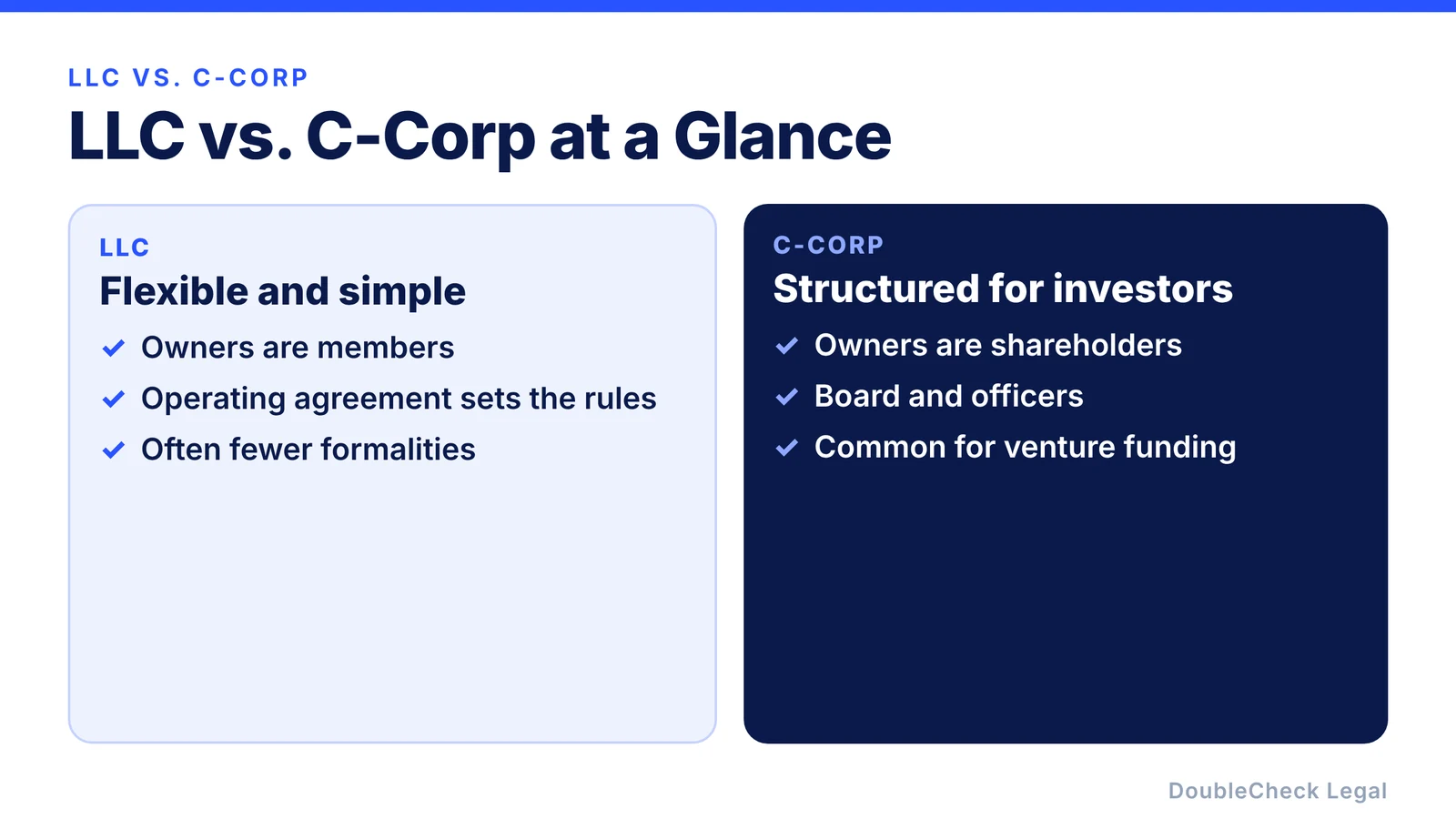
- An LLC is owned by members and governed by an operating agreement. It is often simpler and more flexible.
- A C-corp is owned by shareholders and run through a board and officers. It is the structure many venture investors expect.
2. Six questions to ask first
Do not start with “Which is better?” Start with your situation:
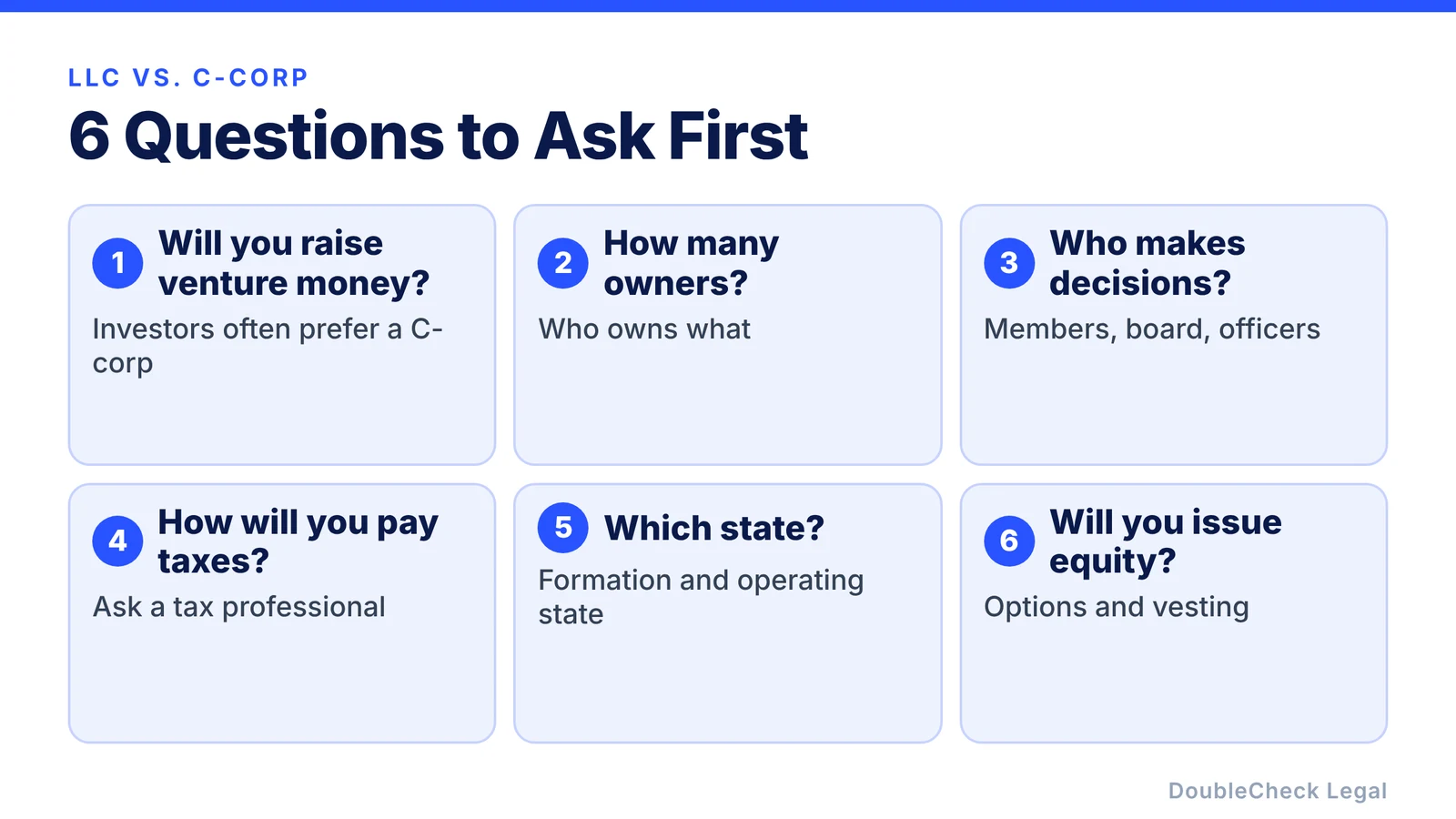
Founders planning to raise venture money are often advised to use a C-corp, commonly formed in Delaware. A small service business with one or two owners may prefer an LLC. Taxes are a major part of the decision, so ask a tax professional about your numbers.
3. Ownership and decisions
Whatever you choose, write down who owns what and who decides what. For an LLC that is the operating agreement; see our guide on LLC operating agreements and AI. For co-founders, see the co-founder agreement guide.
4. What changes later
Founders often change structure when they raise money or add owners. Converting can be done, but it can involve filings, tax questions, and contract updates. It is cheaper to think about your likely path early.
5. Where AI helps and where it stops
AI is a good thinking partner: ask it to explain the terms, compare your scenarios, and list questions for your accountant and lawyer.
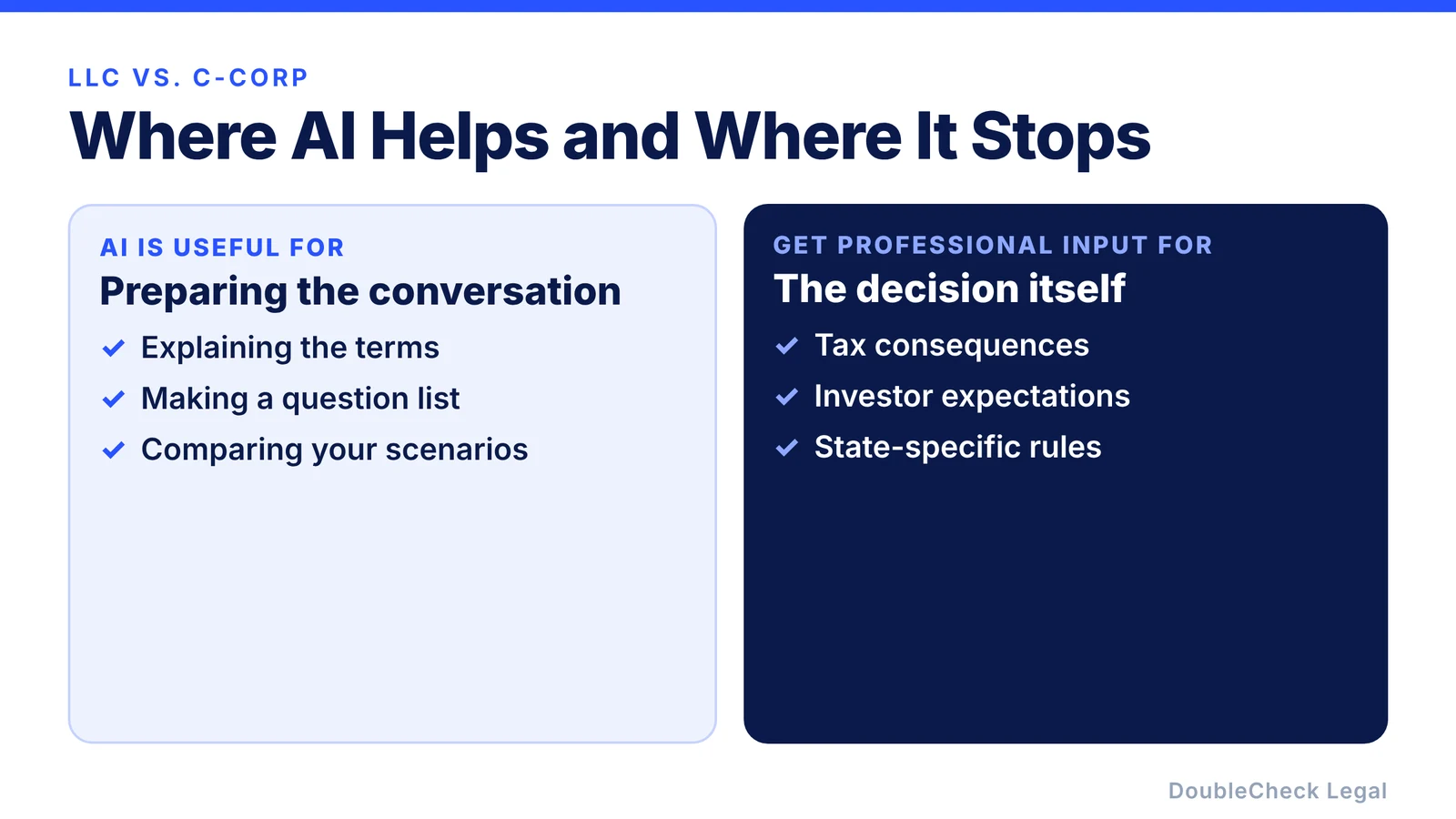
It is a poor decision-maker on tax consequences, investor requirements, and state-specific rules. See how to incorporate a company in the U.S. and launching an AI startup in the U.S..
6. Where DoubleCheck fits
DoubleCheck is built for businesses that start legal work with AI. Bring your question or draft, use an AI-first workflow to understand and verify it, and when professional advice is warranted, you can connect with an independent attorney. Attorneys on DoubleCheck are independent professionals; an attorney-client relationship forms only if an attorney accepts your engagement.
FAQ
Is an LLC or C-corp better for a startup?
It depends. Startups planning venture funding often choose a C-corp, while smaller owner-run businesses often prefer an LLC. Get tax and legal input.
Can I switch from an LLC to a C-corp later?
Yes, conversions are possible but can involve filings, tax questions, and contract updates.
Can AI choose my entity type?
AI can explain options and help prepare questions, but tax consequences and investor expectations should be confirmed with professionals.
Do I need an operating agreement?
If you form an LLC, a written operating agreement is strongly advisable so ownership and decision rules are clear.
General information only. This article is not legal, tax, investment, or accounting advice.