How to Write a Co-Founder Agreement: 9 Things to Settle Early
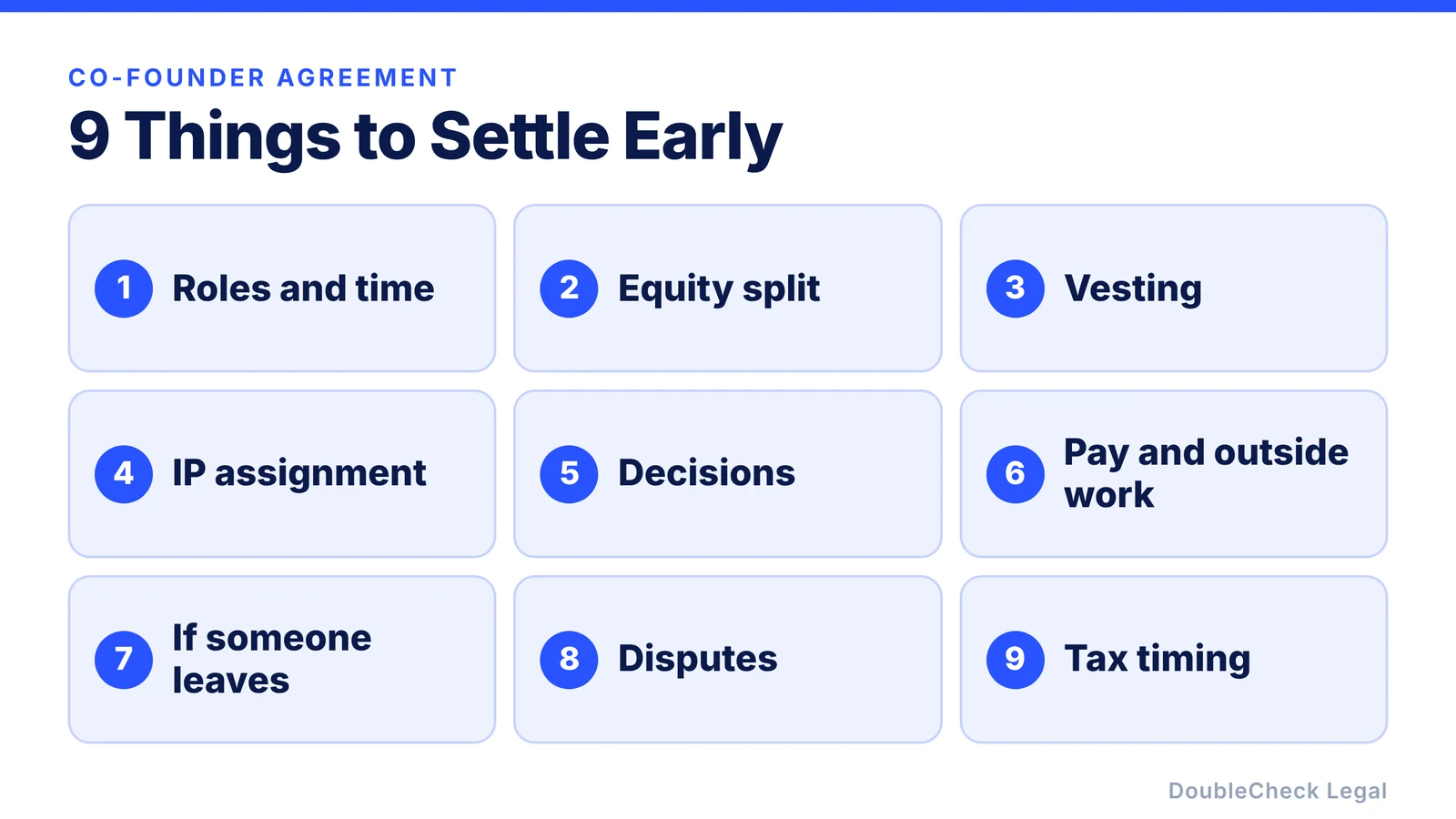
Most founder disputes come from things that were never written down. A co-founder agreement does not need to be long, but it should answer nine questions before you build together.
Key takeaways:
- Settle roles, equity, vesting, IP, decisions, pay, departures, disputes, and tax timing early.
- There is no universal equity split. Choose one deliberately.
- Vesting, commonly four years with a one-year cliff, ties ownership to continued contribution.
- Each founder should assign relevant IP to the company.
- Make sure the agreement matches your corporate documents, and consider independent review.
Starting a company with a co-founder is exciting, and that is exactly why the hard questions get postponed. Who owns what? What if one of you wants out? What if you disagree about a major decision? Answering these while you are still aligned is far easier than answering them later.
What is a co-founder agreement?
A co-founder agreement records how the founders agree to build the company together. It covers who does what, who owns what, how decisions get made, and what happens if the relationship changes.
It usually sits alongside your corporate documents, not in place of them. The share terms themselves, such as vesting and repurchase rights, typically end up in documents like founder stock purchase agreements, so the two need to match. If you have not formed the company yet, start with our guide to incorporating a company in the US.
Why settle this early
Early on, everyone is optimistic and aligned, which is exactly when these conversations are easiest. Waiting means having them later, when the company has value, someone is frustrated, or one founder is already leaving.
Putting it in writing also forces precision. “We will split it fairly” can mean very different things to two people.
1. Roles, responsibilities, and time commitment
Write down who is responsible for what and how much time each founder will commit. Is everyone full-time? Is someone starting part-time and moving over later? Who is CEO, and what does that title actually decide?
Clear roles reduce overlap and let you identify what happens if someone stops doing the job they agreed to do.
2. Equity split
There is no universal formula. Founders typically consider:
- work already done before the company existed,
- future responsibilities and time commitment,
- who is full-time and who is not,
- money, assets, or relationships contributed,
- experience and the risk each person is taking.
An equal split is common and can be right, but it should be a choice, not a way to avoid an uncomfortable conversation. Also decide whether you expect to set aside shares for future hires or investors, and how investment instruments such as a SAFE can affect everyone’s ownership later.
3. Vesting
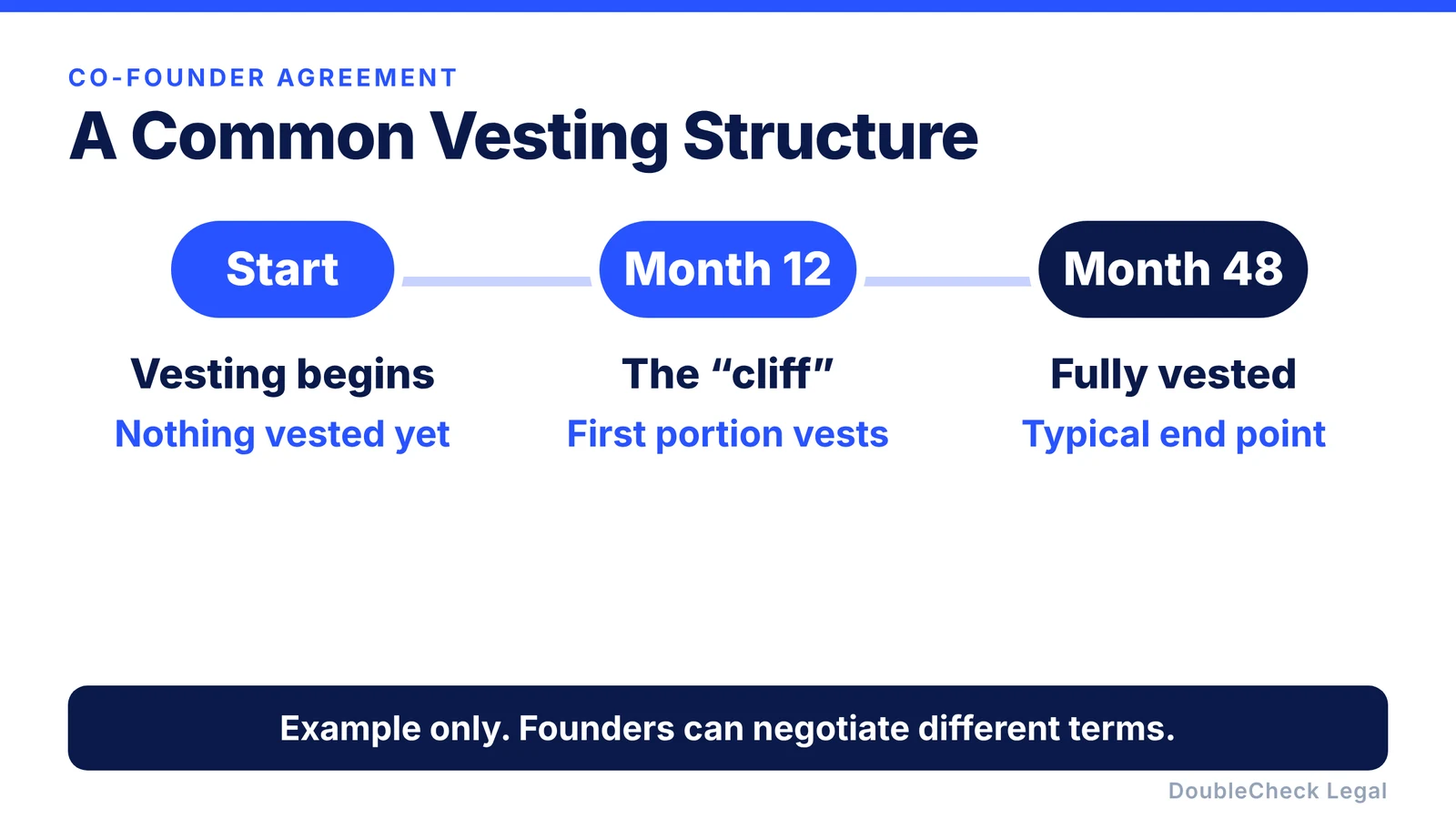
Vesting means founders earn their shares over time rather than owning them outright from day one. A common structure is four years with a one-year cliff, meaning nothing vests until the first anniversary, after which a portion vests and the rest vests gradually. Terms are negotiable and vary.
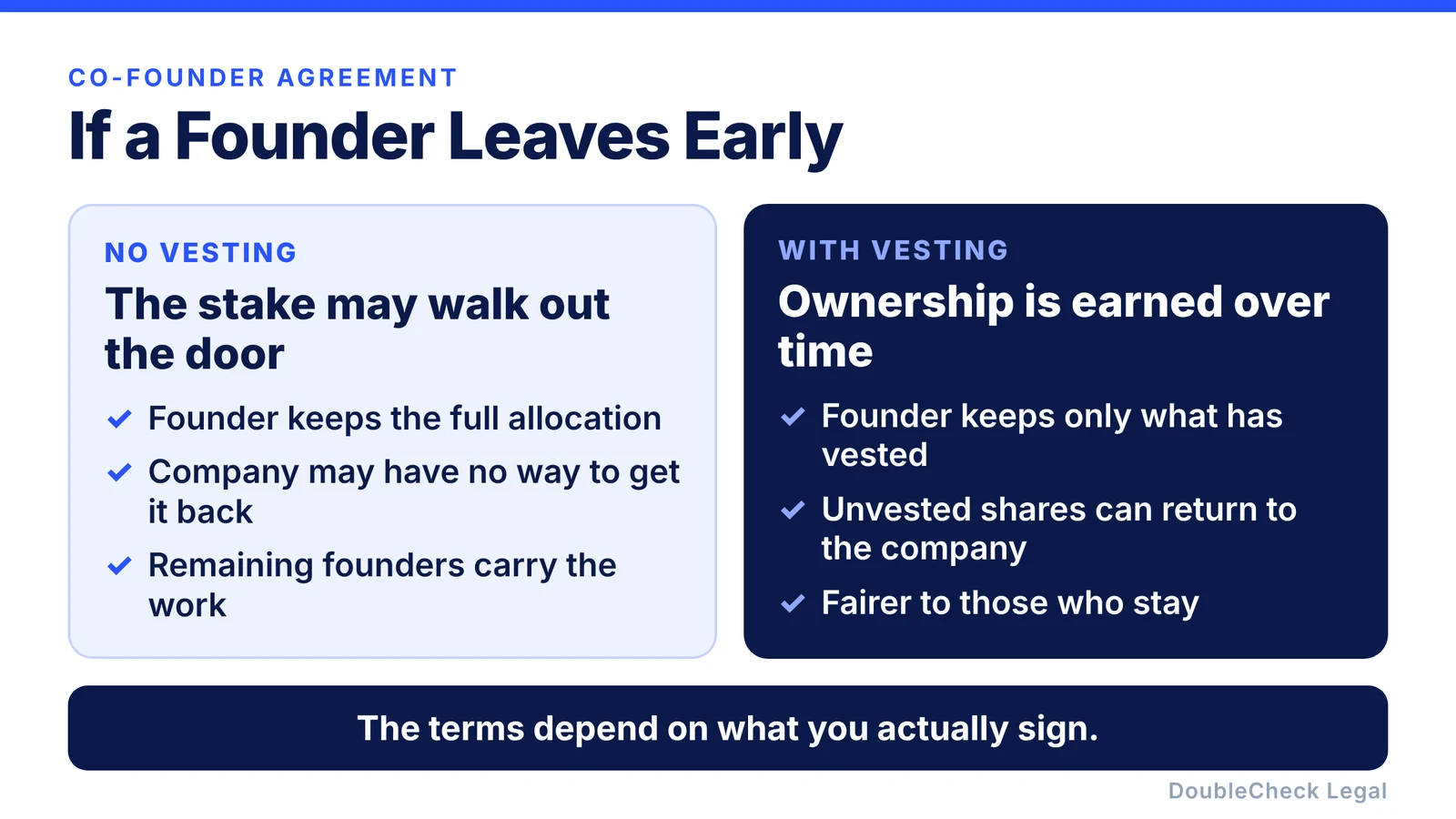
Why it matters: without vesting, a founder who leaves after a few months may still hold their full stake, while the people who stay keep doing the work. Vesting is one way to keep ownership tied to continued contribution.
Also discuss acceleration: whether some or all unvested shares vest if the company is sold, and under what conditions.
4. Intellectual property assignment
Each founder should assign the intellectual property relevant to the business to the company, and the agreement should address what each person created before the company existed. If any founder uses AI tools to write code or content, see our guide on ownership of AI-generated code for startup founders.
Unclear IP ownership is a common issue investors and acquirers look at, so it is worth getting right early.
5. Decision-making and deadlock
Decide how important decisions get made. Which ones need every founder to agree, such as raising money, selling the company, or issuing shares? Which can one person decide alone?
Plan for deadlock, especially with two founders at 50/50. Options include a defined escalation process, a mediator, or an agreed tie-breaker. It is easier to choose one before a disagreement.
6. Compensation, expenses, and outside work
Cover whether founders will draw salary and when, how expenses are reimbursed, and whether anyone may work on other projects or hold another job. If someone has an employer, check whether their existing agreement could affect what they build, especially around intellectual property.
7. What happens if a founder leaves
This is the section most founders avoid and later wish they had written. Address:
- whether the company or remaining founders can buy back shares, and at what price,
- what happens to vested versus unvested shares,
- whether the reason for leaving changes the outcome,
- confidentiality and what the departing founder may do afterward.
Rules that apply to a founder who is fired for misconduct may reasonably differ from those for a founder who leaves for health or family reasons. Decide that in advance, while no one is the person leaving.
8. Disputes and ending the venture
State how disagreements will be handled before anyone goes to court, for example direct discussion, then mediation, then another agreed process, and which state’s law governs. Also cover what happens if the company winds down, including assets, IP, and any debts.
9. Tax timing: do not miss the 83(b) deadline
If your founder shares are subject to vesting, a tax election called an 83(b) election may be worth discussing with a tax professional. The deadline is generally tight, measured in days from the date of transfer, so build it into your timeline instead of remembering it later. Our guide to the 83(b) election for startup founders explains what to double-check.
How to use AI to draft a co-founder agreement
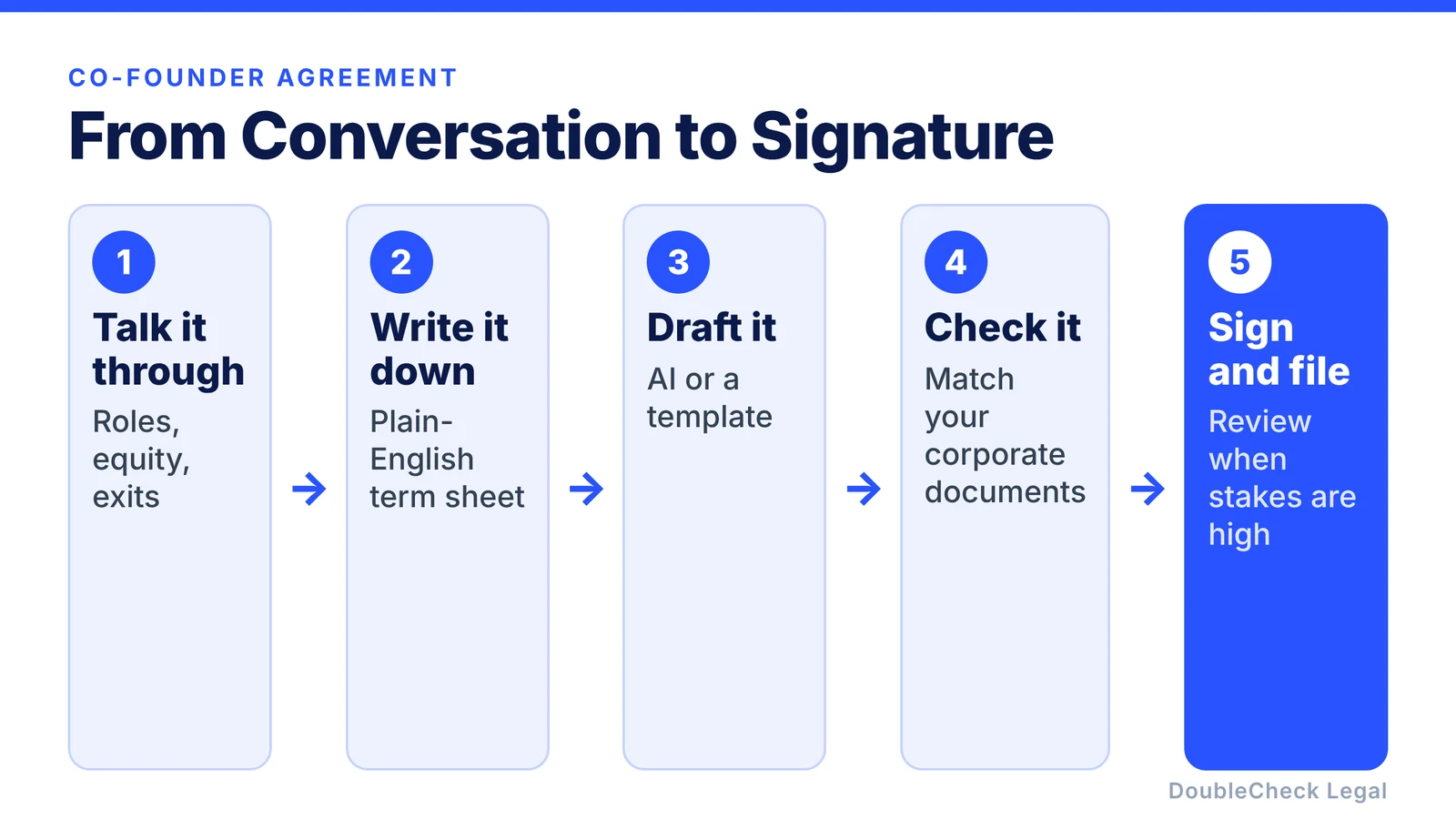
AI is useful for getting organized. A practical approach:
- Have each founder answer the nine topics above separately, in writing.
- Compare the answers and note where you disagree.
- Give the AI the agreed terms and ask it to draft a first version in plain English.
- Ask it: “What important provision is missing?”, “Where are these terms ambiguous?”, and “What would each founder want clarified?”
- Check the draft against your corporate documents and jurisdiction.
Remember that founders’ interests are not identical. The person drafting is not automatically looking out for everyone, so consider whether each founder should have independent advice before signing. Equity, vesting, and IP are the kind of issues where an attorney’s review can matter most.
Where DoubleCheck fits
If you drafted a co-founder agreement with ChatGPT or Claude, DoubleCheck is built for the next step: double-checking the work and, when warranted, bringing in an independent attorney. DoubleCheck’s attorneys are independent professionals, and an attorney-client relationship is formed only if an attorney accepts the engagement.
FAQ
What is a co-founder agreement?
A co-founder agreement is a written record of how founders plan to work together: roles, equity, vesting, intellectual property, decision-making, what happens if someone leaves, and how disputes are handled.
Do I need a co-founder agreement if I already formed a company?
Forming a company does not by itself answer most founder questions. Corporate documents cover some of them, but a co-founder agreement or term sheet can spell out expectations on roles, time, equity, and exits. The two should be consistent with each other.
How should co-founders split equity?
There is no single correct split. Founders often consider past and future contributions, time commitment, risk taken, experience, and whether someone is full-time. An equal split is common, but it is worth deciding deliberately rather than by default.
What is founder vesting?
Vesting means a founder earns ownership over time instead of receiving it all up front. A common structure is four years with a one-year cliff, but the terms are negotiable and vary by company.
Can I use AI to draft a co-founder agreement?
AI can help you organize the issues, draft a first version, and list questions to settle. Because the document affects ownership and each founder’s interests, consider independent review before signing, and make sure it matches your corporate documents.
What happens if a co-founder leaves and there is no agreement?
The outcome depends on your corporate documents, any stock purchase or vesting terms, and applicable law, and it can become disputed. Settling this in writing early is usually far easier than negotiating it after a falling out.
General information only. This article is not legal, tax, investment, or accounting advice.