83(b) Election for Startup Founders: What It Is, the 30-Day Deadline, and What to Double-Check
You incorporated, received founder shares, and signed the paperwork. Then someone says, “Don’t forget your 83(b).” Here is what that means, why the 30-day clock matters, and what to double-check.
Key takeaways:
- An 83(b) election is a U.S. federal tax election. It can become relevant when you receive property, such as founder stock, that is subject to vesting or forfeiture.
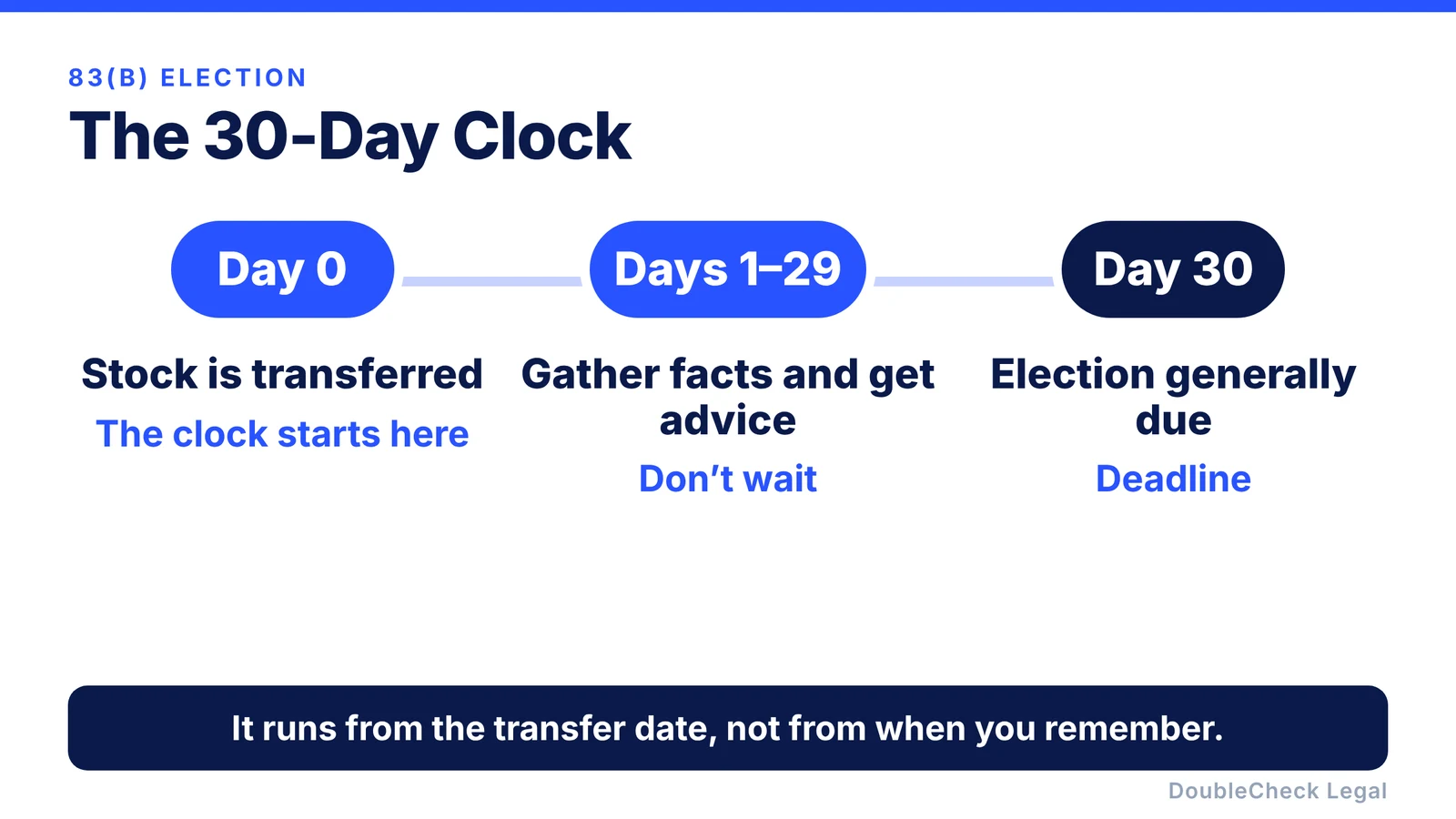
- The statute generally requires it within 30 days after the property is transferred.
- Confirm your equity type, transfer date, restrictions, price paid, and fair market value before relying on any answer.
- AI can help you understand the paperwork. A tax or legal professional should help with the decision.
For first-time founders, this can be confusing, because an 83(b) election is not simply another incorporation document. It is a U.S. federal tax election that can become relevant when someone receives certain property, such as founder stock, that is still subject to vesting or forfeiture. And unlike many startup administrative tasks, it comes with a short deadline.
What does an 83(b) election do?
Very broadly, Section 83 of the Internal Revenue Code addresses when property received in connection with services becomes taxable. An 83(b) election allows an eligible recipient to elect to include the relevant value in income at the time of transfer, rather than waiting until the property later becomes substantially vested.
The actual tax consequences depend on the facts, so founders should not assume that filing is automatically beneficial in every situation. For startup founders receiving restricted stock at a very early stage, the election often comes up because the company’s shares may initially have a relatively low value while being subject to vesting.
Why founders should care about the 30-day clock
This is what makes 83(b) different from many other startup tasks. The statute generally requires the election to be made no later than 30 days after the date the property is transferred. You cannot simply decide to deal with it six months later. The deadline is tied to the date of the transfer, not to when you eventually remember to investigate.
That is why the 83(b) election frequently appears on startup formation checklists.
The IRS has also released Form 15620, Section 83(b) Election, which gives founders a standardized form rather than requiring everyone to construct their own statement from scratch. Check the IRS website for the current version and instructions, since forms and filing methods can change.
What information should a founder double-check?
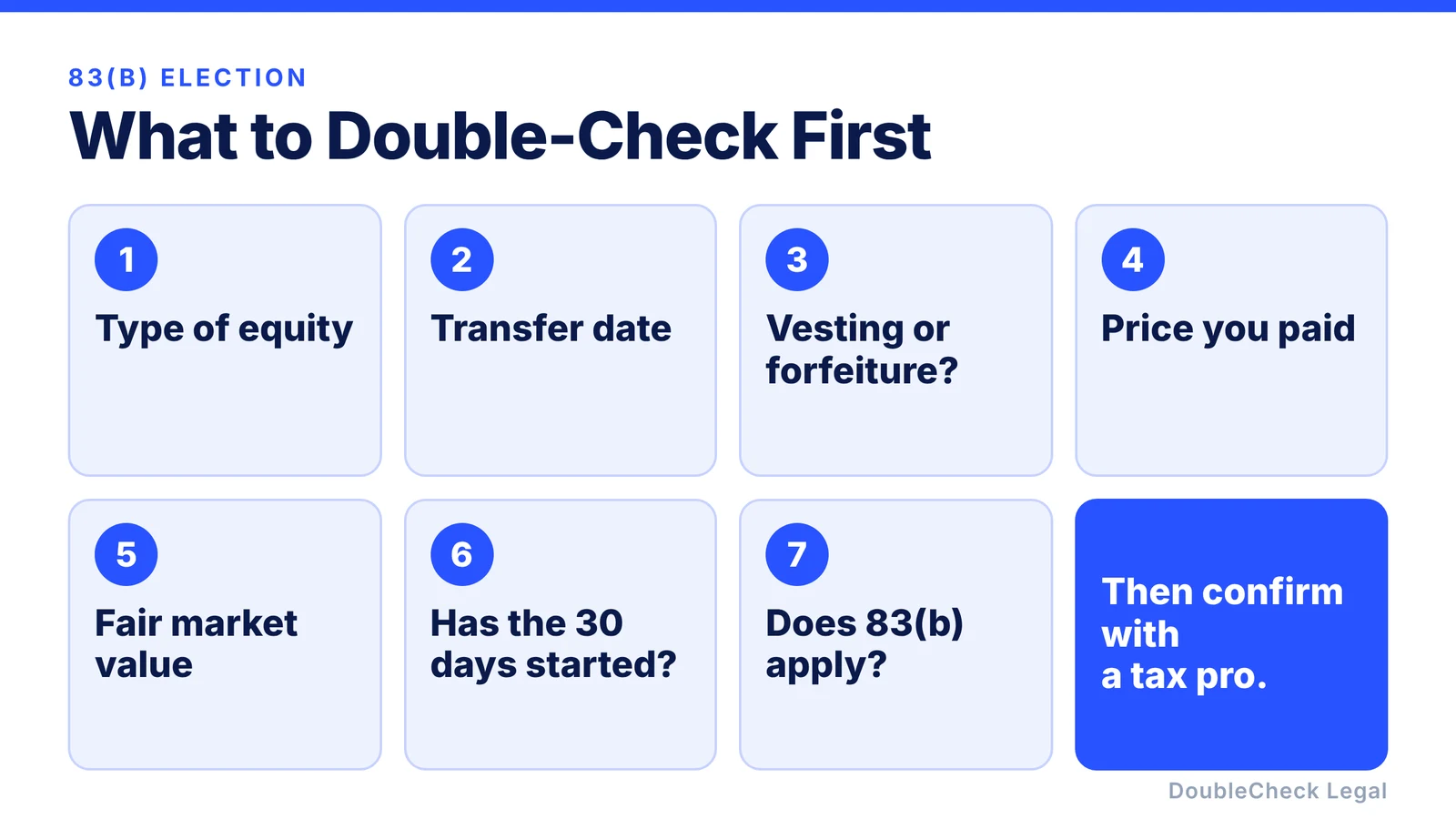
Before treating an AI-generated answer as definitive, confirm basic facts such as:
- What type of equity did you receive?
- When was it actually transferred?
- Is it subject to vesting or another substantial risk of forfeiture?
- What did you pay for the shares?
- What was their fair market value?
- Has the 30-day window begun?
- Does an 83(b) election actually apply to the equity you received?
The election is made in writing, so use the IRS form or ask your tax advisor what to include rather than assembling it from memory.
Be careful asking AI about an 83(b)
This is a good example of where AI can be useful, but where a wrong answer can matter. You can ask ChatGPT, Claude, Gemini, or another AI:
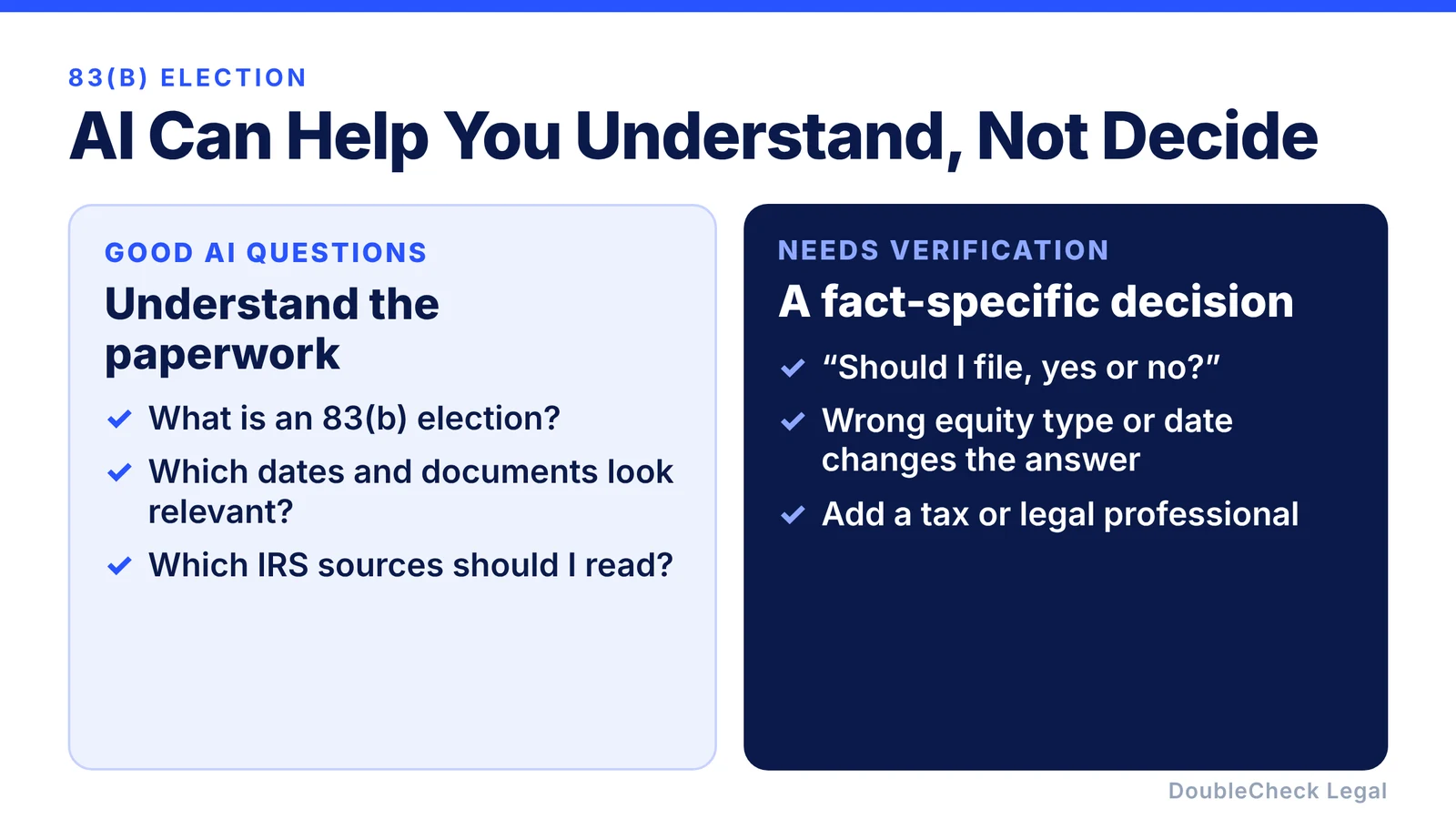
“Explain what an 83(b) election is.”
That is useful. You can also upload your founder documents and ask:
“Which dates and documents appear relevant to determining whether I should investigate an 83(b) election?”
Also useful. But asking:
“Should I file an 83(b), yes or no?”
moves much closer to a fact-specific tax and legal determination. AI may misunderstand the equity instrument, use the wrong date, or fail to recognize a fact that changes the analysis.
A better AI workflow
Use AI to create structure:
Founder stock documents → identify relevant dates → identify vesting restrictions → retrieve IRS sources → verify the deadline → professional help if needed.
The AI can help you understand the paperwork. The underlying source should help you verify the rule. And a tax or legal professional can help when your particular facts require judgment. If you think a deadline may already have passed, speak with a tax professional promptly rather than relying on a chatbot.
How DoubleCheck can help
This is exactly the kind of workflow where DoubleCheck can be more useful than a normal chatbot. Instead of only answering “You may need an 83(b) election,” a verification workspace could show something like this (an illustrative example):
- Transfer date detected: March 4
- Potential deadline: check immediately
- Vesting detected: yes
- Underlying source: Section 83 and IRS guidance
- Missing information: fair market value and exact stock-transfer terms
Then you can inspect the supporting sources rather than relying entirely on generated text. If the facts remain unclear, human verification or professional assistance can be added as another layer.
FAQ
What is an 83(b) election?
It is a federal tax election under Internal Revenue Code Section 83 that can apply when certain property is transferred in connection with services and remains subject to restrictions.
How long do I have to file an 83(b) election?
The statute generally requires the election to be made no later than 30 days after the property is transferred.
Is there an IRS form for an 83(b) election?
Yes. The IRS has released Form 15620, Section 83(b) Election. Check the IRS website for the current form and instructions.
Does every startup founder need to file an 83(b) election?
No. Whether an election applies or makes sense depends on the type of equity and the founder’s circumstances.
Can AI help me with an 83(b) election?
AI can explain the concept, organize documents, identify dates, and find authoritative sources. A consequential tax election should not be based solely on an unverified AI response.
General information only. This article is not legal, tax, investment, or accounting advice.