New Data: Businesses draft legal documents with AI and seek professional review

A new survey of 304 startup workers and business developers reveal how they use AI to produce legal documents and seek professional verification.
DoubleCheck Market Research · August 2026
Key findings
- Legal ranks #1 for willingness to pay for review compared to accounting, financial modeling, etc.
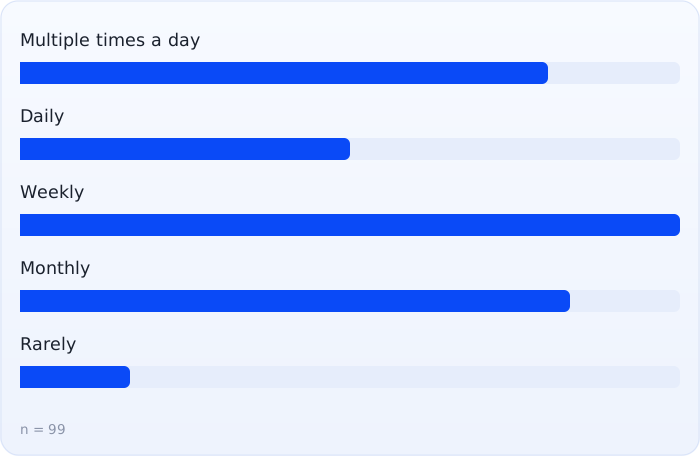
- 70% of business who generate AI legal documents do so at least once a week.
- 83% of those who use AI for legal drafting would pay for professional review.
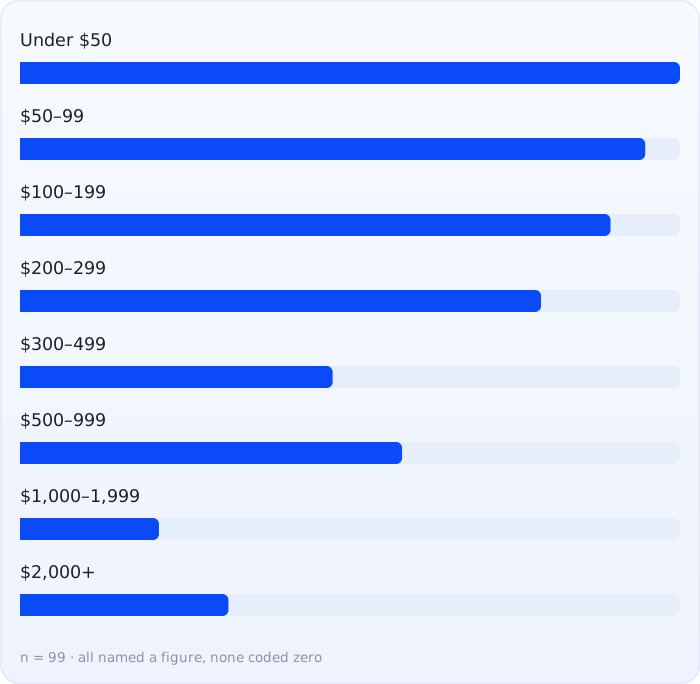
- The typical business would pay $120 per document review.
Key findings continued
- Almost 1 in 4 would pay $400 or more for a single document review (23 of 99).
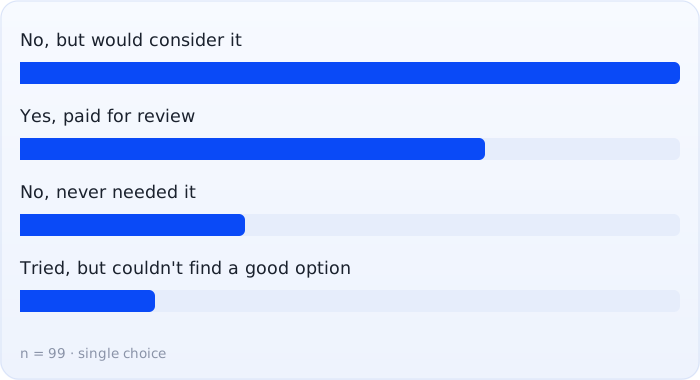
- 44% have never paid for review but would consider it (44 of 99).
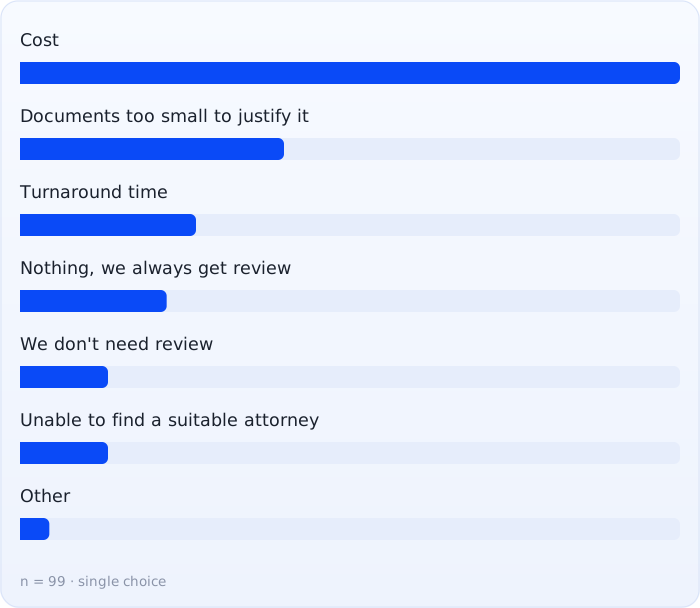
- Cost is the top barrier: 45 of 99 name it, and only 10 say they always get review.
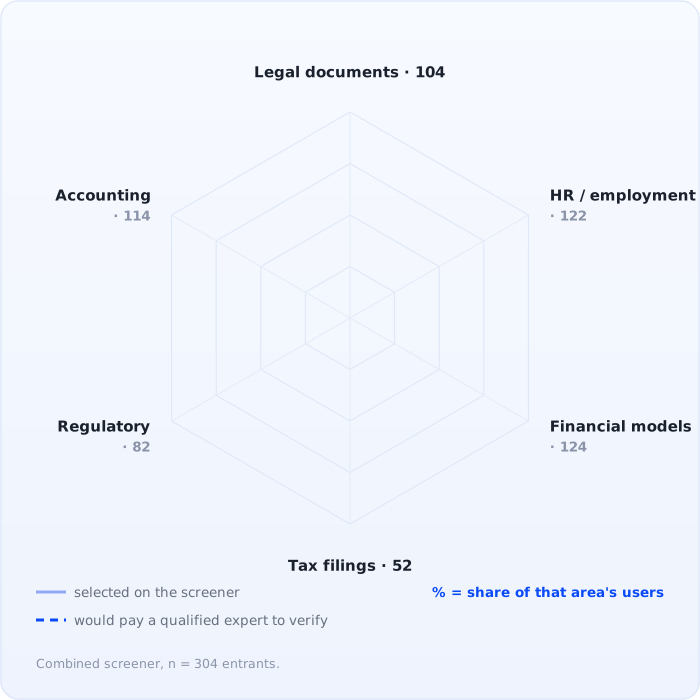
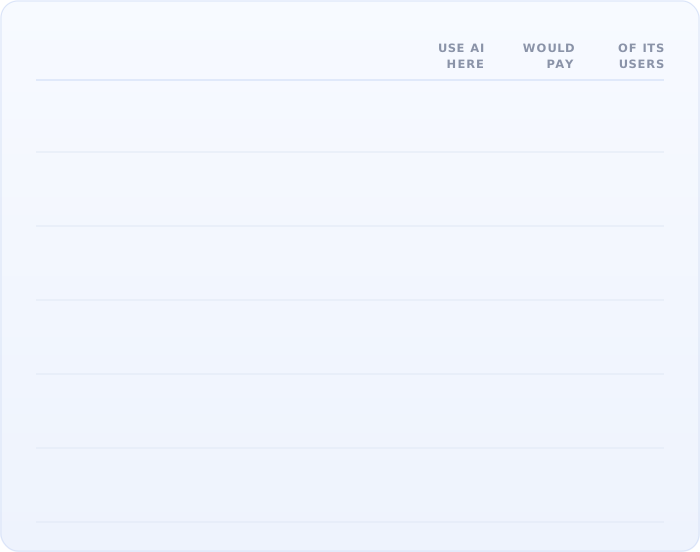
- 83% of legal-document selectors would pay for review in that area; tax is 79%, accounting is 75%.
- Median willingness is $125 across all 99 retained completes.
- 74% of legal-document selectors also picked finance or HR (73 of 99).
- 31% have already paid for attorney review at least once (31 of 99); 9 more tried but could not find a good option.
Executive summary
AI is now a core part of how businesses generate internal documents. Next to accounting, financial modeling, and HR & employment, legal is one of the top purposes for AI use. 70% of those who generate AI legal documents do so at least once a week. The most common documents are contractor and freelance agreements, employment and offer letters, vendor agreements, NDAs, and privacy policies.
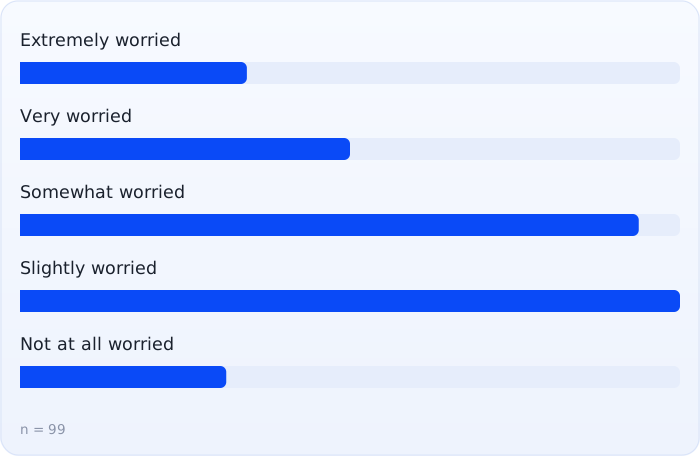
Yet businesses are worried about the accuracy of these documents. 90% of respondents expressed some level of concern about errors in AI-generated legal documents. Just under a third have already purchased an attorney review of AI-drafted work at least once, 44% never have but would consider it, and 9% went looking and could not find a workable option.
Attorneys have a significant opportunity in AI-document review. Compared to all other kinds of AI business documents, businesses express the highest willingness to pay for professional review of legal documents at 83%, outranking accounting at 75% and tax filings at 79%. While cost remains the biggest barrier to seeking such services, the median willingness to pay is $125 per document review.
Methodology
Two waves of survey data fielded through one panel provider.
Panel provider — Prolific
Field dates — Wave 1, general sample: 18–28 July 2026 (144 entrants). Wave 2, startup-only sample: 28 July – 21 August 2026 (160 entrants).
Screener question — “Which of these areas have you or your company used AI to generate documents? (select all that apply)” Respondents whose answer included Legal documents continued into the full survey.
Screen-out compensation — $0.14 per screened-out respondent
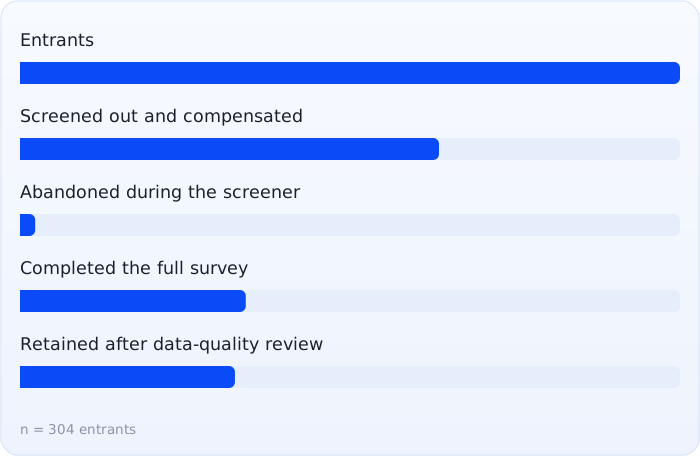
Sample — 304 entrants. 193 were screened out and compensated and 7 abandoned during the screener itself. The remaining 104 all selected legal documents and completed the full survey, of which 99 were retained after 5 were rejected on answer quality. Respondents identified as business developers or business executives, startup workers, or startup founders and entrepreneurs.
Median duration — 3 minutes 50 seconds among retained completes; 53 seconds across all entrants, most of whom were screened out inside a minute.
01. Adoption: AI has become the norm for internal document creation
What businesses use AI for
Respondents were screened on which areas their company uses AI to generate documents in, then asked which of those areas they would pay a qualified expert to verify. Legal documents were identified as having the strongest “would pay for review” conversion rate out of all areas.
83% of legal-document selectors would pay a qualified expert to verify that work, the highest conversion of any area.
What is being drafted
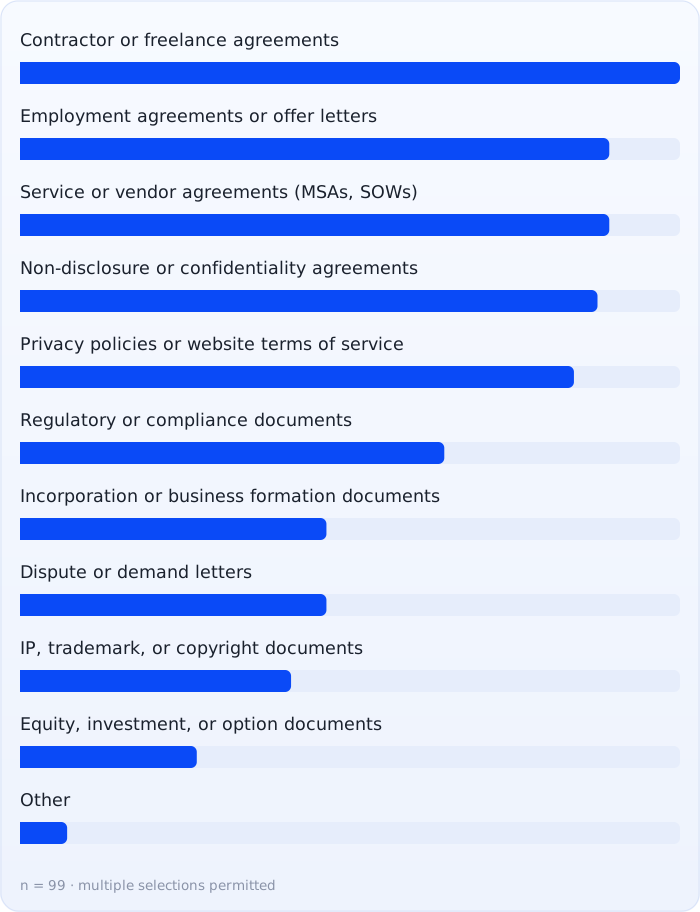
Among respondents who continued into the full survey, the most common AI-drafted legal documents are the high-volume agreements a growing company produces repeatedly.
Contractor and freelance agreements are the most common AI-drafted legal document, at 57%.
How often
AI is being used at a consistent rate within growing companies, becoming intertwined within the document creation process.
70% of teams draft legal-weight documents with AI at least weekly.
02. Review barriers: Most of this work reaches use without a lawyer
What happens before the document is used
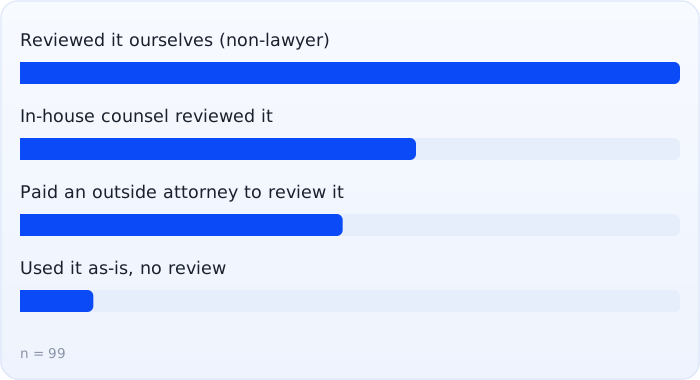
Respondents were asked about the most recent AI-drafted legal document their company actually relied on. Fewer than one in four had it reviewed by an outside attorney.
Half relied on their most recent AI-drafted legal document with no attorney involved.
Companies are worried about AI-generated accuracy
The same respondents report widespread unease about the documents they are relying on. Only 10 of 99 are untroubled.
89 of 99 report some level of concern about errors in the documents they rely on.
What stops them
Asked what most prevents them from seeking attorney review today, cost leads by a wide margin.
Only 10 of 99 say they always obtain review today, a contrast from 83% of respondents saying they would be willing to pay for review.
03. Demand: Companies are already seeking review
Whether they have ever paid
Just under a third of the market has already bought this service, while the largest group says it would consider it.
44% have never paid for review but would consider it. A further 9% tried to buy and could not find a good option.
What a review is worth
Respondents named the most their company would pay for a licensed attorney to review one AI-generated document and return a memo flagging issues.
Median willingness to pay is $125 across all retained completes.
Who pays the most
Six respondents named $2,000 or more. The highest figures came from company heads in data and development.
04. Beyond legal documents: Demand extends past legal documents
Screened-out demand
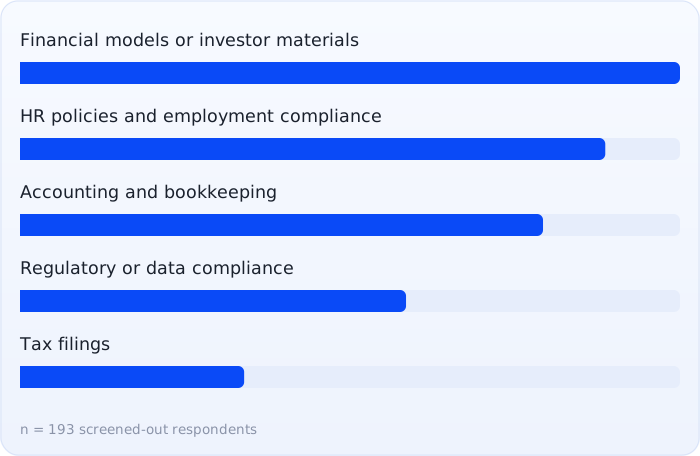
Respondents who did not qualify for the full survey were still asked which areas they would pay a qualified expert to verify. 128 of 193 named at least one.
Two thirds of screened-out respondents named at least one area they would pay to have verified.
The funnel
The study screened widely and paid for every screen-out, which is what makes the qualified sample a qualified one.
304 entrants produced 99 retained completes and 193 compensated screen-outs.
Commissioned by DoubleCheck Legal, fielded by Prolific.
Using AI to draft legal documents?
Get peace of mind. Have expert attorneys review your AI-drafted contracts, NDAs, and policies before you rely on them.