Incorporate in California vs. Delaware: What Startup Founders Should Compare
Delaware or California? Compare what each state charges and why founders operating in California often deal with both.
Key takeaways:
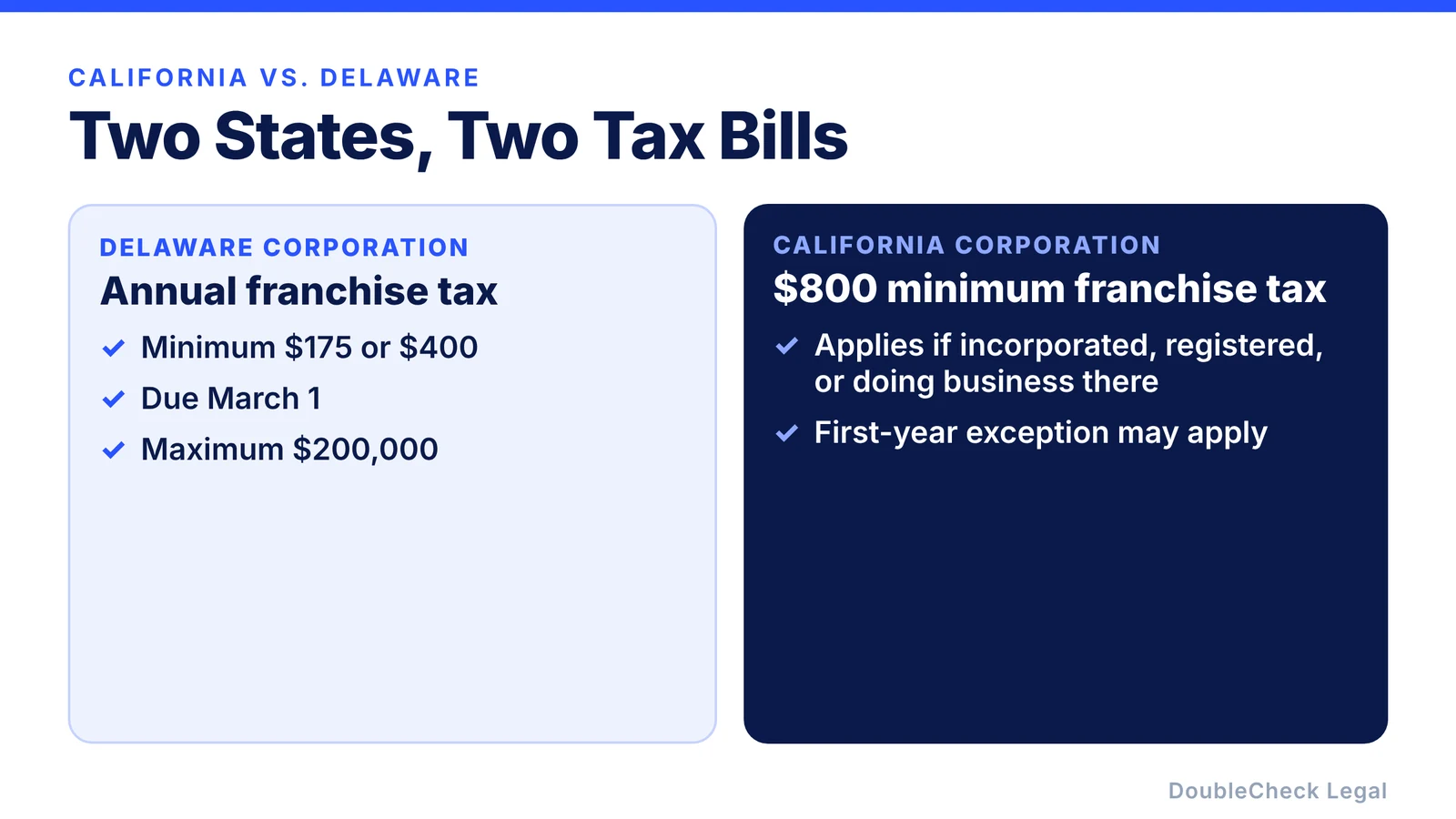
- Delaware corporations owe an annual franchise tax due March 1, with $175 and $400 minimums depending on method.
- California corporations owe an $800 minimum franchise tax, with a first-year exception for new corporations since 2020.
- A Delaware company that does business in California can still be subject to California franchise tax.
- Decide with your lawyer and accountant, using your real operating facts.
1. Why this question comes up
Many startups ask whether to incorporate in Delaware or California. The honest answer depends on where you operate, who your investors are, and what each state charges you every year. Our general guide is how to incorporate a company in the U.S.; this article focuses on the California side of the comparison.
2. Two states, two annual bills
Delaware. According to the Delaware Division of Corporations, annual reports and franchise taxes for domestic corporations are due on or before March 1. The minimum is $175 under the Authorized Shares Method or $400 under the Assumed Par Value Capital Method, and the maximum is $200,000. See our Delaware franchise tax guide.
California. FTB says a corporation “incorporated, registered, or doing business in California” must pay the $800 minimum franchise tax. FTB also states that since January 1, 2020, newly incorporated or qualified corporations are not required to pay the minimum in their first taxable year.
3. The part founders miss
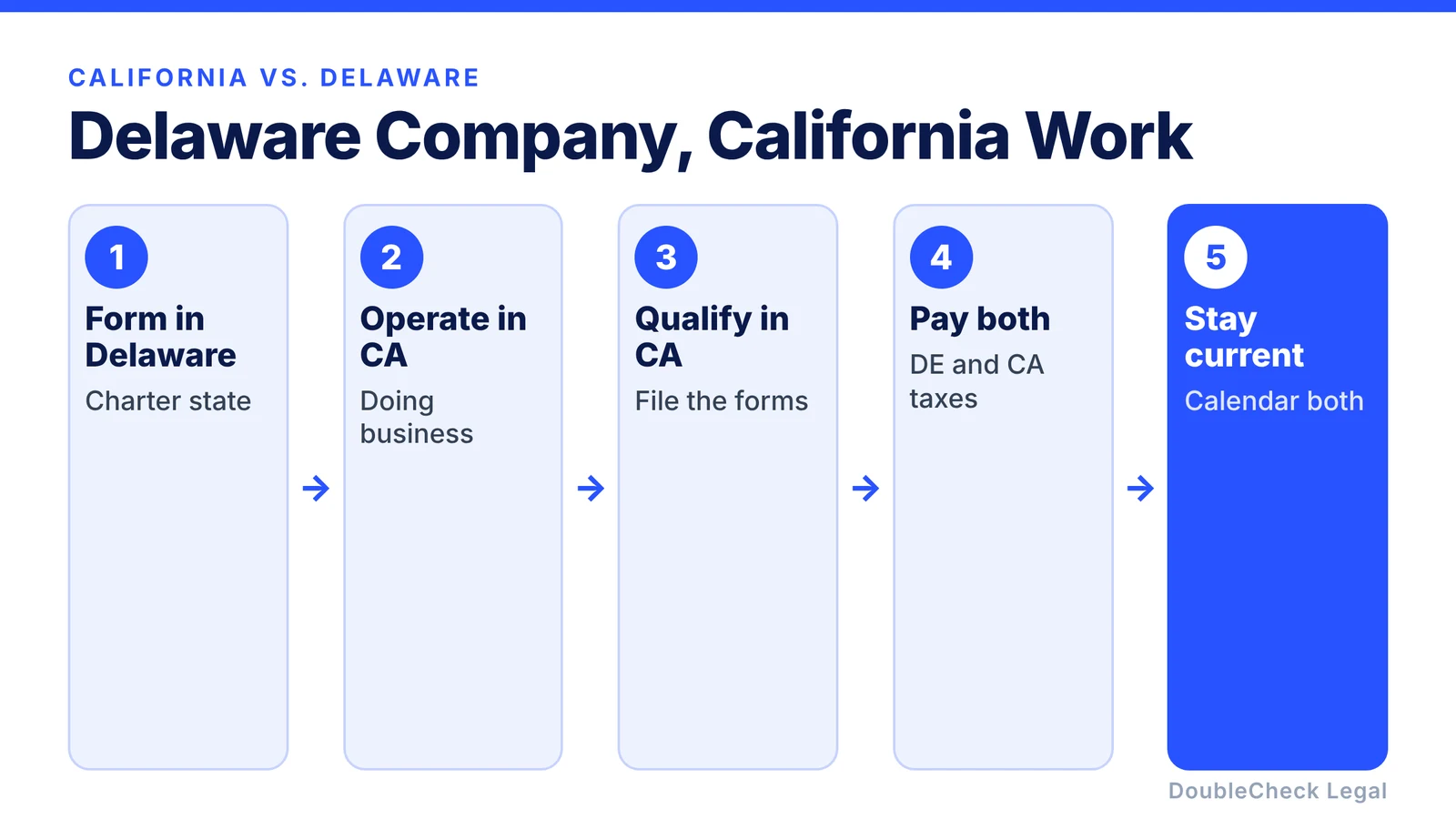
Incorporating in Delaware does not remove California from the picture if you actually operate there. FTB says a foreign corporation that qualifies with the Secretary of State becomes subject to the franchise tax, and so is one that does business in California without qualifying. See Delaware corporation doing business in California.
4. Six questions to answer first
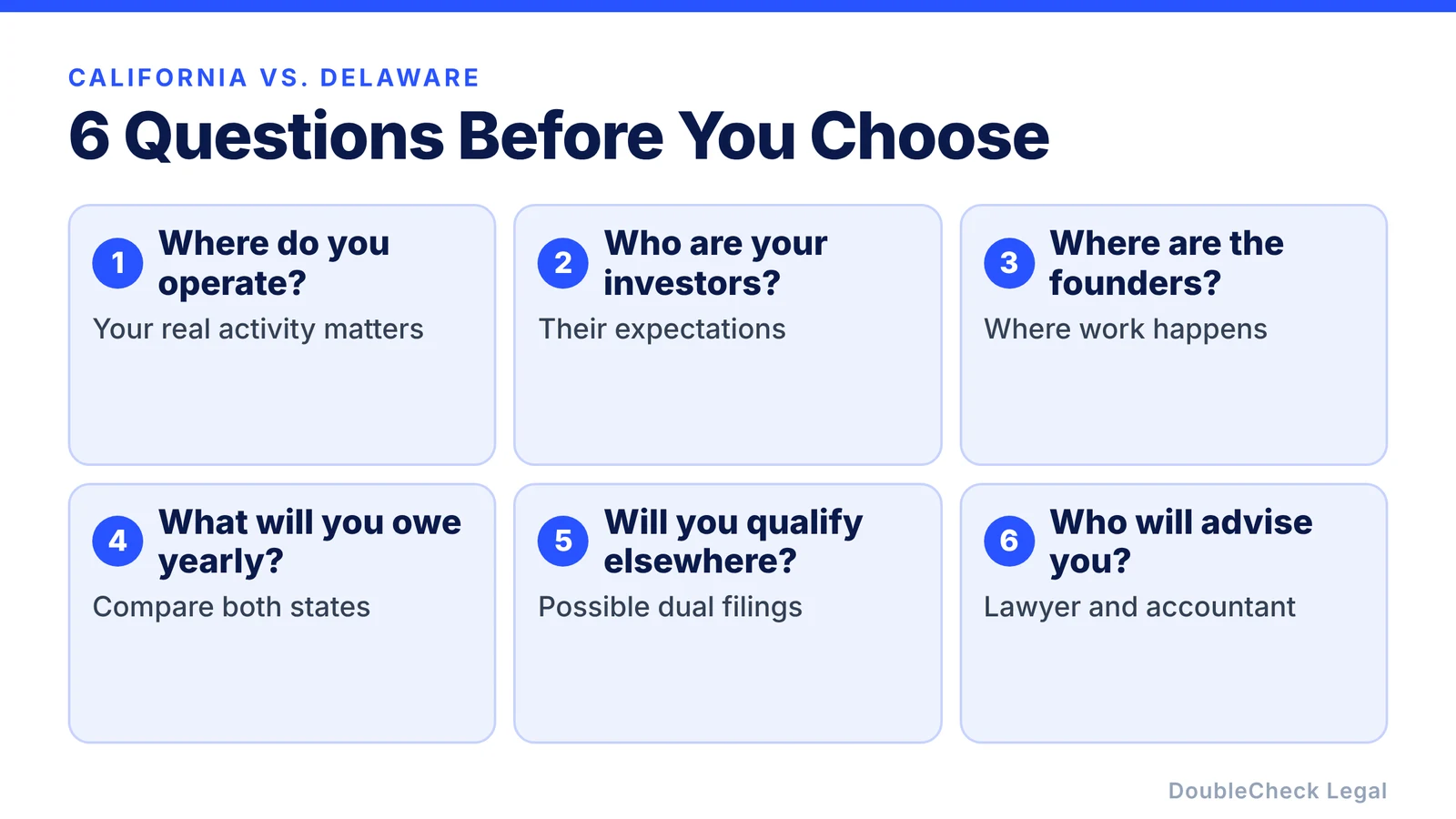
Work through them with your co-founders, your accountant, and a startup lawyer. We do not claim one state is best for every company, and we have not included generalizations about investor preferences that we cannot verify.
5. LLC or corporation first
The state question sits next to the entity question. Read LLC vs. C corp for startups before you pick a state, and review founder equity with founder vesting and 83(b) elections.
Where DoubleCheck fits
DoubleCheck is built for businesses that start legal work with AI. Bring your question or draft, use an AI-first workflow to understand and verify it, and when professional advice is warranted, you can connect with an independent attorney. Attorneys on DoubleCheck are independent professionals; an attorney-client relationship forms only if an attorney accepts your engagement.
Sources: FTB: Corporations; Delaware Division of Corporations.
FAQ
Do I still pay California tax if I incorporate in Delaware?
FTB says foreign corporations that qualify in California, or that do business there without qualifying, are subject to the franchise tax.
What is California’s minimum franchise tax?
$800 for corporations incorporated, registered, or doing business in California, according to FTB.
What is Delaware’s minimum franchise tax?
$175 under the Authorized Shares Method or $400 under the Assumed Par Value Capital Method, per Delaware’s website.
Which state is better for startups?
It depends on facts we cannot assess here. Compare annual costs, where you operate, and your investors’ expectations with a lawyer and accountant.
General information only. This article is not legal, tax, investment, or accounting advice.