Noncompete Agreements in 2026: What Small Businesses and Workers Should Know
The FTC’s nationwide ban is gone, which means state law now does the work. Here is what that means.
Key takeaways:
- The FTC’s broad noncompete rule was blocked in 2024 and the appeal was withdrawn in September 2025.
- State law controls, and it varies a lot, from bans in California and Minnesota to conditional enforcement elsewhere.
- Employers should consider narrower tools such as confidentiality and non-solicitation clauses.
- Workers should read the clause, check the governing law, and get review before signing.
Noncompetes are one of the most misunderstood clauses in employment. The federal picture changed, so here is where things stand.
1. The federal ban is not in effect
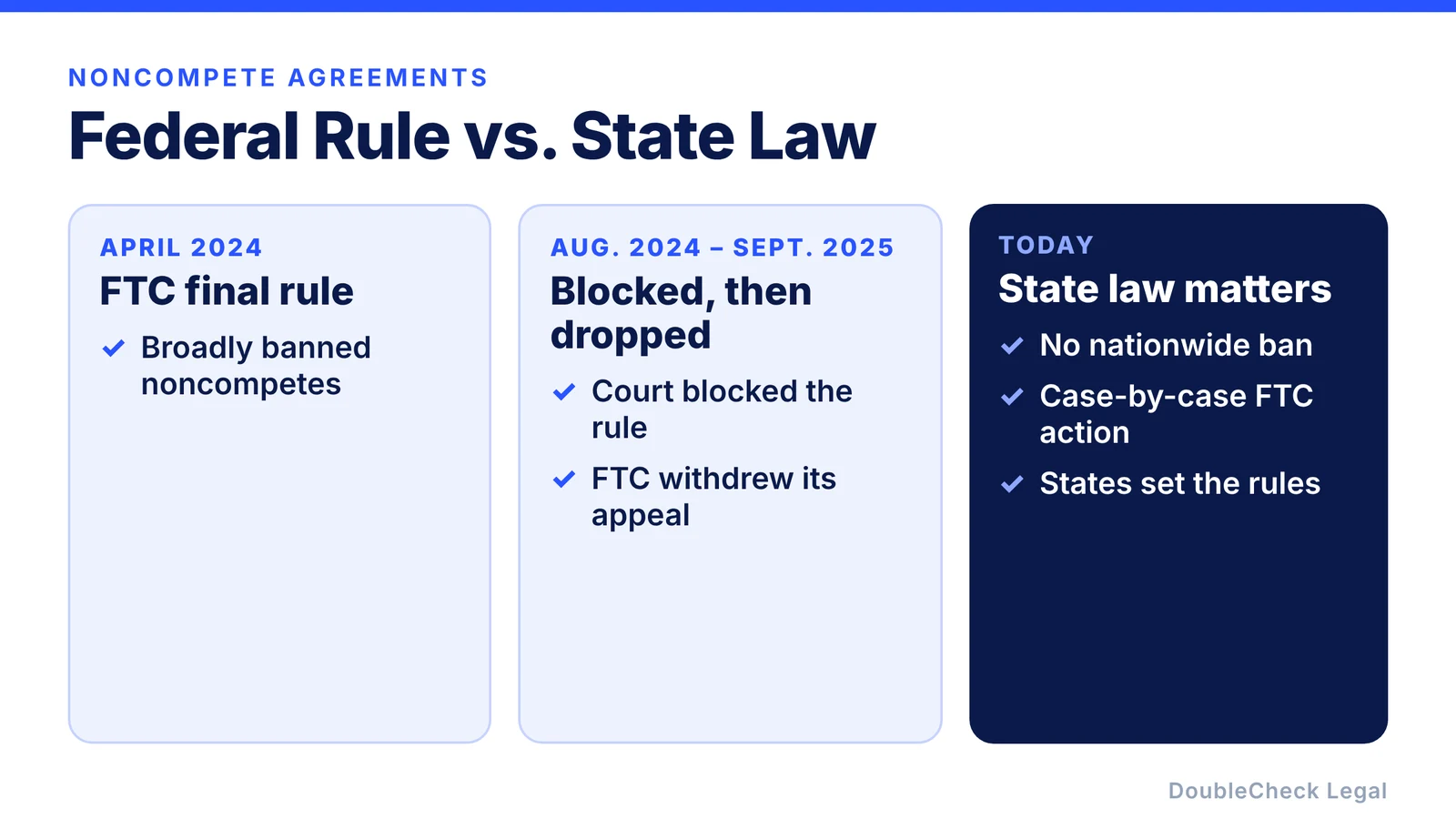
In April 2024, the FTC issued a rule broadly prohibiting noncompete agreements. In August 2024, a federal court in Texas blocked the FTC from enforcing it nationwide. In September 2025, the FTC withdrew its appeal.
According to a July 2026 law-firm overview, there is no nationwide FTC noncompete ban in effect. The agency now favors case-by-case enforcement.
That means the answer to “Is this noncompete enforceable?” mostly depends on state law.
2. A snapshot of state approaches
The same overview describes a patchwork:
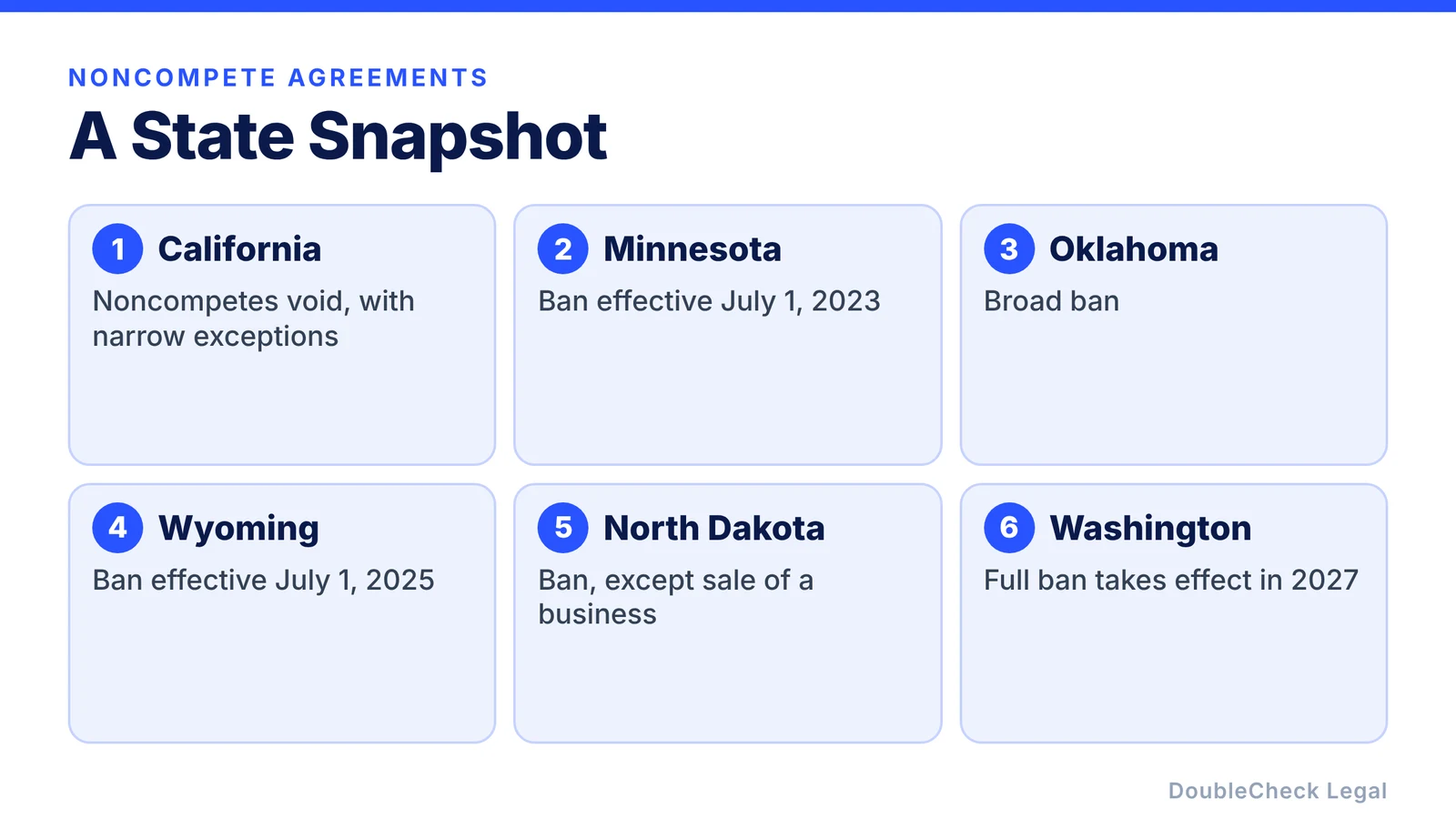
- California: noncompetes are void, with very limited exceptions such as a sale of a business.
- Minnesota: ban effective July 1, 2023.
- Oklahoma and Wyoming: bans, with Wyoming’s effective July 1, 2025.
- North Dakota: ban, except in sale-of-business situations.
- Washington: a full ban that takes effect in 2027.
Other states allow noncompetes with conditions. Check the state that governs the person and the work.
3. If you are an employer
Do not copy a noncompete from the internet or an AI draft. A clause that is lawful in one state can be void or even create liability in another.
Consider whether you actually need one. Often a confidentiality agreement, an invention assignment, and a narrow customer non-solicitation clause protect what you care about with less legal risk. Which of those is enforceable also varies by state.
4. If you are asked to sign one
Read it before signing and ask:
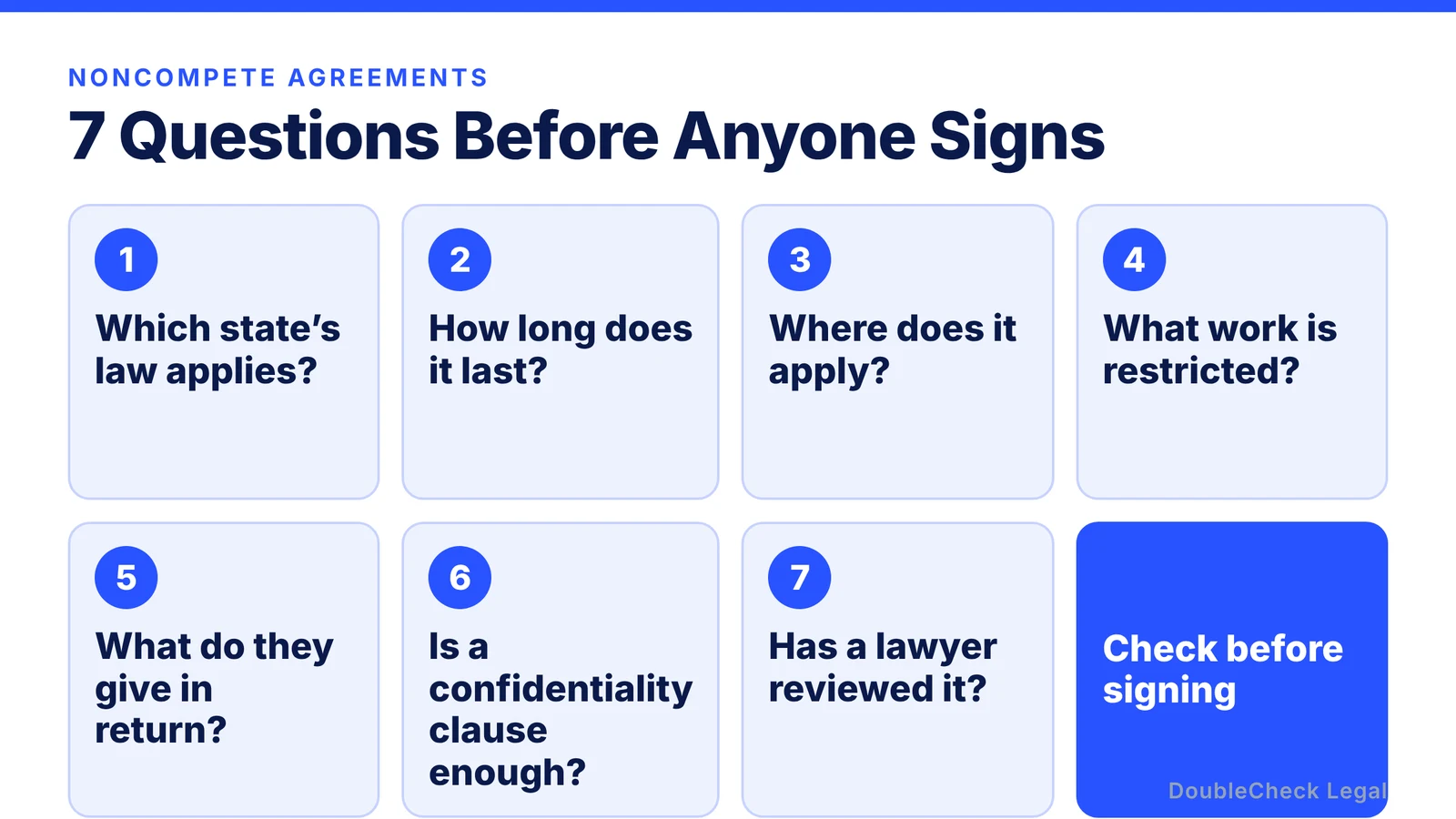
A void clause in your state may still be used to scare people into complying, so understand your actual position before acting. For disputes, see how to respond to a legal demand letter.
5. Using AI on noncompetes
AI is useful for explaining what a clause says and listing questions. It is risky for deciding enforceability, because that depends on your state, your facts, and current law, all of which AI can get wrong. For hiring paperwork see drafting job offer letters with AI.
6. Where DoubleCheck fits
DoubleCheck is built for businesses that start legal work with AI. Bring your question or draft, use an AI-first workflow to understand and verify it, and when professional advice is warranted, you can connect with an independent attorney. Attorneys on DoubleCheck are independent professionals; an attorney-client relationship forms only if an attorney accepts your engagement.
Source: Foley: Noncompete Agreements in 2026.
FAQ
Is there a federal noncompete ban in 2026?
No. The FTC’s rule was blocked by a federal court in 2024 and the FTC withdrew its appeal in September 2025.
Which states ban noncompetes?
According to a July 2026 overview: California, Minnesota, Oklahoma, Wyoming, and North Dakota (with a sale-of-business exception), and Washington’s full ban takes effect in 2027.
Can I use an AI-written noncompete?
Be careful. Enforceability depends on state law and facts. Use AI to understand the clause, then have a professional check it for the right state.
What can protect my business instead of a noncompete?
Confidentiality agreements, invention assignment, and narrow non-solicitation clauses are common alternatives, though enforceability also varies by state.
General information only. This article is not legal, tax, investment, or accounting advice.