Sole Proprietor vs. LLC for a Solo Founder (California, Texas, Florida)
Solo founder deciding between a sole proprietorship and an LLC? Here is what changes and what does not, with California, Texas, and Florida costs.
Key takeaways:
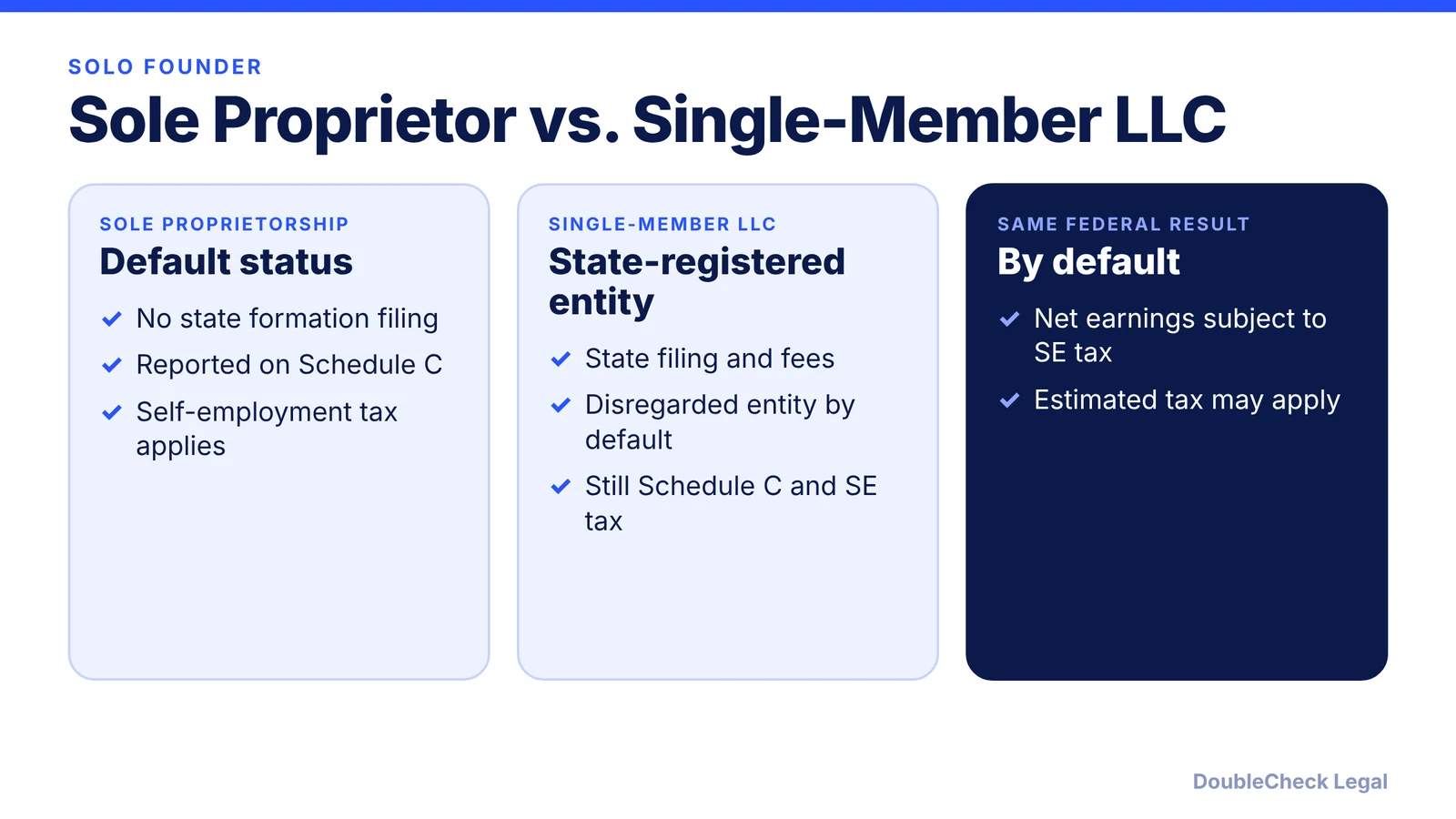
- By default, a single-member LLC is taxed like a sole proprietorship: Schedule C and self-employment tax.
- The LLC adds a liability separation but also state filings and fees.
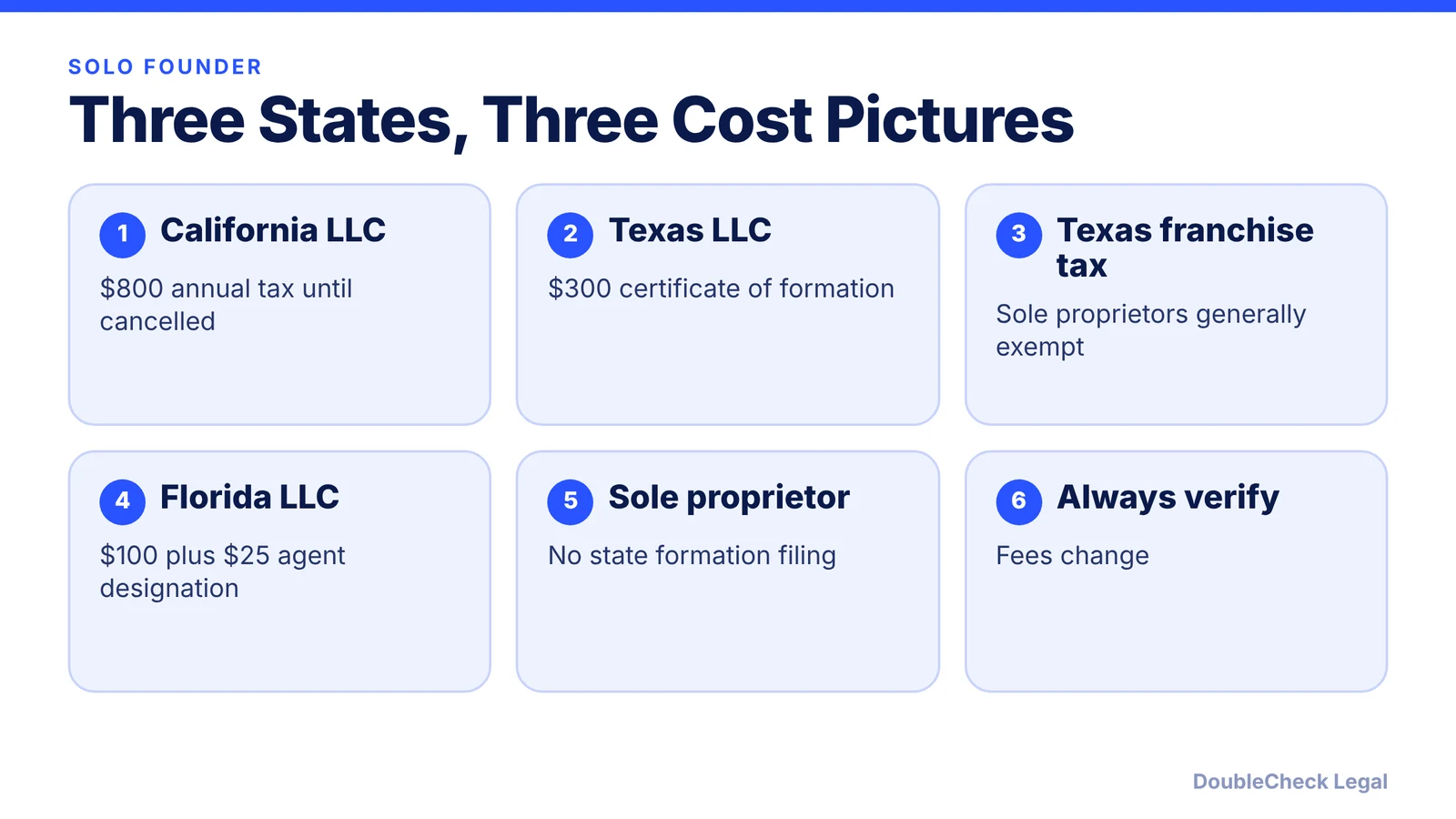
- California charges LLCs an $800 annual tax; Texas charges $300 to form; Florida $100 plus $25.
- Texas franchise tax generally does not apply to sole proprietorships, with a single-member LLC exception.
1. The quick answer
Quick answer: A sole proprietorship is the default if you work for yourself and file nothing with the state; an LLC is a state-registered entity that creates a legal separation between you and the business. For federal tax, a single-member LLC is by default treated as a “disregarded entity,” so you still report on Schedule C and still pay self-employment tax, per the IRS. The decision is mostly about liability, state costs, and how you want to look to clients and banks, not about a lower federal tax bill.
2. What the IRS says
The IRS says a single-member LLC is a disregarded entity unless it files Form 8832 to elect otherwise, separate from its owner for liability purposes but not for federal tax. An individual owner reports activity on Schedule C (or Schedule E or F depending on the business), and net earnings are subject to self-employment tax, as with a sole proprietorship. Read more in single-member LLC taxes and self-employment tax.
3. State costs: California, Texas, Florida
State rules are where the choice gets real.
- California: every LLC doing business in California or organized there owes the $800 annual tax until it cancels, per the Franchise Tax Board (details).
- Texas: a certificate of formation is $300 (details). On franchise tax, a CPA Practice Advisor summary says sole proprietorships are generally exempt (with an exception for single-member LLCs); see Texas franchise tax.
- Florida: Articles of Organization are $100 and registered agent designation is $25, per the Division of Corporations.
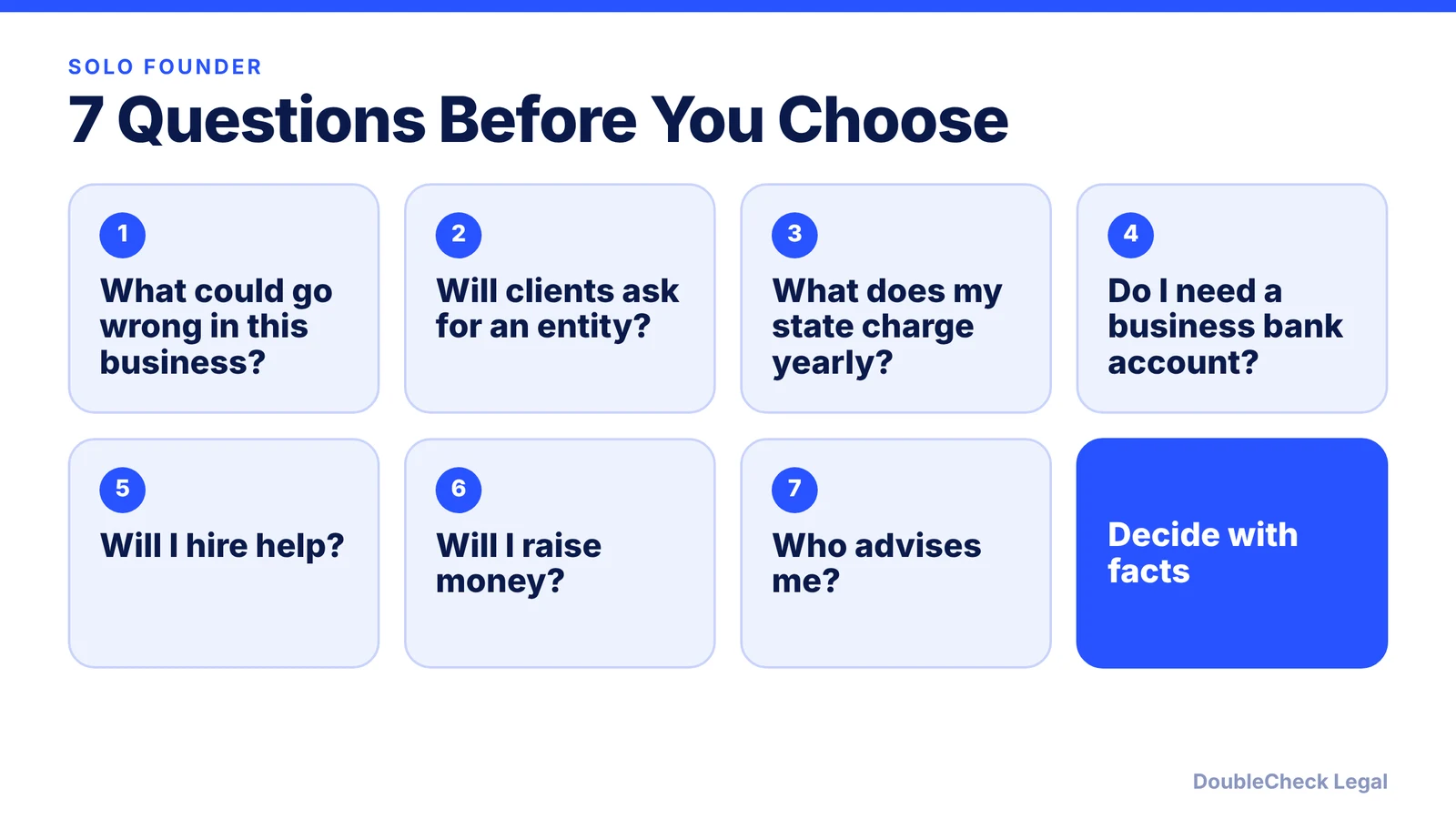
4. Seven questions to settle it
If you may raise outside money later, read LLC vs. C corp for startups. If you use AI to draft your own operating agreement, see LLC operating agreement with AI and verify it.
Where DoubleCheck fits
DoubleCheck is built for businesses that start legal work with AI. Bring your question or draft, use an AI-first workflow to understand and verify it, and when professional advice is warranted, you can connect with an independent attorney. Attorneys on DoubleCheck are independent professionals; an attorney-client relationship forms only if an attorney accepts your engagement.
Sources: IRS: Limited liability company; FTB; Texas SOS fee schedule; CPA Practice Advisor; Florida Division of Corporations.
FAQ
Is an LLC taxed differently from a sole proprietorship?
By default, no. The IRS treats a single-member LLC as a disregarded entity, reported on Schedule C with self-employment tax, unless it elects otherwise on Form 8832.
Do I need an LLC to be a freelancer?
No. A sole proprietorship needs no state formation filing. Whether to form an LLC depends on liability, state costs, and client expectations.
How much does an LLC cost in California?
FTB says every LLC owes an $800 annual tax until it cancels, plus an LLC fee above certain income levels.
How much does an LLC cost in Florida?
The Division of Corporations lists $100 for Articles of Organization and $25 for registered agent designation.
General information only. This article is not legal, tax, investment, or accounting advice.