Contract Red Flags: Seven Things Small Businesses Should Pause On
Most contract trouble is hiding in a handful of clauses. Here are seven worth slowing down for.
Key takeaways:
- Look closely at liability, renewal, termination, IP assignment, payment terms, scope, and data rights.
- Red flags are places to ask questions, not automatic deal-breakers.
- Read parties, money, duration, exit, and risk in that order.
- Use AI to find and explain, then verify against the document and escalate high-stakes terms.
You do not have to be a lawyer to spot clauses that deserve a second look.
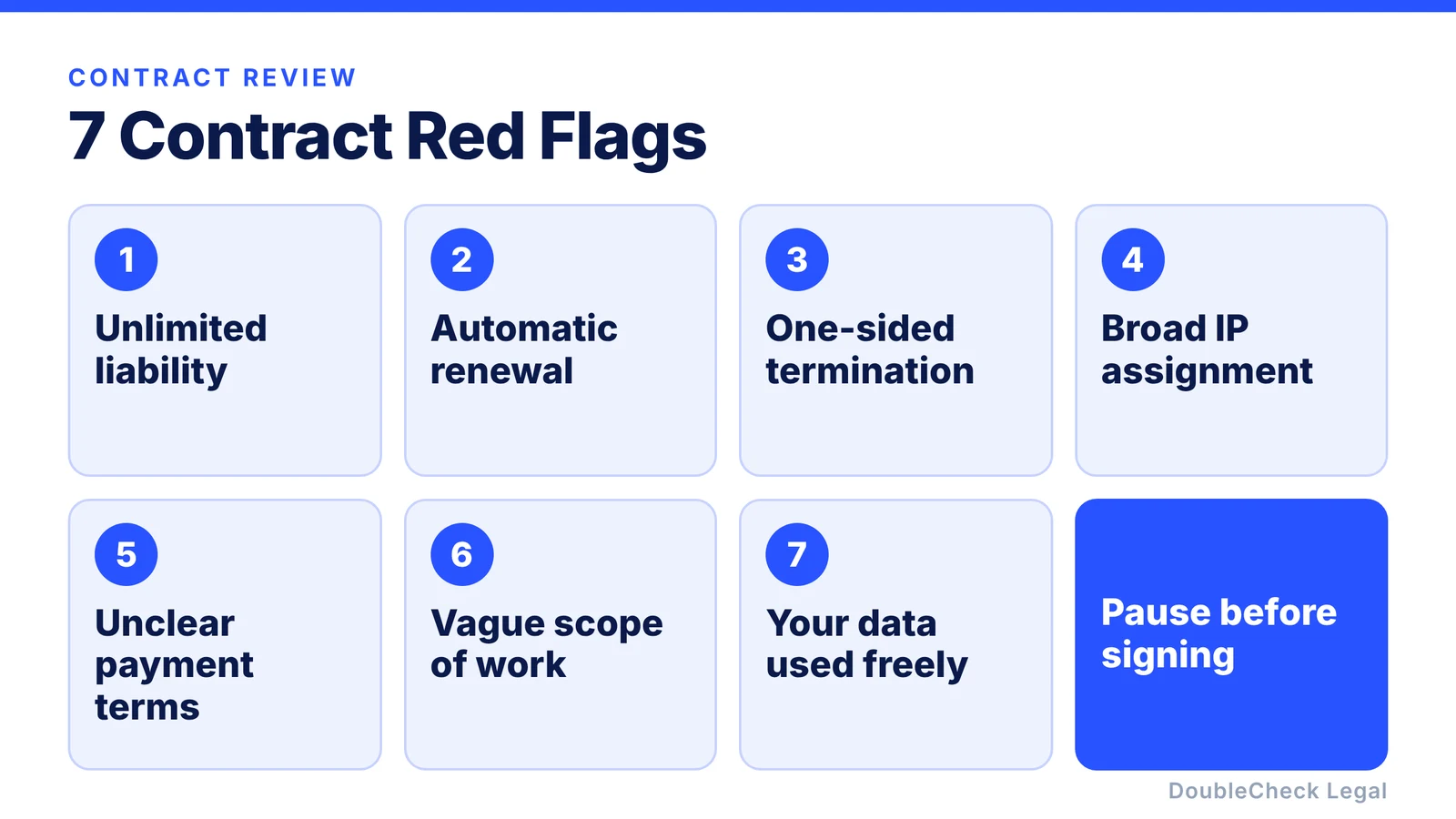
1. Seven red flags to look for
These are not automatic deal-breakers. They are places to slow down and ask questions.
2. Liability and renewal
Unlimited liability. If you could owe unlimited damages for a small contract, find out why and whether there is a cap.
Automatic renewal. Check whether the contract renews on its own, for how long, and how and when you must give notice to stop it. Missed notice windows are a common source of surprise charges.
3. Termination, IP, and data
One-sided termination. Can only the other party end the deal early? What happens to payments and work already done?
Broad IP assignment. Does the contract transfer ownership of everything you create, even work unrelated to the project?
Your data used freely. Does the other side get broad rights to your or your customers’ data, including for AI training? See our AI vendor contract checklist.
4. Money and scope
Unclear payment terms. Price, due dates, late fees, and expenses should be specific.
Vague scope. If the work is described loosely, disagreements about what was promised are likely. Specific deliverables and acceptance criteria help.
5. What to read first
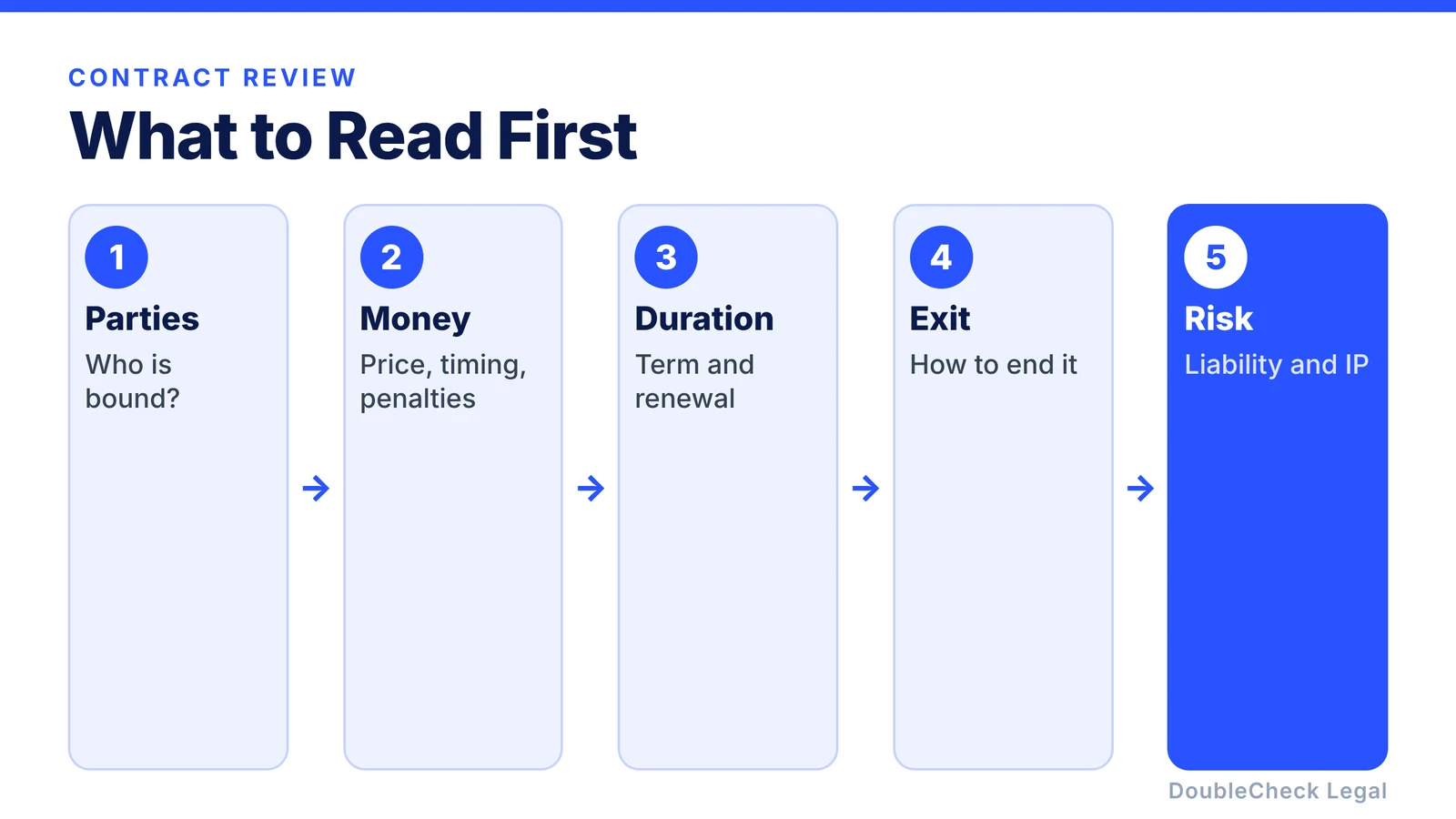
Start with who is bound, then money, duration, how to end it, and finally the risk sections such as liability and IP. For a deeper workflow see AI contract review for small business.
6. Using AI without guesswork
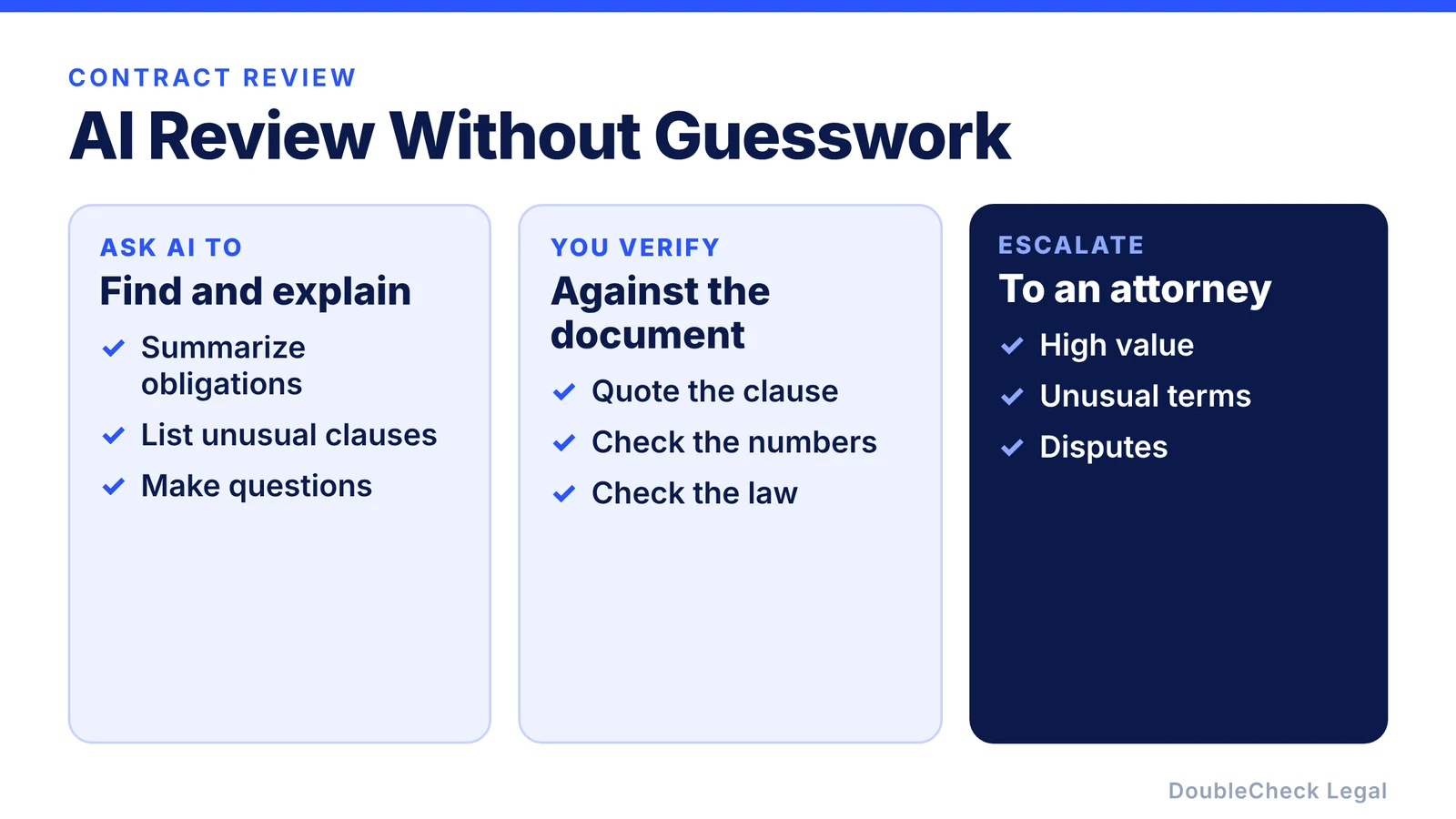
Ask AI to summarize obligations, list unusual clauses, and generate questions. Then verify each point against the actual clause and numbers. For high-value or unusual terms, bring in an attorney. See having a lawyer review a ChatGPT contract.
DoubleCheck is built for businesses that start legal work with AI. Bring your question or draft, use an AI-first workflow to understand and verify it, and when professional advice is warranted, you can connect with an independent attorney. Attorneys on DoubleCheck are independent professionals; an attorney-client relationship forms only if an attorney accepts your engagement.
FAQ
What are common contract red flags?
Unlimited liability, automatic renewal, one-sided termination, broad IP assignment, unclear payment terms, vague scope, and broad rights to your data.
Should I avoid contracts with these clauses?
Not necessarily. They are prompts to ask questions and negotiate or get advice.
Can AI review a contract for red flags?
AI can summarize and flag unusual clauses, but verify each point against the actual text and numbers.
When should an attorney review a contract?
For high-value deals, unusual or one-sided terms, or any dispute risk.
General information only. This article is not legal, tax, investment, or accounting advice.