Confidentiality and IP Assignment Agreements for Startups
Who owns what your team builds? An IP assignment agreement answers that, and investors will ask.
Key takeaways:
- These agreements protect confidential information and make the company the owner of work created for it.
- Founders, employees, contractors, advisors, and interns may all need to sign.
- Wording matters: assign IP rather than only promising to.
- Get signatures before work starts and have counsel check state-law limits.
If a contractor wrote your core code and never signed anything, who owns it? Fix that question before an investor asks.
1. What these agreements do
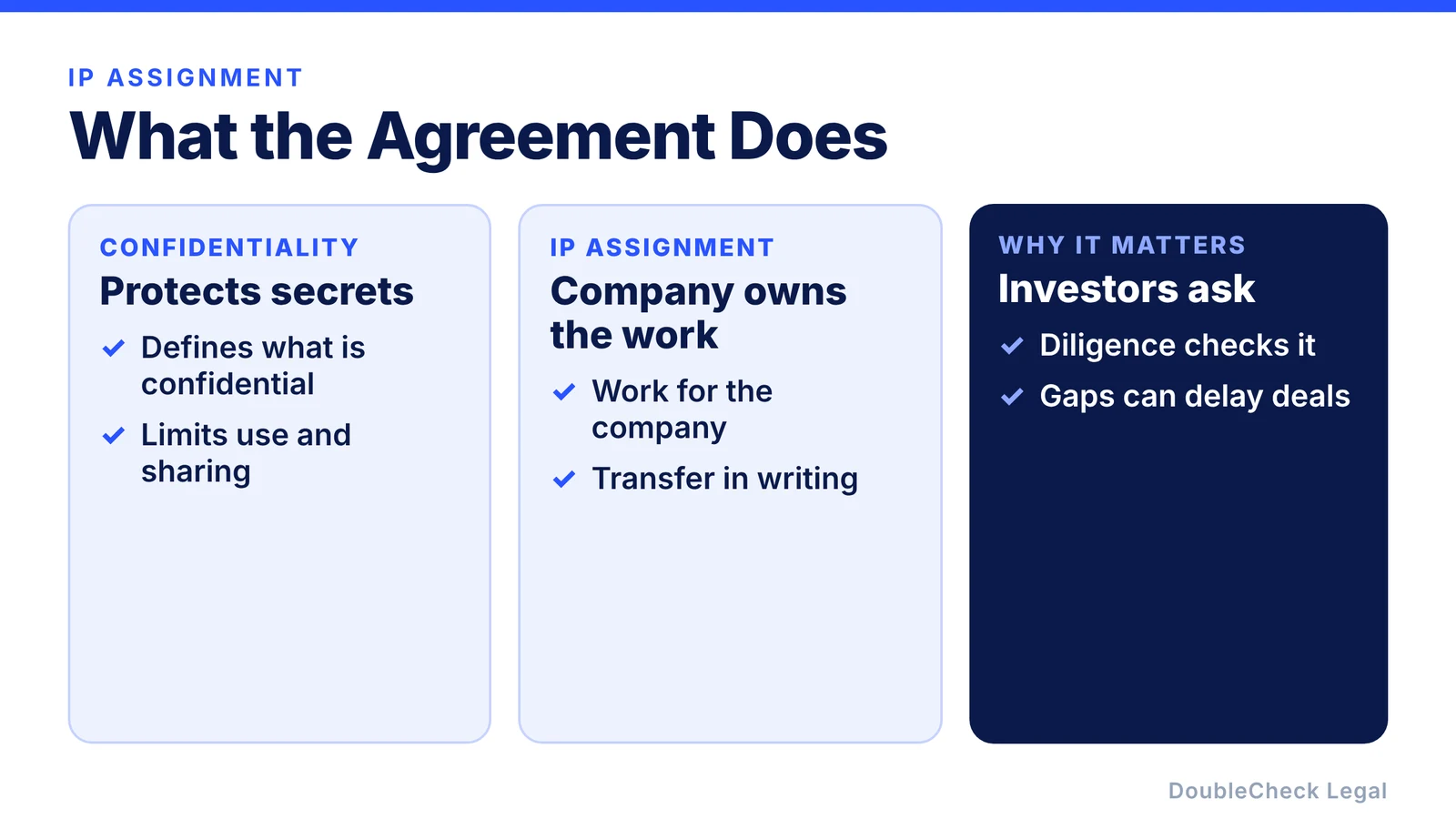
A confidentiality and IP assignment agreement does two things. It keeps the company’s confidential information protected, and it says the work a person creates for the company belongs to the company.
Investors look for exactly this. A Series A legal checklist from Allied VC lists proof that founders, employees, and contractors assigned their IP to the company; see our legal due diligence checklist.
2. Who should sign one
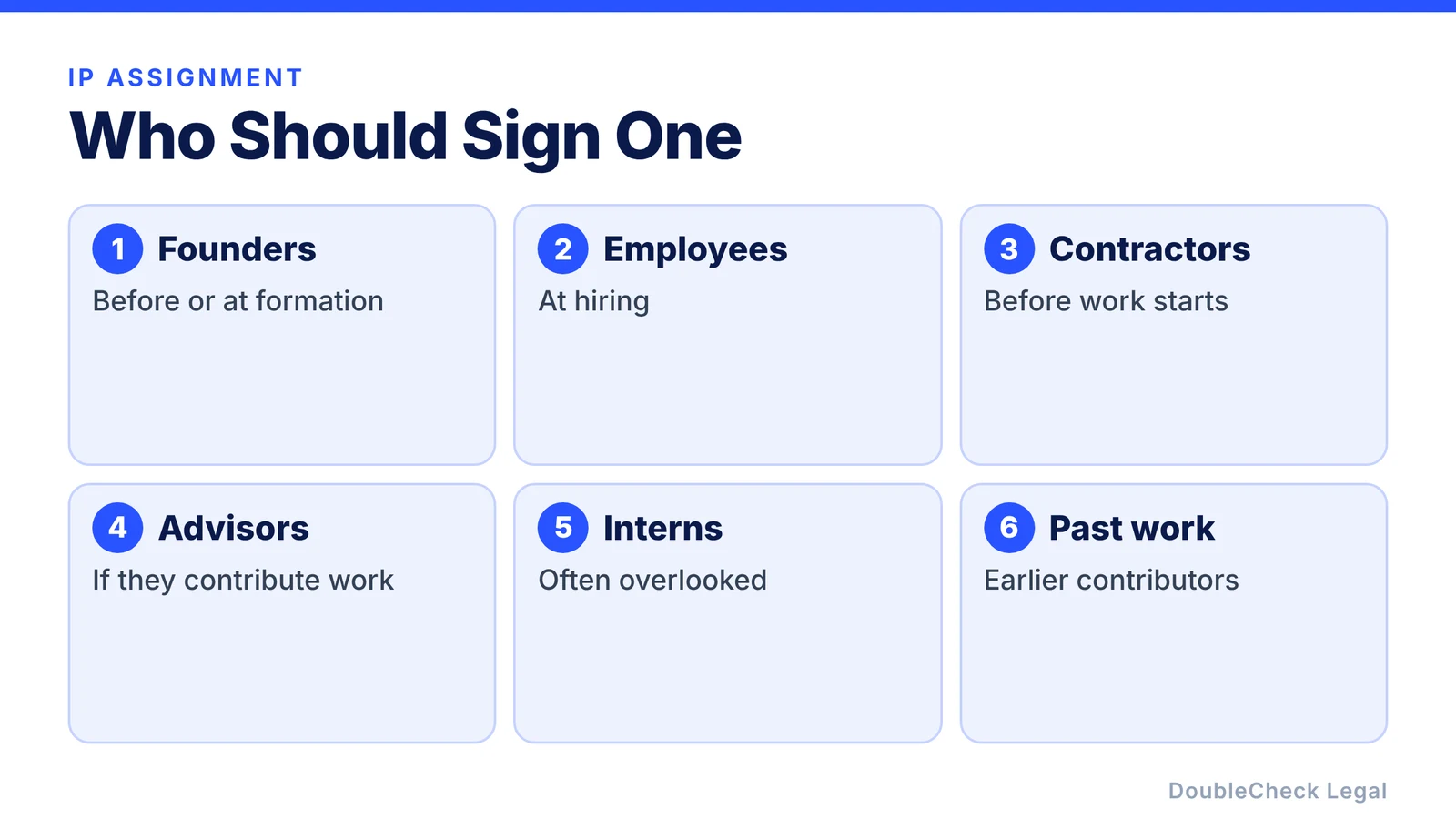
Founders, employees, and contractors are the core. Do not forget advisors who contribute work, interns, and anyone who helped before the company existed. Get signatures before the work starts where possible.
3. Assign, don’t just promise
The wording matters. An agreement that only promises to assign IP in the future is weaker than one that assigns it. Past work and pre-incorporation work should be covered too. Have counsel check the language for your state.
4. Seven checks
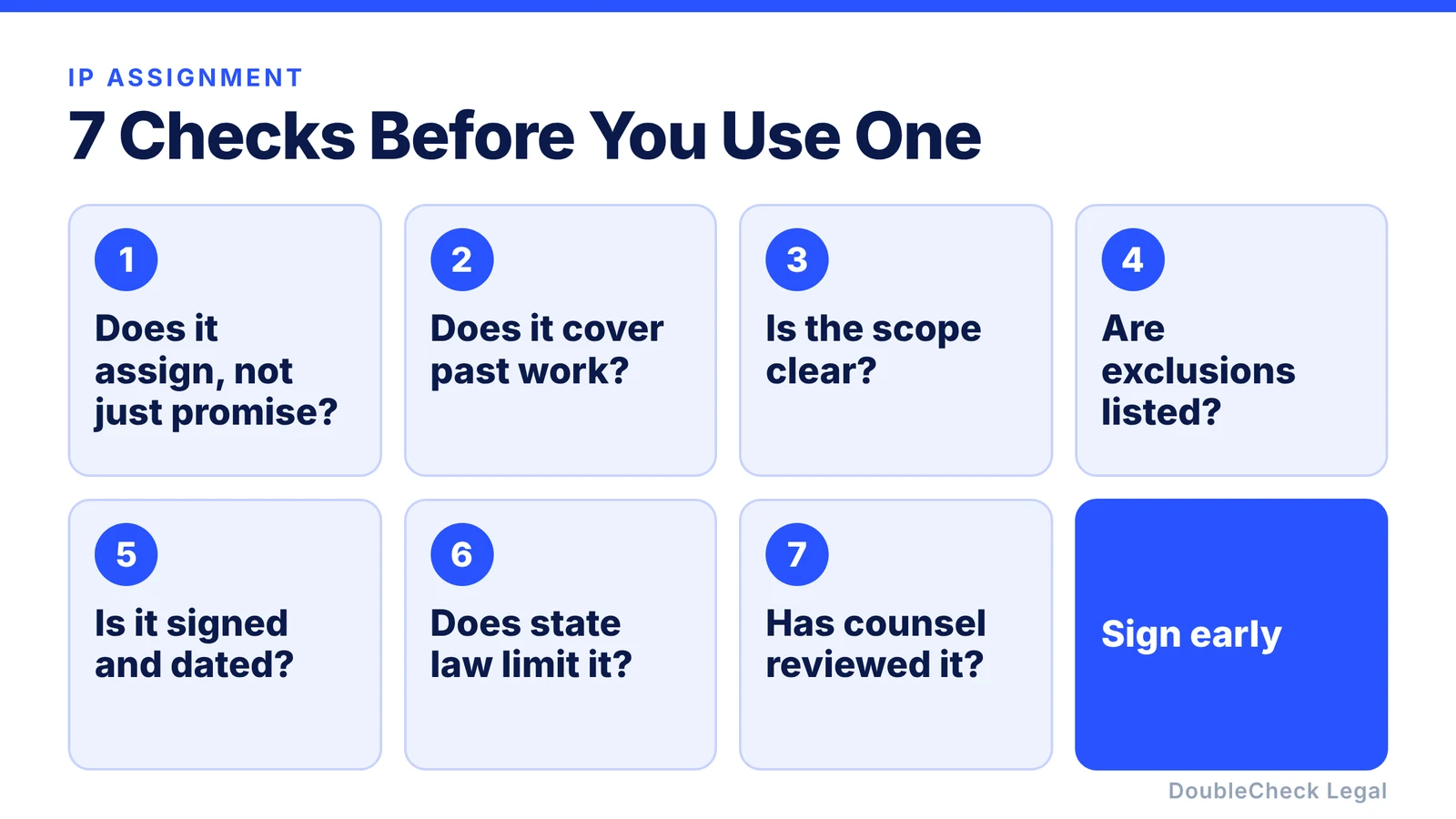
Also check state-law limits on what an employee agreement can claim, which vary. See AI-generated code and IP for the issues around AI-assisted work.
5. Where AI helps
AI can draft a first version and explain each clause. Verify it against your state’s rules and your situation, and get counsel review before you roll it out to your team. Related: draft a job offer letter with AI, how to write a freelance contract.
6. Where DoubleCheck fits
DoubleCheck is built for businesses that start legal work with AI. Bring your question or draft, use an AI-first workflow to understand and verify it, and when professional advice is warranted, you can connect with an independent attorney. Attorneys on DoubleCheck are independent professionals; an attorney-client relationship forms only if an attorney accepts your engagement.
Source for the diligence point: Allied VC: Series A Funding Legal Checklist.
FAQ
What is an IP assignment agreement?
An agreement under which a person transfers ownership of work they create for the company to the company.
Who should sign one?
Founders, employees, and contractors, and potentially advisors, interns, and earlier contributors.
Why do investors ask for IP assignments?
They want proof that the company owns the intellectual property it relies on.
Can I use an AI-drafted version?
As a first draft, yes. Verify it for your state and get counsel review before rolling it out.
General information only. This article is not legal, tax, investment, or accounting advice.