SAFE vs. Convertible Note: What Founders Should Compare Before Signing
Both a SAFE and a convertible note delay the valuation question. Here is how they differ and what to check before you sign.
Key takeaways:
- Both let an investor fund now and receive equity later.
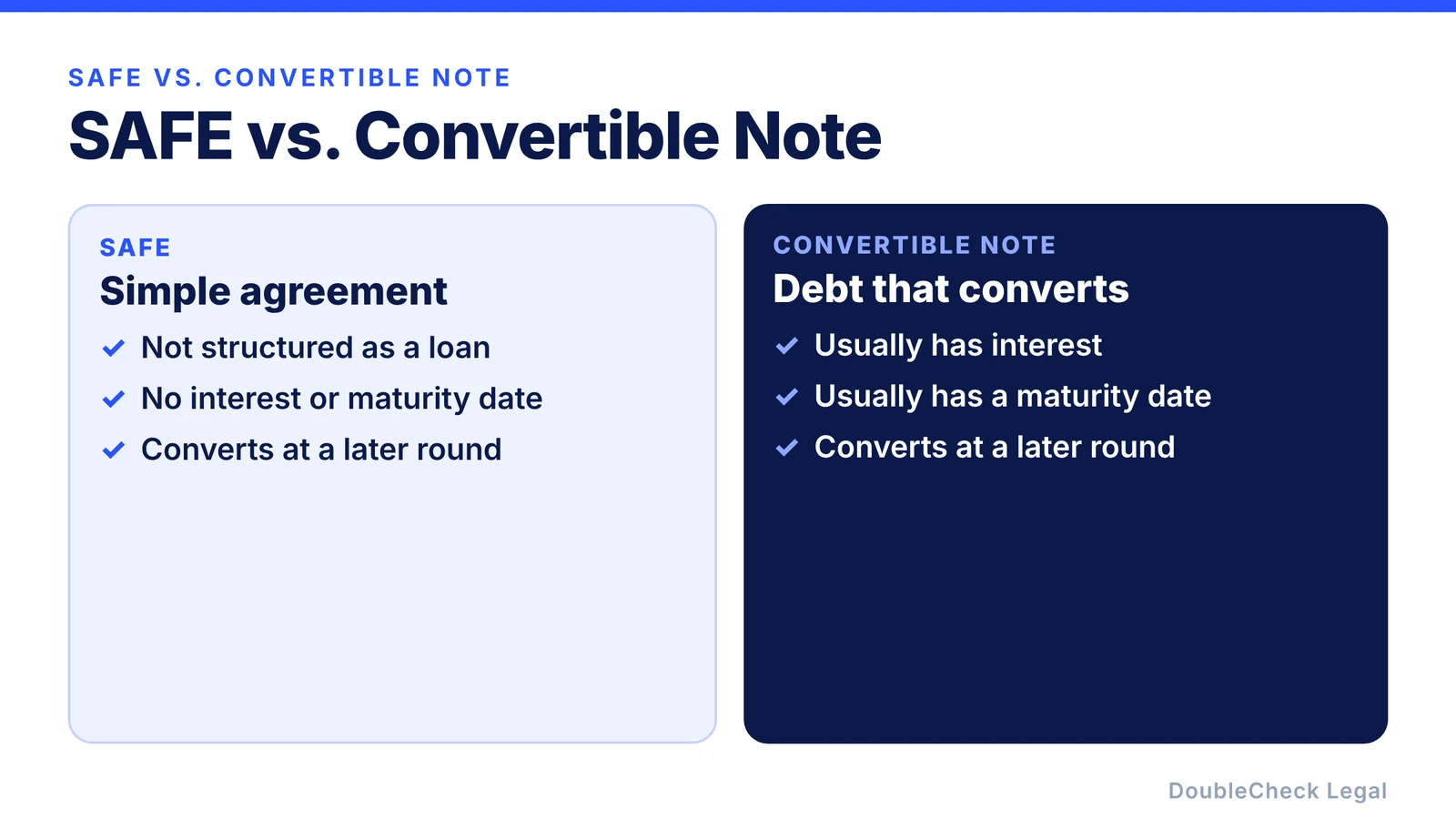
- A SAFE is generally not a loan, with no interest or maturity date; a note is debt that usually has both.
- Compare the cap, discount, MFN, interest, maturity, and conversion trigger.
- Model dilution across scenarios and consider legal review of financing documents.
Choosing between a SAFE and a note is mostly about the structure around the promise of equity.
1. What both instruments are trying to do
Early-stage startups often raise money before they are ready to set a company valuation. A SAFE (simple agreement for future equity) and a convertible note both let an investor put money in now and receive equity later, usually when the company raises a priced round.
The difference is the structure around that promise.
Our earlier guide on what a SAFE agreement is covers the basics. This article is about comparing it with a note.
2. SAFE: the simple version
A SAFE is an agreement giving an investor the right to receive equity in the future, on specified events. It is generally not structured as a loan, so it typically has no interest and no maturity date. Standard SAFE forms are published by Y Combinator, though terms in any specific document can differ.
3. Convertible note: the debt version
A convertible note is a loan that is expected to convert into equity. Because it is debt, it typically includes interest and a maturity date, when the note comes due if it has not converted. That creates a repayment question that SAFEs generally avoid, which is why founders should read the maturity terms carefully.
4. Six terms to compare
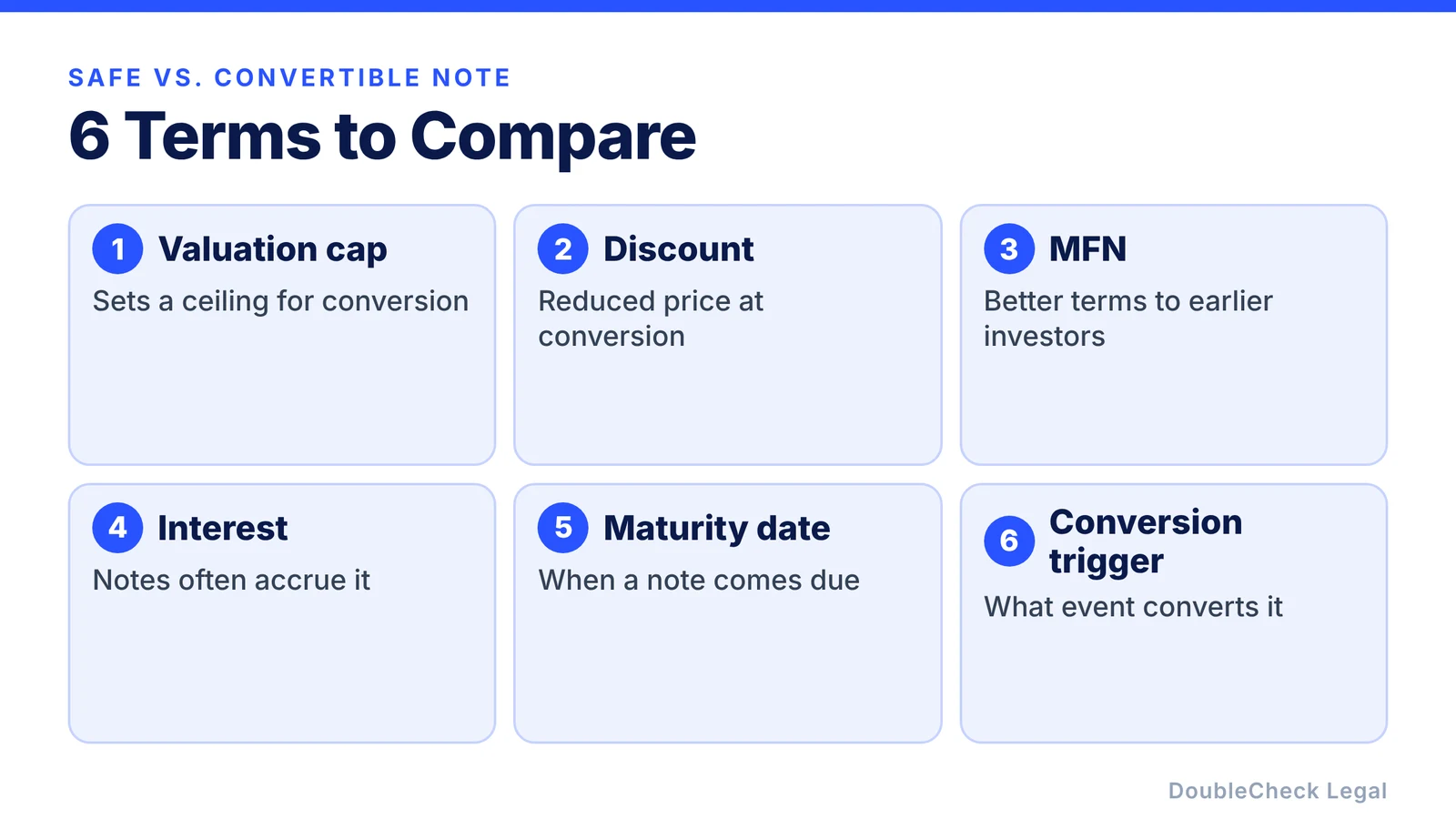
- Valuation cap: a ceiling on the valuation used for conversion.
- Discount: a reduced price compared with new-round investors.
- MFN (most favored nation): the investor may get better terms later offered to others.
- Interest: common on notes, generally not on SAFEs.
- Maturity date: relevant for notes.
- Conversion trigger: the event that converts the instrument, such as a priced equity round.
Read the actual wording in your document. The names are similar across deals, but the details differ.
5. Dilution: model it before you sign
Several SAFEs and notes with different caps can stack up. Before you sign another, build a simple spreadsheet showing how your ownership changes at conversion under a few funding scenarios. If the result surprises you, slow down. For how founder stock is structured alongside this, see co-founder vesting explained.
6. Seven questions before you sign
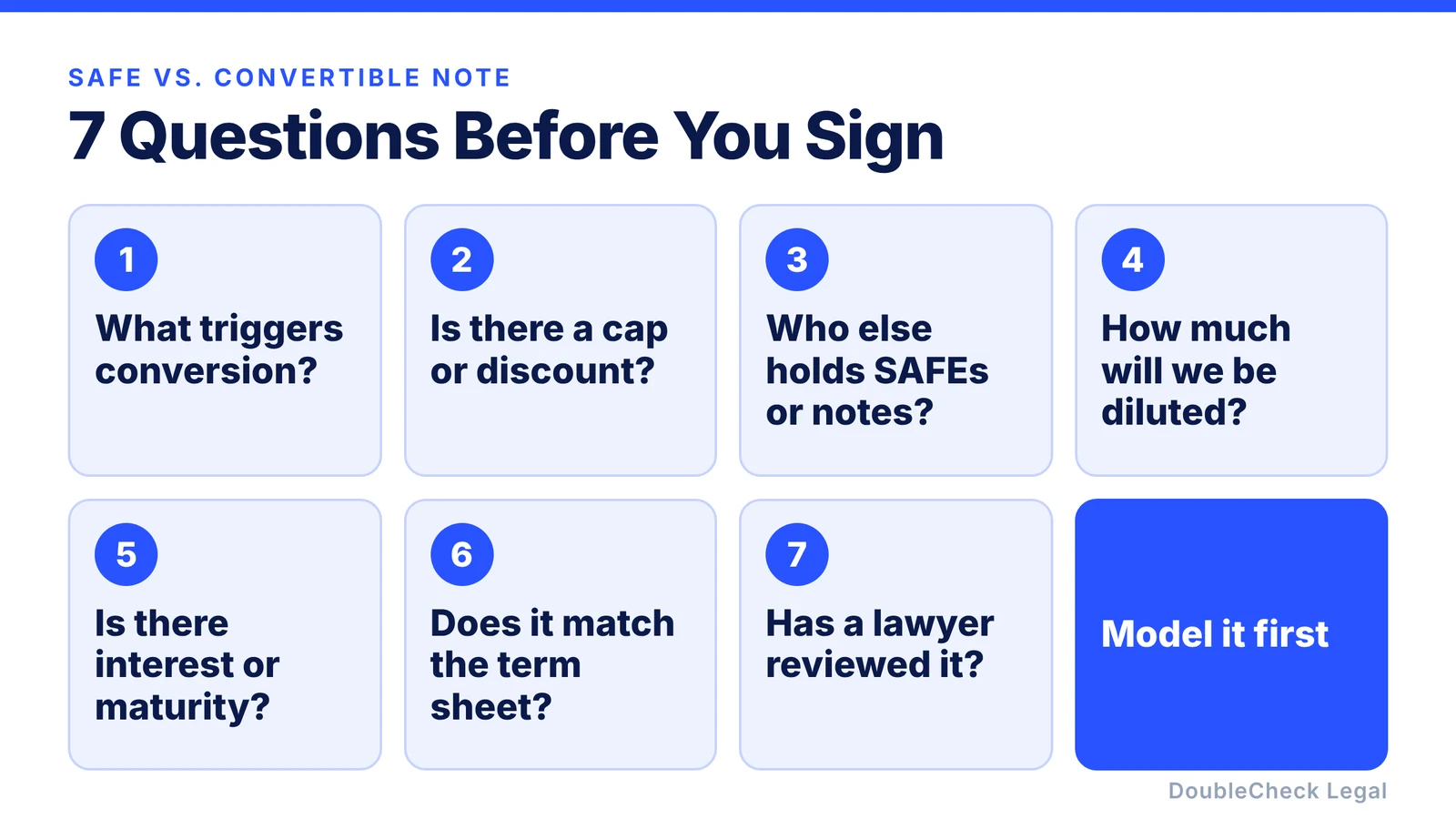
Using AI to explain each clause is a good start; see AI contract review for small business. For financing documents, though, a professional review is usually worth it because the terms affect ownership for years.
7. Where DoubleCheck fits
DoubleCheck is built for businesses that start legal work with AI. Bring your question or draft, use an AI-first workflow to understand and verify it, and when professional advice is warranted, you can connect with an independent attorney. Attorneys on DoubleCheck are independent professionals; an attorney-client relationship forms only if an attorney accepts your engagement.
FAQ
What is the difference between a SAFE and a convertible note?
A SAFE is generally not structured as a loan and typically has no interest or maturity date. A convertible note is debt that usually has both.
What is a valuation cap?
A ceiling on the valuation used when a SAFE or note converts into equity.
Do SAFEs have interest?
Generally no. Notes commonly do.
Should I have a lawyer review a SAFE or note?
Financing documents affect ownership for years, so professional review is usually worth considering, especially for non-standard terms.
General information only. This article is not legal, tax, investment, or accounting advice.