SAFE Review: Seven Things to Check Before You Sign
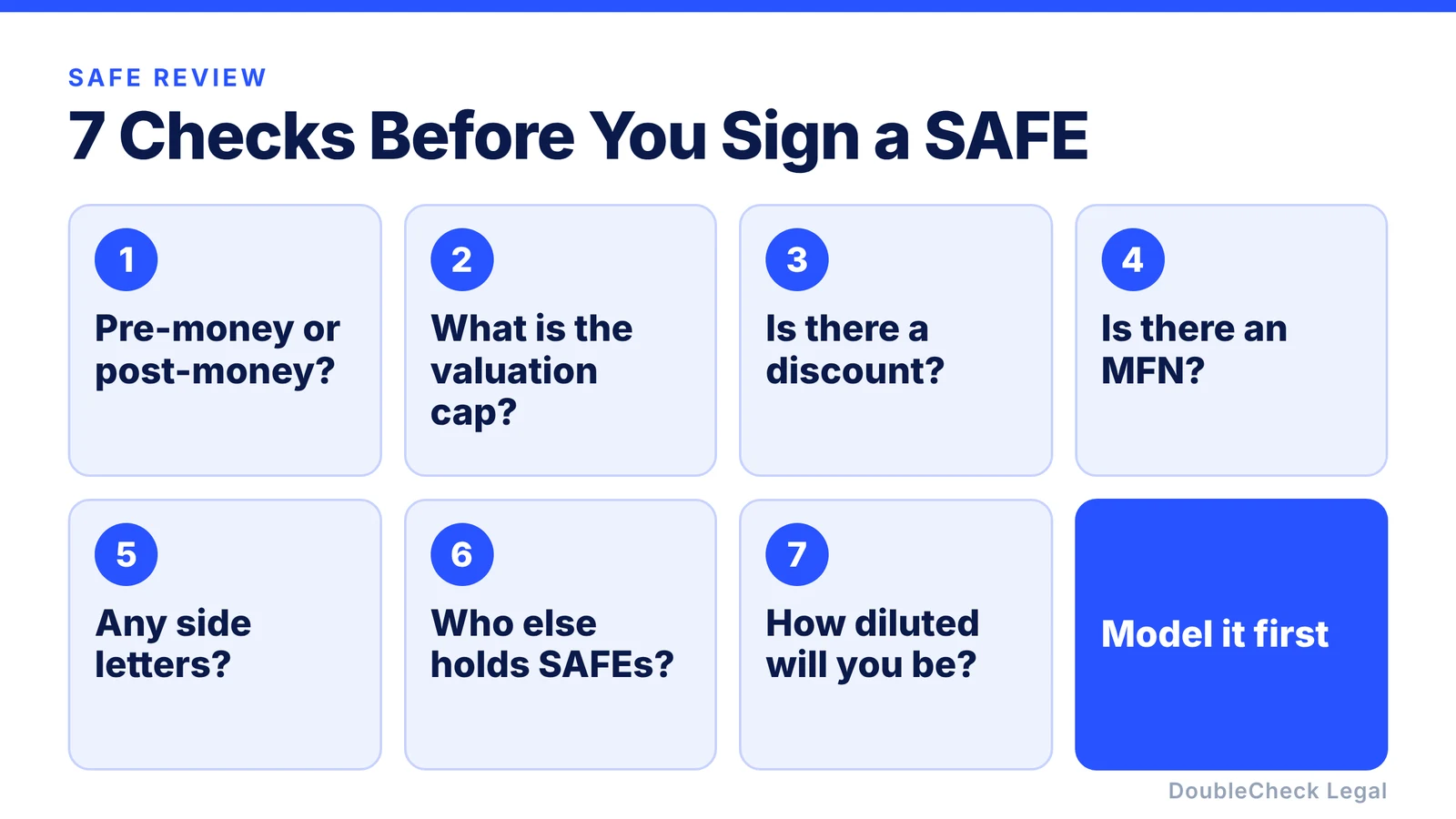
A SAFE looks short, but its terms decide your ownership later. Here are seven checks.
Key takeaways:
- Check whether the SAFE is pre-money or post-money, since it affects dilution.
- Check the valuation cap, discount, and MFN.
- Look for side letters and extra rights.
- Model what happens when several SAFEs convert, and consider legal review.
A SAFE is short. The details are not.
1. Reviewing a SAFE someone sent you
An investor sends you a SAFE and says it is “standard.” Before you sign, review it. This article is about the review step; for the basics see what a SAFE agreement is and for the comparison with notes see SAFE vs. convertible note.
2. Pre-money or post-money?
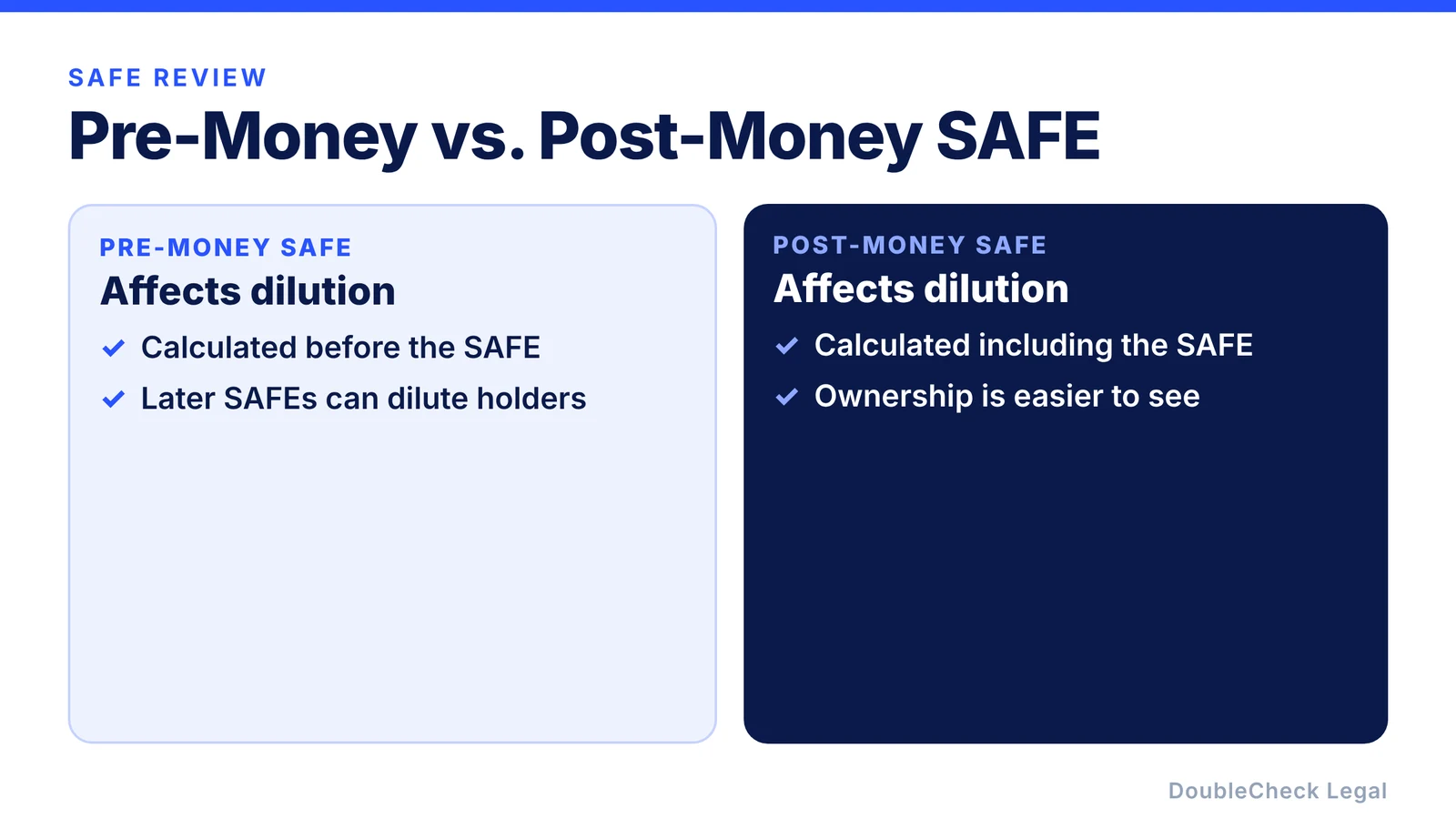
Per Carta, a SAFE can be post-money or pre-money, which affects investor dilution. Check which one you are signing, because the ownership math differs.
3. Cap, discount, and MFN
Check whether there is a valuation cap, a discount, or an MFN (most favored nation) right, and what number each uses. These determine how many shares the investor receives when the SAFE converts.
4. Side letters and extras
Look for side letters or extra rights outside the SAFE, such as information rights or pro rata rights. A short, standard-looking SAFE can arrive with a longer side letter that changes the deal.
5. When SAFEs stack up
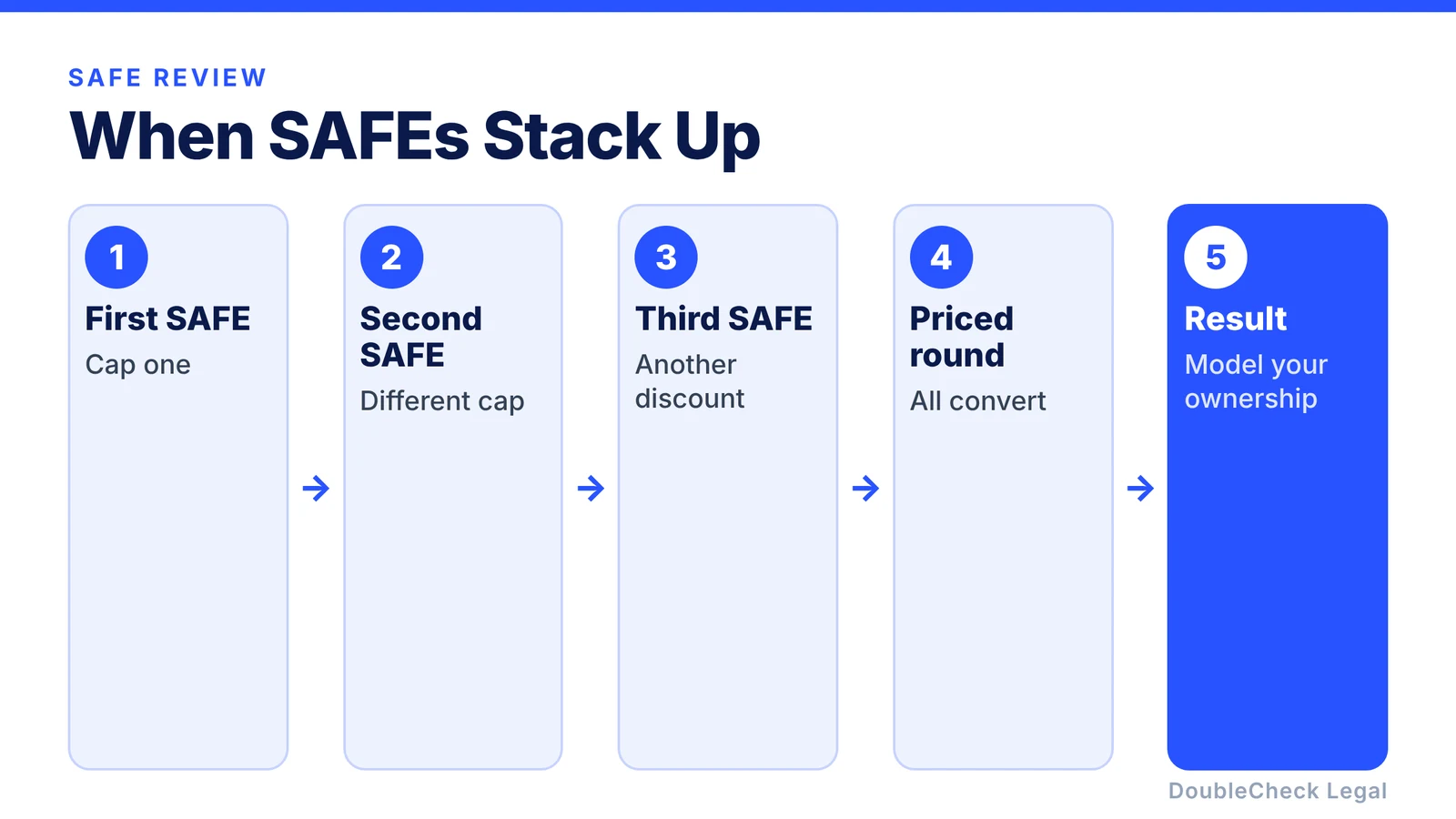
Each additional SAFE on different terms can change your ownership at conversion. Build a simple model before you sign another one. See also the funding stages guide.
6. Use AI, then verify
AI can explain each term and draft questions for the investor. Verify the numbers against the document, and consider legal review because the terms affect ownership for years.
7. Where DoubleCheck fits
DoubleCheck is built for businesses that start legal work with AI. Bring your question or draft, use an AI-first workflow to understand and verify it, and when professional advice is warranted, you can connect with an independent attorney. Attorneys on DoubleCheck are independent professionals; an attorney-client relationship forms only if an attorney accepts your engagement.
Source: Carta: Seed Funding.
FAQ
What should I check before signing a SAFE?
Pre- or post-money, the valuation cap, any discount, MFN rights, side letters, who else holds SAFEs, and your resulting dilution.
What is the difference between pre-money and post-money SAFEs?
Per Carta, a SAFE can be post-money or pre-money, which affects investor dilution.
Can multiple SAFEs cause trouble?
Several SAFEs on different terms can change your ownership at conversion, so model it.
Should a lawyer review a SAFE?
Because it affects ownership for years, legal review is worth considering.
General information only. This article is not legal, tax, investment, or accounting advice.