How to Review an NDA You Received: Seven Checks Before You Sign
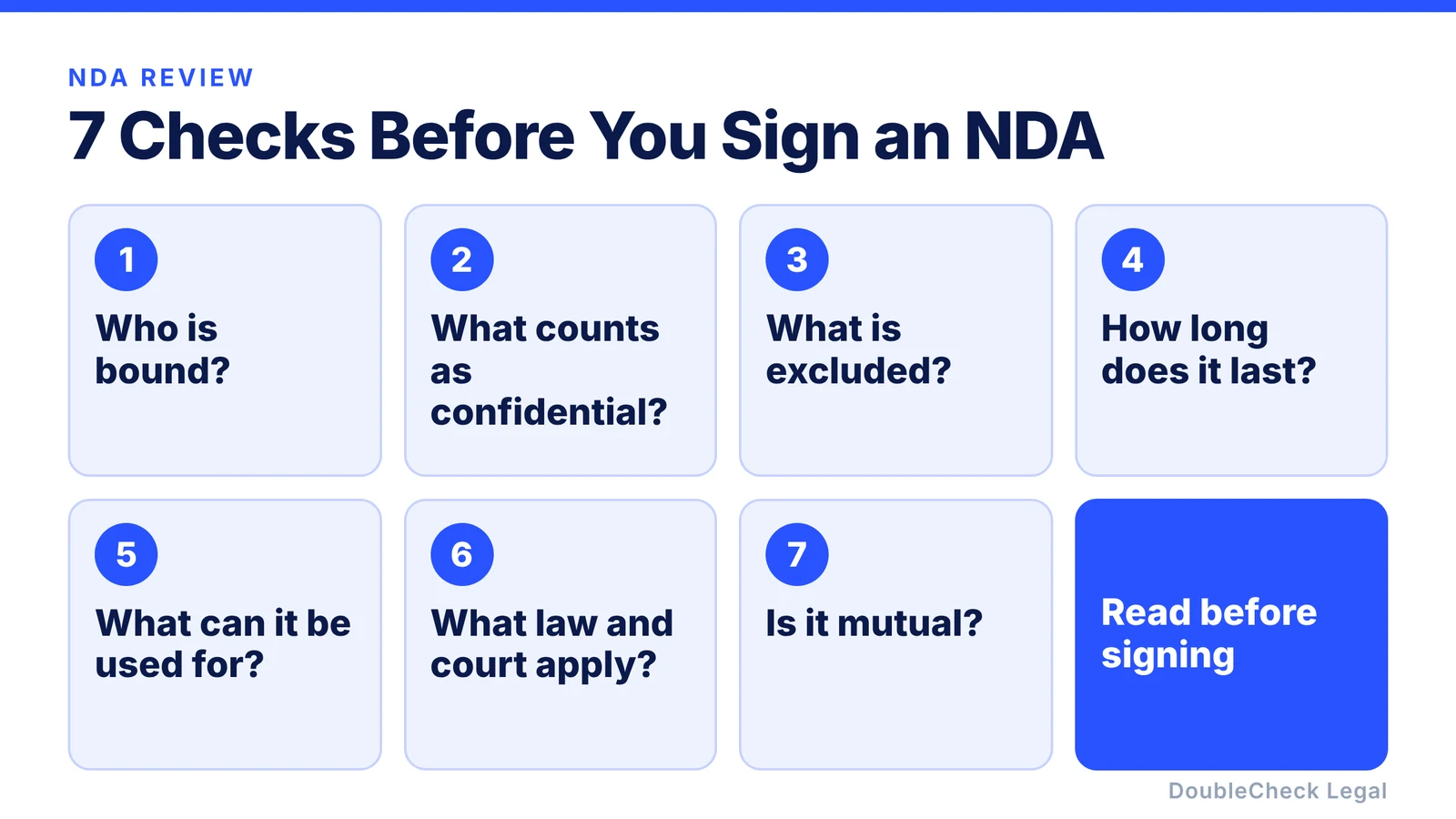
Someone sent you an NDA and wants it signed. Here are seven checks to run first.
Key takeaways:
- Check who is bound and whether the NDA is mutual or one-way.
- Look at the definition of confidential information and the standard exclusions.
- Check duration, permitted use, governing law, and venue.
- Use AI to summarize, verify against the text, and escalate unusual or large deals.
Signing an NDA without reading it is how people end up bound by terms they did not expect.
1. Reviewing an NDA is different from writing one
Our guide on how to write an NDA covers drafting your own. This article is for the moment someone else sends you theirs and says “can you sign this today?”
Do not skip the read just because it is “standard.”
2. Who is bound, and is it mutual?
Check who the parties are, including affiliates. Then check whether it is mutual or one-way.
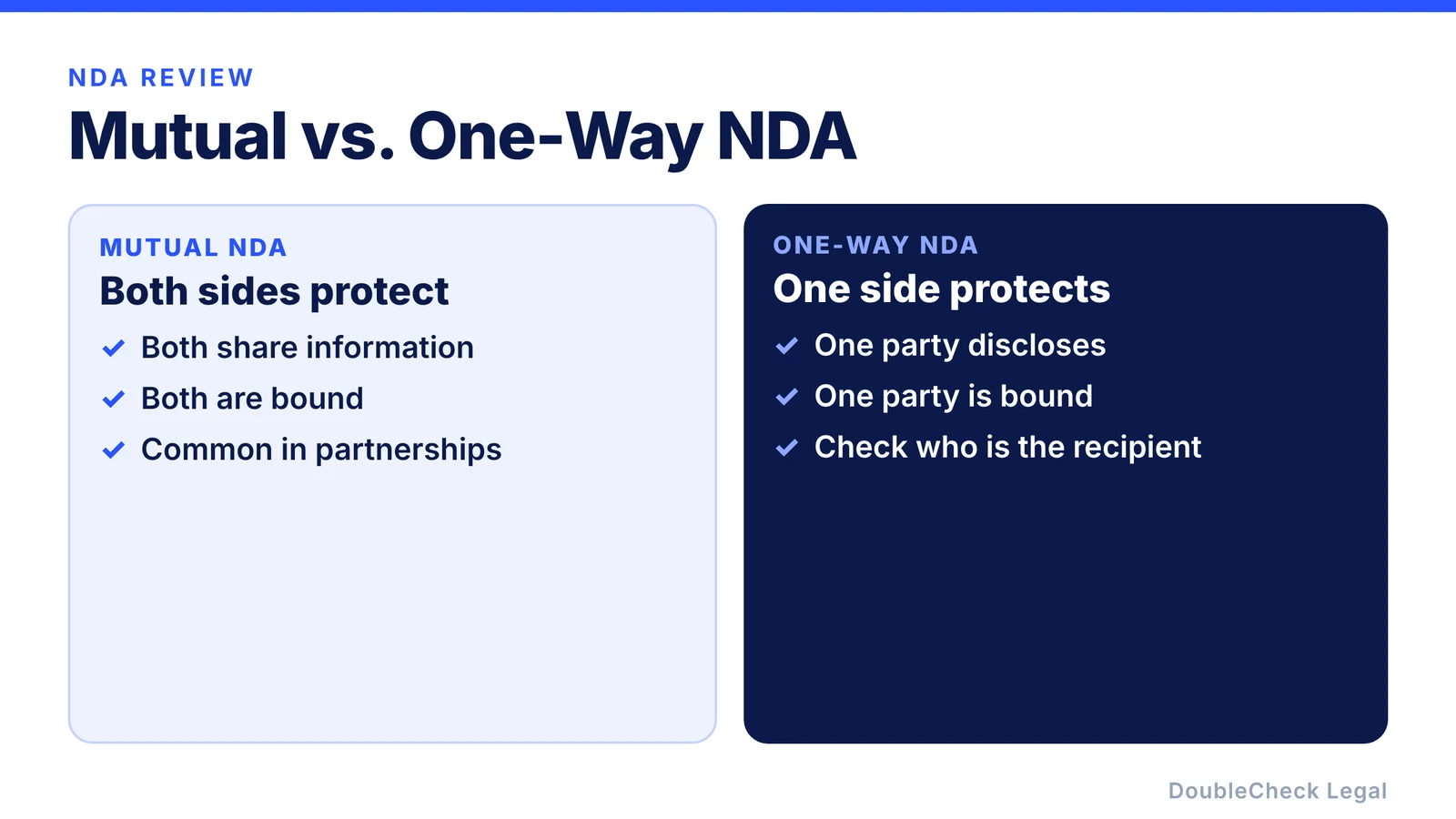
If you will also share sensitive information, a one-way NDA that protects only the other side is a problem.
3. What counts as confidential, and what does not
A very broad definition (“everything you learn”) can be hard to comply with. Look for standard exclusions such as information that is already public, already known to you, independently developed, or received from a third party without restriction.
4. Duration and permitted use
How long do the confidentiality duties last? Some run for a fixed number of years, others without end. And check the permitted purpose: the NDA should say what you may use the information for, such as evaluating the deal.
5. Governing law and where disputes go
Look for the governing law and the court or arbitration forum. A distant venue can make a dispute costly. Also scan for unusual terms such as non-solicitation or non-compete language hiding in an NDA.
6. AI first, then your judgment
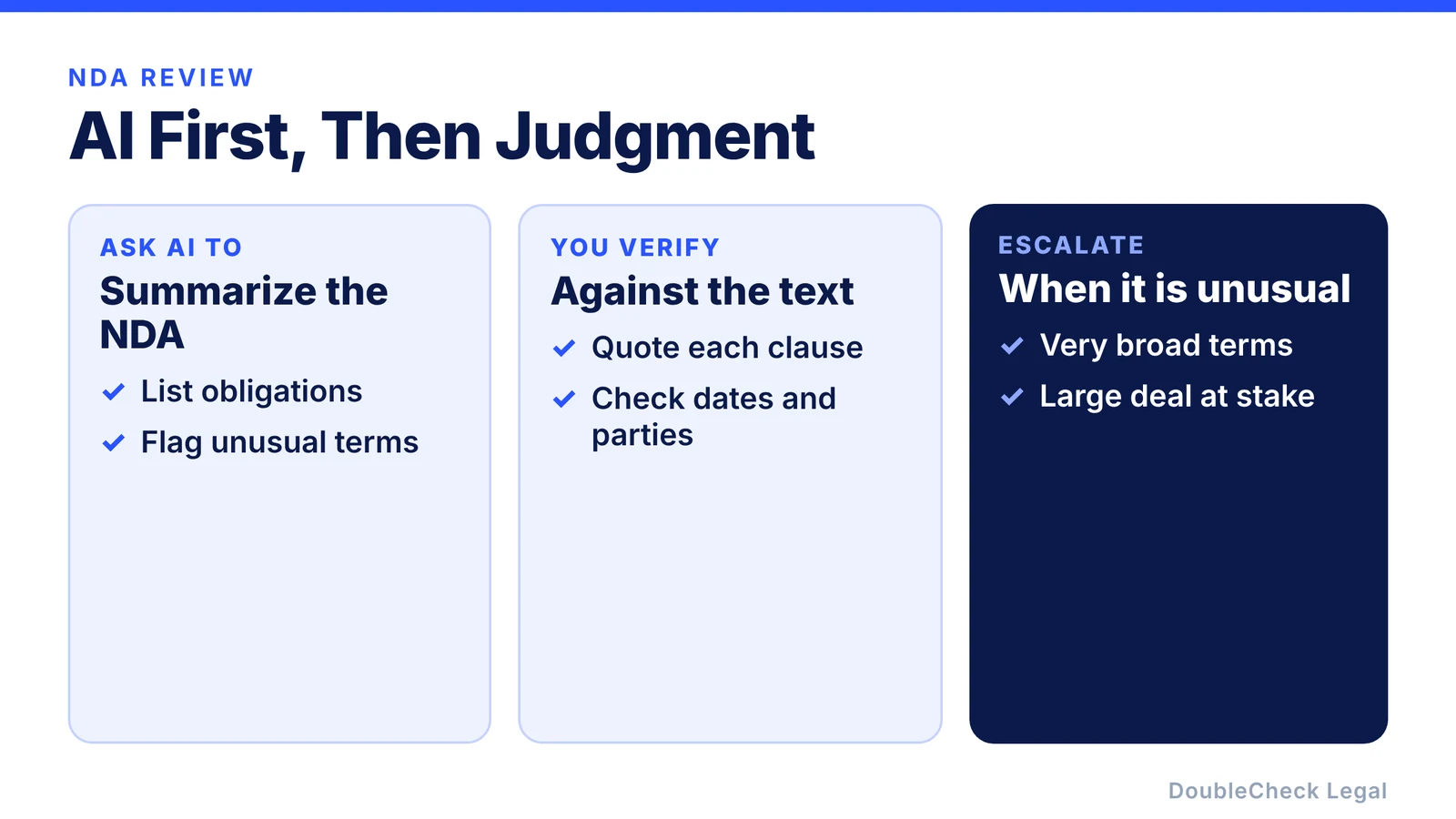
Ask AI to summarize obligations and flag unusual clauses. Then verify each point against the actual text. Escalate when terms are very broad or the deal is large. See verifying AI-generated legal documents and when to hire a lawyer.
7. Where DoubleCheck fits
DoubleCheck is built for businesses that start legal work with AI. Bring your question or draft, use an AI-first workflow to understand and verify it, and when professional advice is warranted, you can connect with an independent attorney. Attorneys on DoubleCheck are independent professionals; an attorney-client relationship forms only if an attorney accepts your engagement.
FAQ
What should I check before signing an NDA?
Who is bound, whether it is mutual, what counts as confidential, exclusions, duration, permitted use, and governing law and venue.
What is the difference between a mutual and one-way NDA?
In a mutual NDA both parties share and are bound. In a one-way NDA only one party is protected.
Can I ask to change an NDA?
Yes. Many NDAs are negotiable, especially on scope, duration, and mutuality.
Can AI review an NDA for me?
AI can summarize and flag unusual terms, but verify against the text and escalate unusual terms or high stakes.
General information only. This article is not legal, tax, investment, or accounting advice.