Startup Funding Stages: Pre-Seed, Seed, Series A, Series B, and What to Prepare
Pre-seed, seed, Series A, Series B: what each stage means, which instruments are common, and what to prepare before you raise.
Key takeaways:
- Seed is usually the first formal round; Carta reports a median seed round of $3.5 million in 2024 and a typical range of about $500,000 to $5 million.
- Convertibles (SAFEs and notes) are common at seed; priced rounds sell preferred stock at a set price.
- Later rounds generally bring heavier paperwork and diligence.
- Update your cap table, sign IP assignments, model dilution, and involve counsel before you raise.
Every funding stage has its own investors, instruments, and paperwork. Knowing what comes next helps you prepare early.
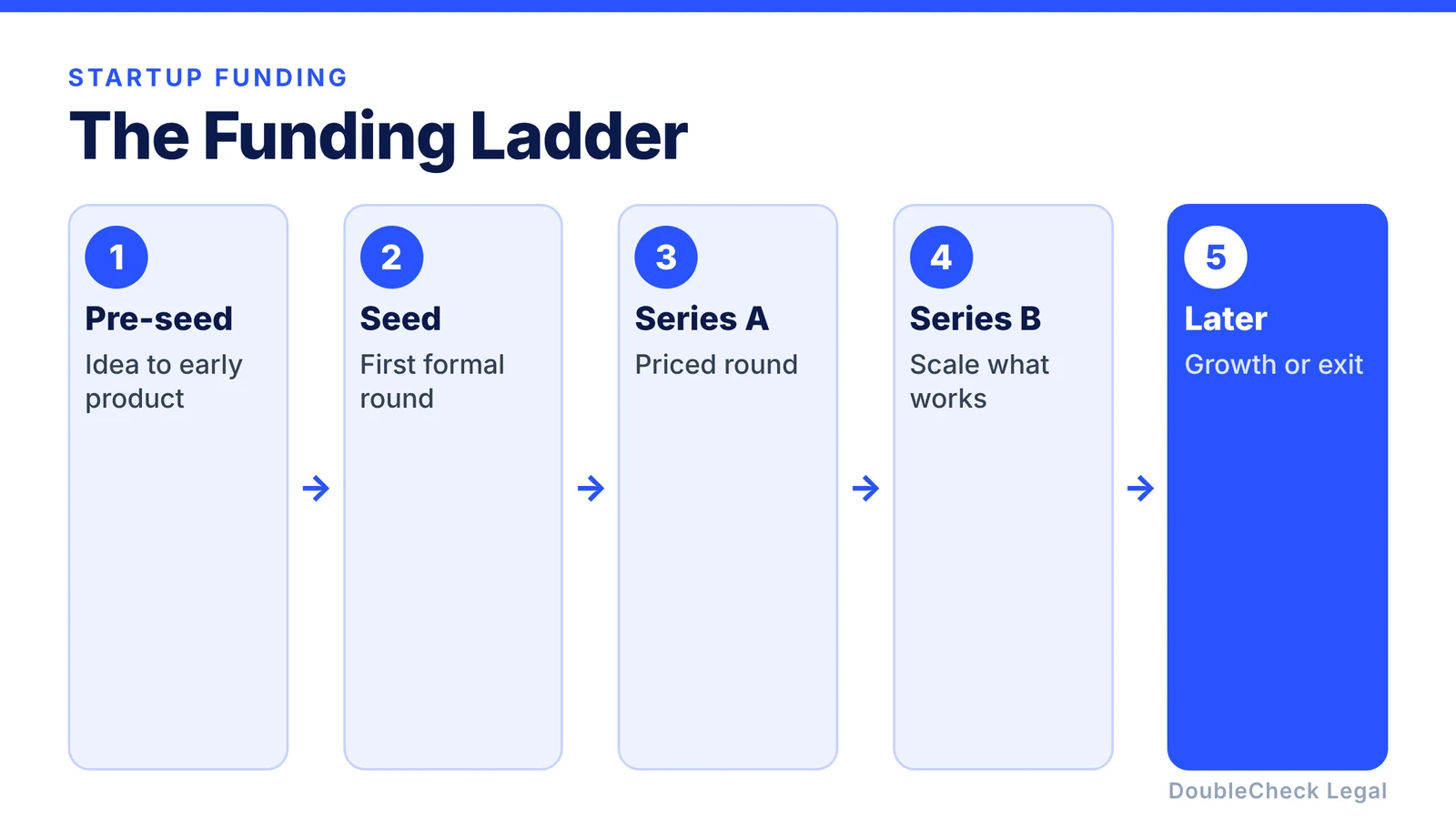
1. The funding ladder
Startups usually raise money in stages. The labels (pre-seed, seed, Series A, Series B, and later) describe roughly how far along the company is and what kind of investor and paperwork you should expect.
The stages are not rigid. Companies skip steps, add “seed extension” rounds, or raise from different investor types at the same stage.
2. Pre-seed and seed
Carta describes a seed round as usually a startup’s first formal institutional round, used to validate the idea and build it into an operating business. Companies are typically ready when they have a product to demo, though they may still need an MVP or proof of concept.
On size, Carta says seed rounds typically range from about $500,000 to $5 million, and reports a median seed round of $3.5 million in 2024. Investors at this stage include angels, venture firms, friends and family, and accelerators.
Pre-seed money is generally earlier and smaller, often from founders’ networks and accelerators. See our guide to launching an AI startup in the U.S..
3. Series A and beyond
A Series A is commonly the first priced round, where investors buy preferred stock at a set price per share. Later rounds (Series B and beyond) generally fund scaling what is working, and the paperwork is typically heavier, with more investor rights and diligence at each step.
Because round sizes and valuations shift from year to year and source to source, check current benchmarks from a source such as Carta before you anchor on a number. We have not included Series A or B dollar figures here for that reason.
4. Three common instruments
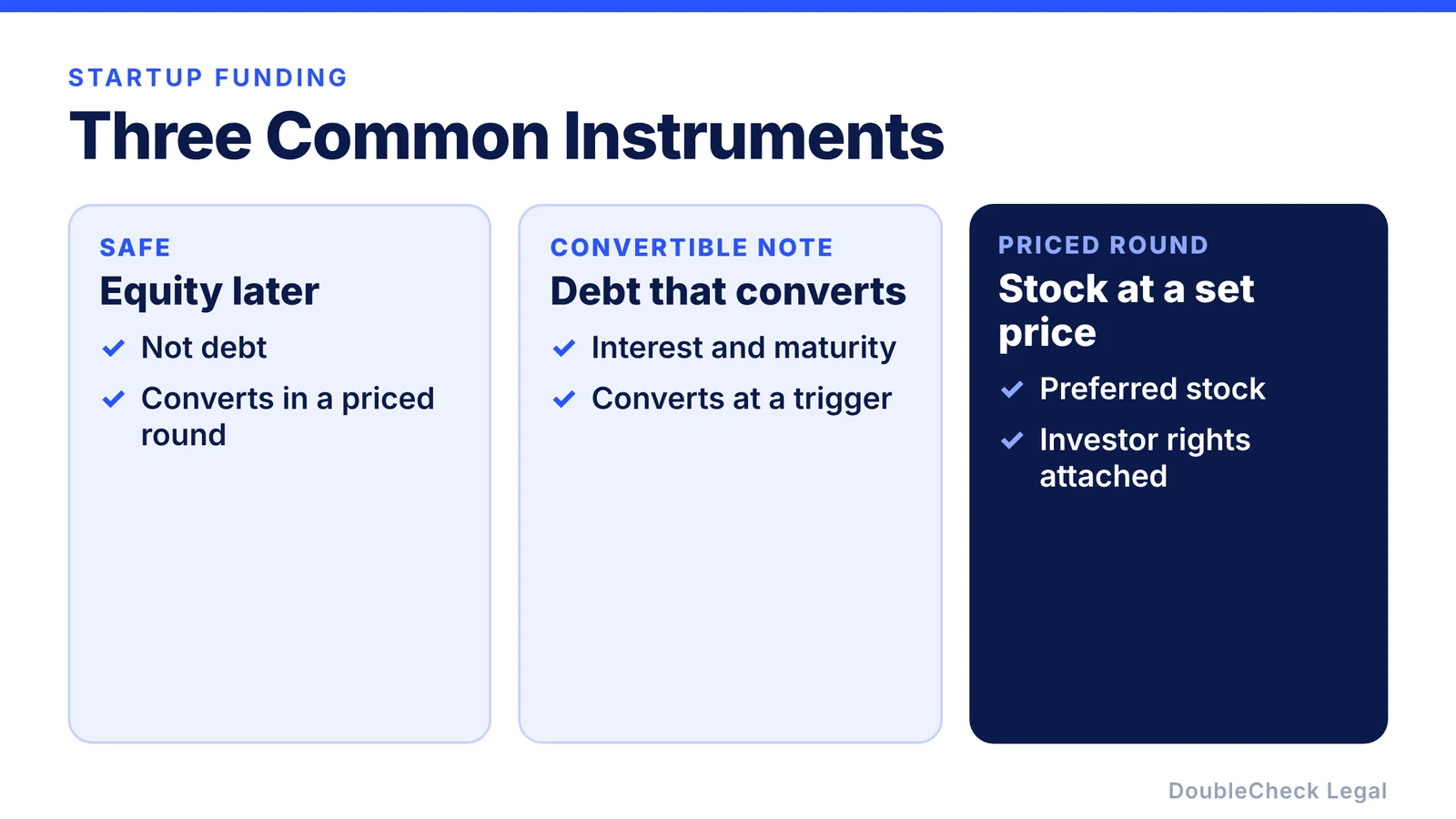
Per Carta: a SAFE is equity, not debt, that converts into stock in a later priced round, and it can be post-money or pre-money, which affects investor dilution. A convertible note is debt that converts into equity at a future event such as a priced round. A priced round sells preferred stock at a set price, and preferred stock can carry rights such as liquidation preference. Carta also says convertibles are most common at seed because they are usually faster and simpler.
Go deeper: SAFE vs. convertible note, reviewing a SAFE before you sign, and NVCA documents for a priced round.
5. Seven things to do before you raise
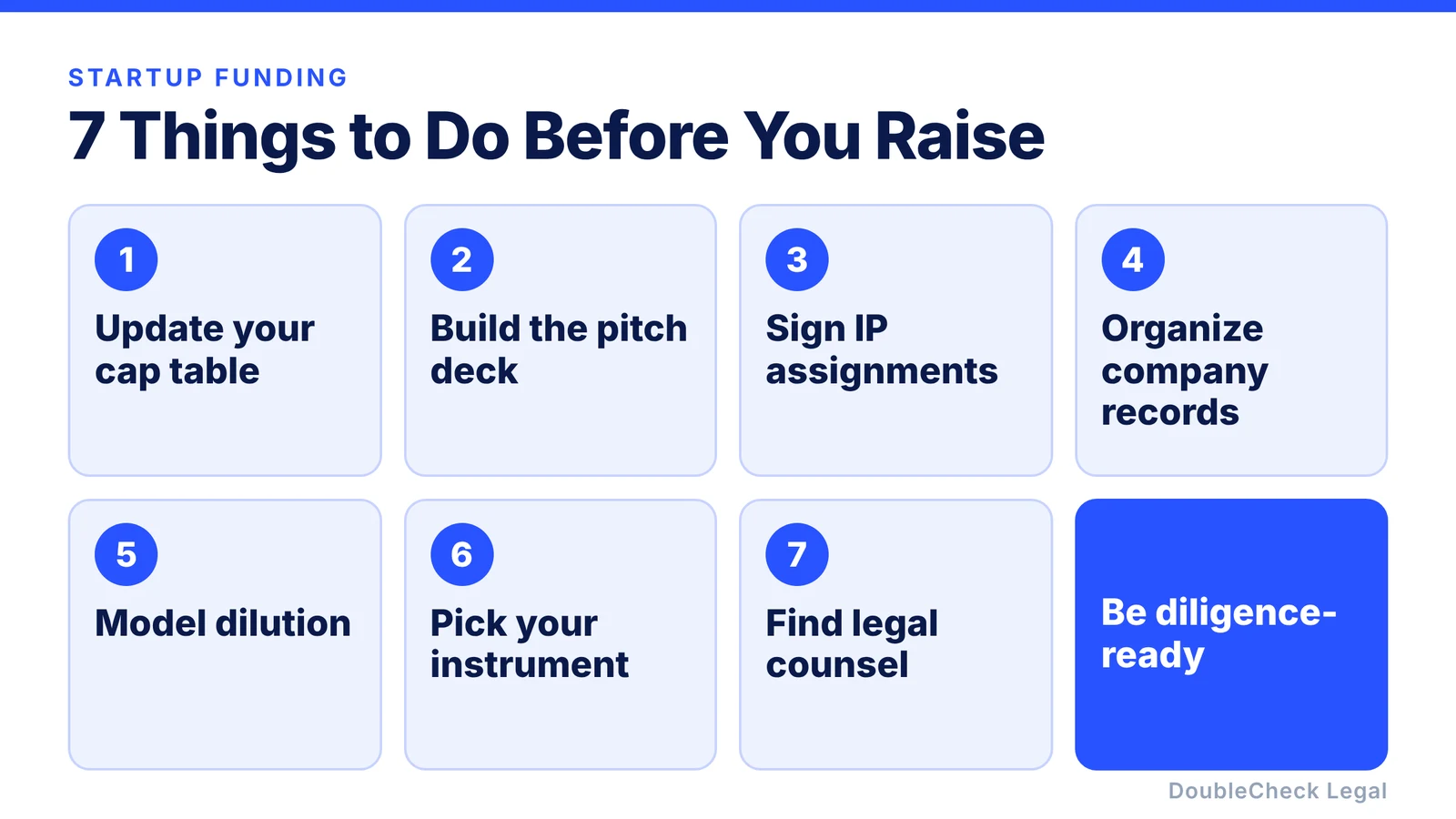
Carta’s process steps include preparing a pitch deck and updating the cap table, modeling dilution for convertible versus priced structures, and involving legal counsel when you receive a term sheet. Add to that the legal housekeeping investors will check; see our Series A legal due diligence checklist and founder vesting.
6. Where AI helps and where it stops
AI is useful for explaining terms, preparing a question list, and comparing scenarios. It should not be your only check on financing documents, because the terms affect ownership for years. Verify numbers and terms against the documents yourself; see verifying AI-generated legal documents.
7. Where DoubleCheck fits
DoubleCheck is built for businesses that start legal work with AI. Bring your question or draft, use an AI-first workflow to understand and verify it, and when professional advice is warranted, you can connect with an independent attorney. Attorneys on DoubleCheck are independent professionals; an attorney-client relationship forms only if an attorney accepts your engagement.
Source: Carta: Seed Funding.
FAQ
What is the difference between pre-seed and seed?
Pre-seed is generally earlier and smaller, often from founder networks and accelerators. Seed is usually the first formal institutional round.
How much is a typical seed round?
Carta says seed rounds typically range from about $500,000 to $5 million, with a median of $3.5 million in 2024.
What is a priced round?
A round where investors buy preferred stock at a set price per share, often starting at Series A.
What should I prepare before fundraising?
Update your cap table, build a pitch deck, sign IP assignments, organize corporate records, model dilution, choose an instrument, and involve counsel.
General information only. This article is not legal, tax, investment, or accounting advice.