NVCA Model Documents Explained: What Is in a Priced Round
Many priced rounds start from the NVCA model documents. Here is what is in the package and how to read it.
Key takeaways:
- The NVCA publishes model documents for venture financings, intended as a starting point to be tailored.
- Core documents include the certificate of incorporation, stock purchase agreement, investors’ rights agreement, voting agreement, and ROFR and co-sale agreement.
- A priced round has more documents and more negotiation than a SAFE round.
- Compare every draft to the term sheet and have an experienced lawyer review.
If your investor’s lawyer sends a stack of documents, this is what you are looking at.
1. What the NVCA model documents are
The National Venture Capital Association (NVCA) publishes model legal documents “to be used in venture capital financings.” Many priced rounds start from these forms. The NVCA says each is intended as a starting point only, to be tailored to your specific requirements.
Understanding the package helps you read a draft from your investor’s counsel without feeling lost.
2. The core financing documents
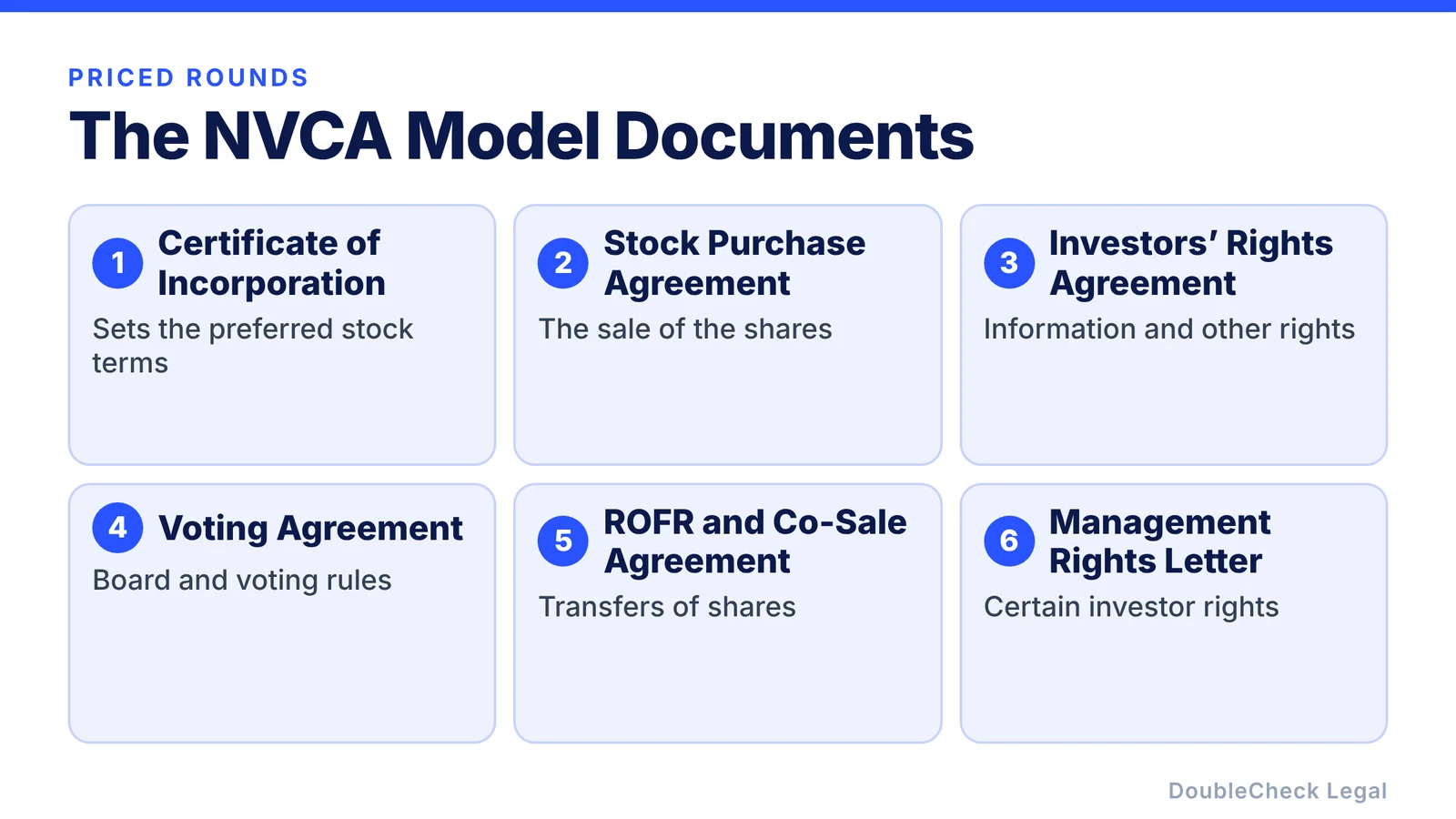
According to the NVCA’s page, the financing documents include:
- Certificate of Incorporation (updated October 2025)
- Stock Purchase Agreement (October 2025)
- Investors’ Rights Agreement (October 2025)
- Voting Agreement (June 2026)
- Right of First Refusal and Co-Sale Agreement (April 2026)
- Management Rights Letter (July 2020)
- Indemnification Agreement (July 2020)
- Model Legal Opinion
In general terms, the certificate of incorporation sets out the preferred stock terms, the stock purchase agreement covers the sale of the shares, and the other agreements address investor rights, voting, and transfers. Always read the actual drafts.
3. SAFE round vs. priced round
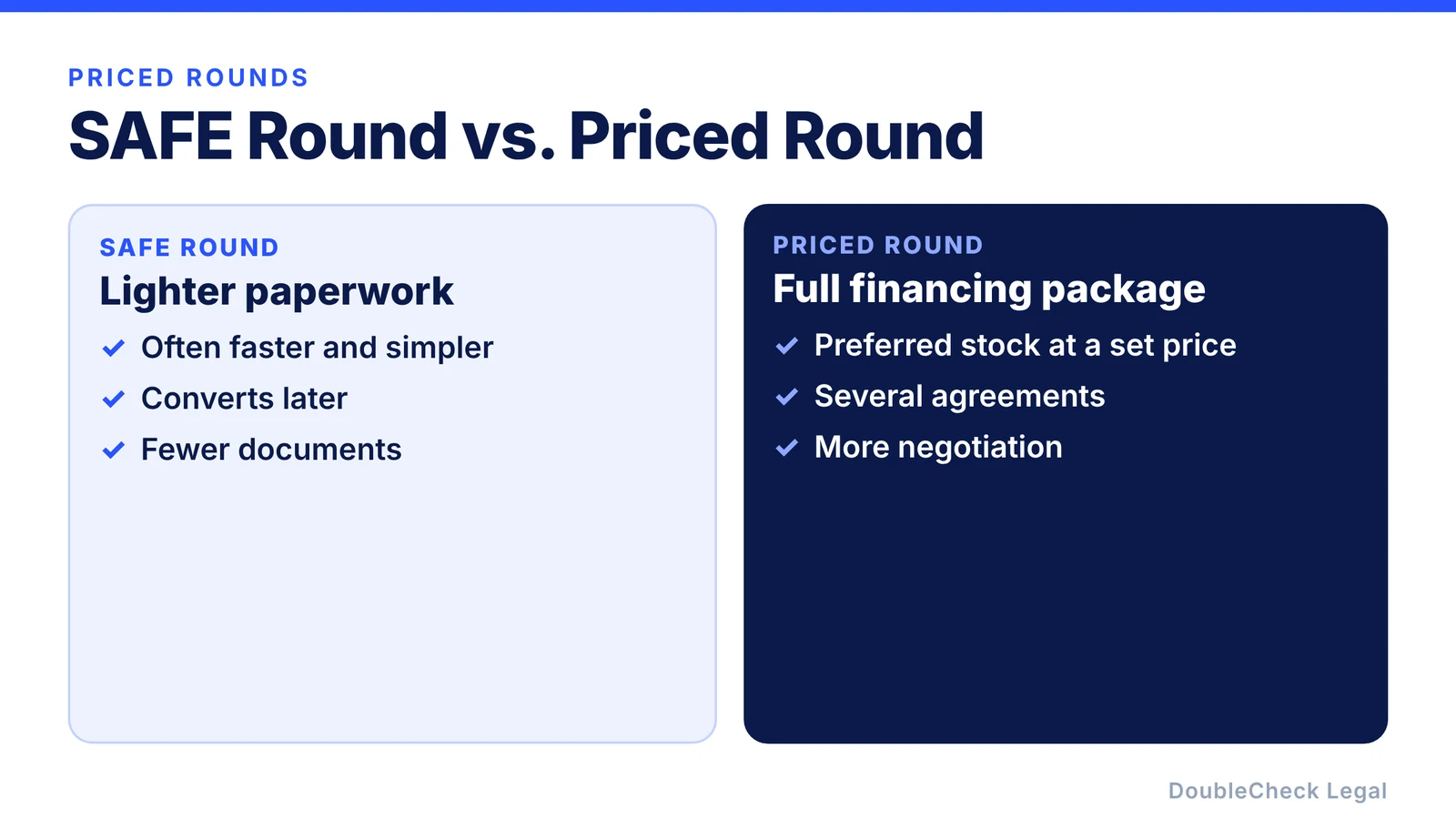
Per Carta, convertibles are usually faster and simpler, which is why they are common at seed. A priced round involves a full set of documents. See SAFE vs. convertible note and startup funding stages.
4. How a priced round usually flows
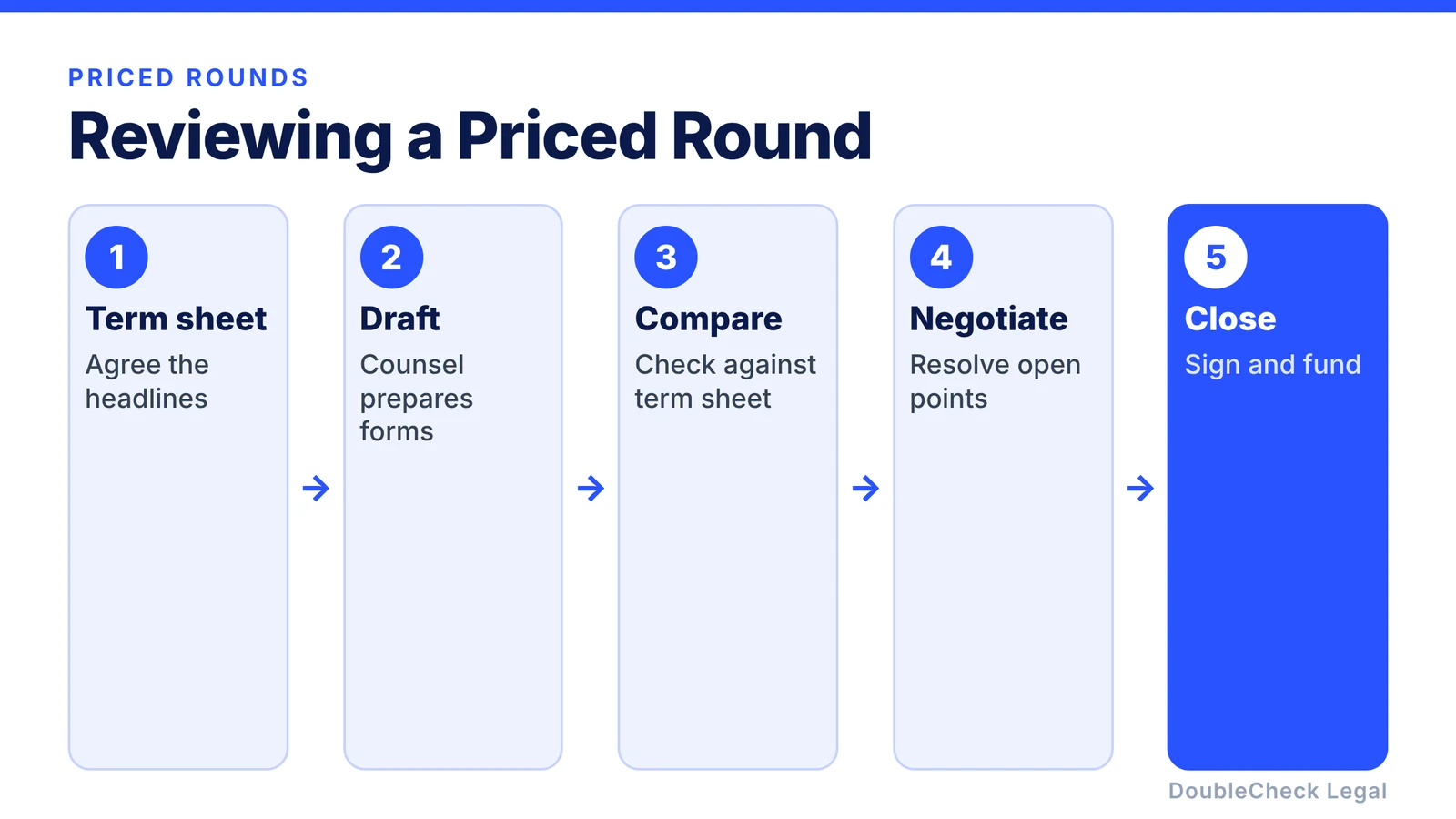
You agree the headline terms in a term sheet, counsel prepares the documents, you compare the drafts to the term sheet, resolve open points, then sign and fund. The comparison step is where careful reading pays off: documents sometimes include terms the term sheet did not mention.
5. Using AI on financing documents
AI can explain a clause in plain English, make a question list, and compare a draft to the term sheet. It cannot negotiate for you or take responsibility for the result. Because these documents control ownership and governance, have a lawyer experienced in venture financings review them. See AI contract review for small business for the general workflow.
6. Where DoubleCheck fits
DoubleCheck is built for businesses that start legal work with AI. Bring your question or draft, use an AI-first workflow to understand and verify it, and when professional advice is warranted, you can connect with an independent attorney. Attorneys on DoubleCheck are independent professionals; an attorney-client relationship forms only if an attorney accepts your engagement.
Source: NVCA: Model Legal Documents (document list and update dates as shown on that page).
FAQ
What are the NVCA model documents?
Industry model documents published by the National Venture Capital Association for use in venture capital financings, intended as a starting point.
Which documents are in a standard priced round?
Typically a certificate of incorporation, stock purchase agreement, investors’ rights agreement, voting agreement, and ROFR and co-sale agreement, among others.
Do I have to use the NVCA forms?
No. They are models. Many deals start from them and tailor the terms.
Should a lawyer review my financing documents?
Because they affect ownership and control for years, review by a lawyer experienced in venture financings is usually worth considering.
General information only. This article is not legal, tax, investment, or accounting advice.