Series A Legal Due Diligence Checklist: What Investors Review
Investors verify your legal house before a priced round. Here are the six areas to get in order first.
Key takeaways:
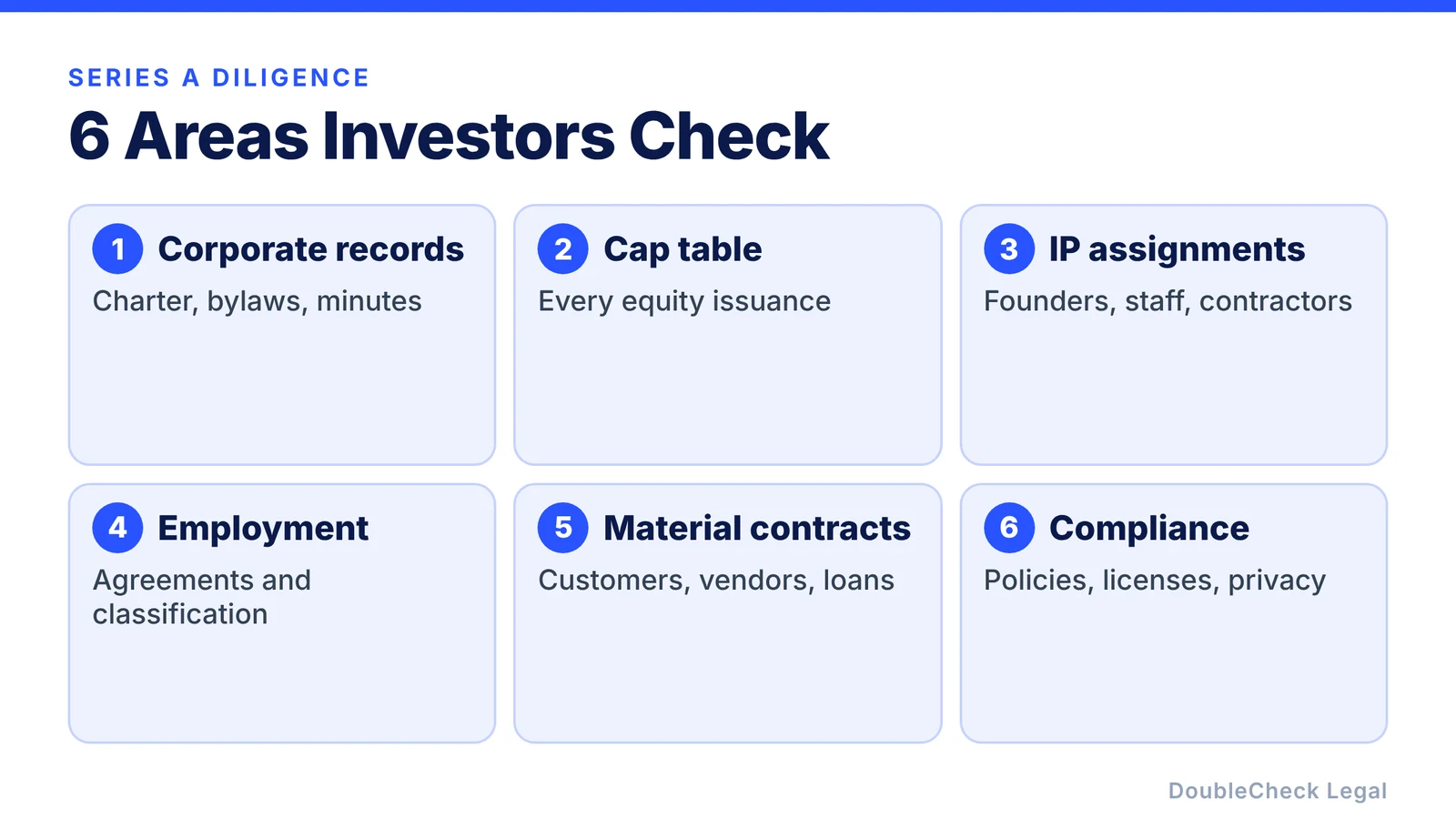
- Investors review corporate records, the cap table, IP assignments, employment agreements, material contracts, and compliance documents.
- Proof that founders, employees, and contractors assigned IP to the company is a common focus.
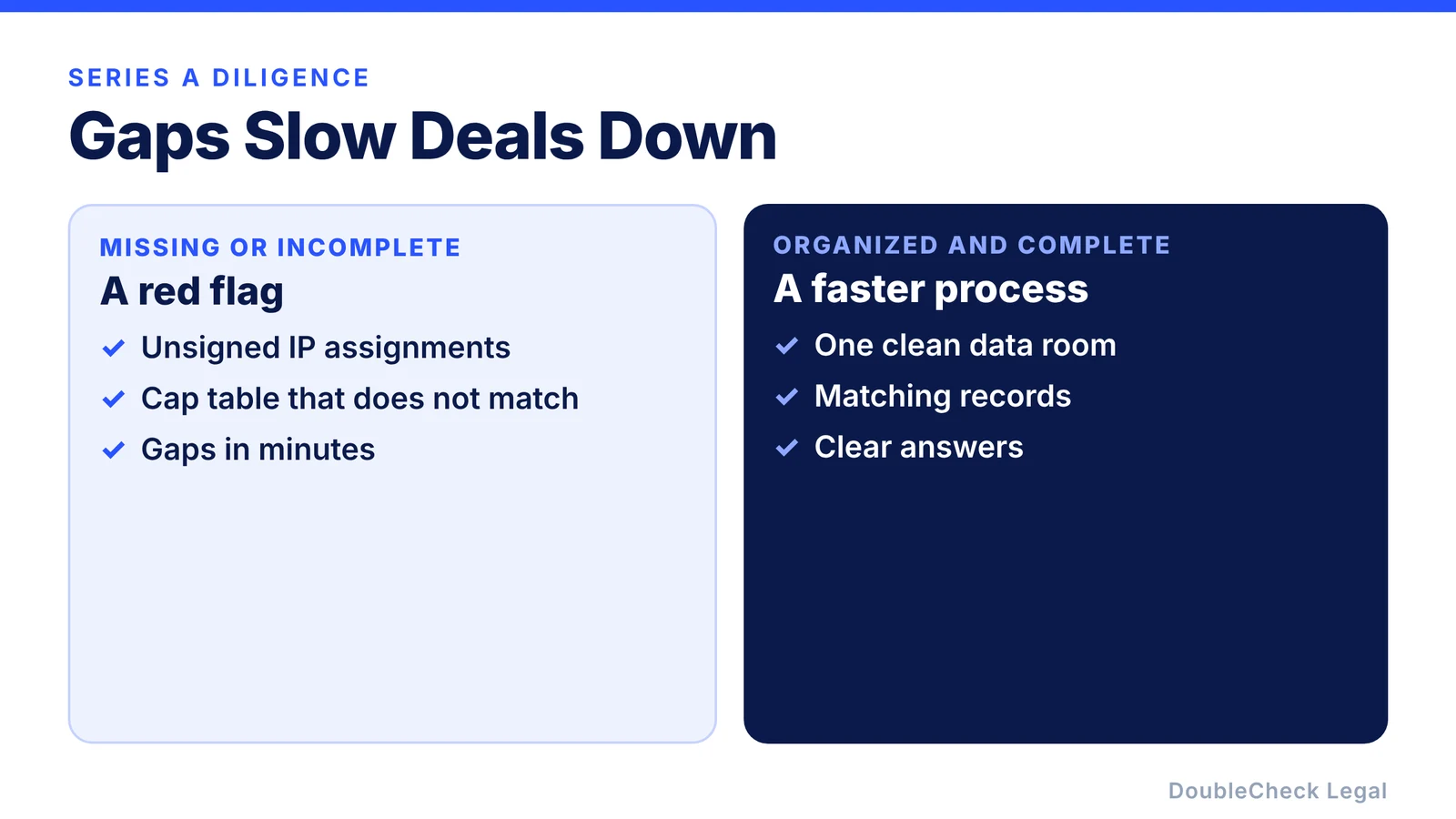
- Missing or incomplete documents are a major red flag.
- Organize a data room and fix gaps before investors ask.
The best time to find a missing signature is before an investor does.
1. What legal due diligence is
Before a priced round closes, investors review a company’s legal records to confirm it owns what it says it owns and has no hidden problems. It is a checklist exercise, and the better organized you are, the smoother it goes.
This checklist follows the areas that a Series A legal checklist from Allied VC lists.
2. Corporate records and the cap table
Corporate records: your certificate of incorporation and amendments, bylaws, board and shareholder meeting minutes, stock ledgers, a list of current shareholders, shareholder or voting agreements, and records of past or pending litigation.
Cap table: a current cap table, its history, and documentation of every equity issuance and change, including option plans and grant agreements. If your cap table does not match your paperwork, fix that first. See founder vesting and the 83(b) election.
3. IP assignments
Investors want proof that founders, employees, and contractors assigned their intellectual property to the company. They also look for registered patents, trademarks, and copyrights, trade secret documentation, and licenses granted to or from the company. See confidentiality and IP assignment agreements and, for AI-built products, AI-generated code and IP.
4. Employment and contracts
Employment: standard employment agreements, contractor and consulting agreements (checked for misclassification), employee policies, and agreements with founders and key executives. See contractor vs. employee.
Material contracts: key customer, vendor, and partnership agreements, loan and financing agreements, leases, and any other contract material to the business. See reviewing customer contract redlines.
5. Compliance
Licenses and permits, privacy policies and terms of service, data security policies and certifications, and industry-specific documentation. Your public policies should match what the product actually does; see writing a privacy policy with AI and writing terms and conditions with AI.
6. Build the data room
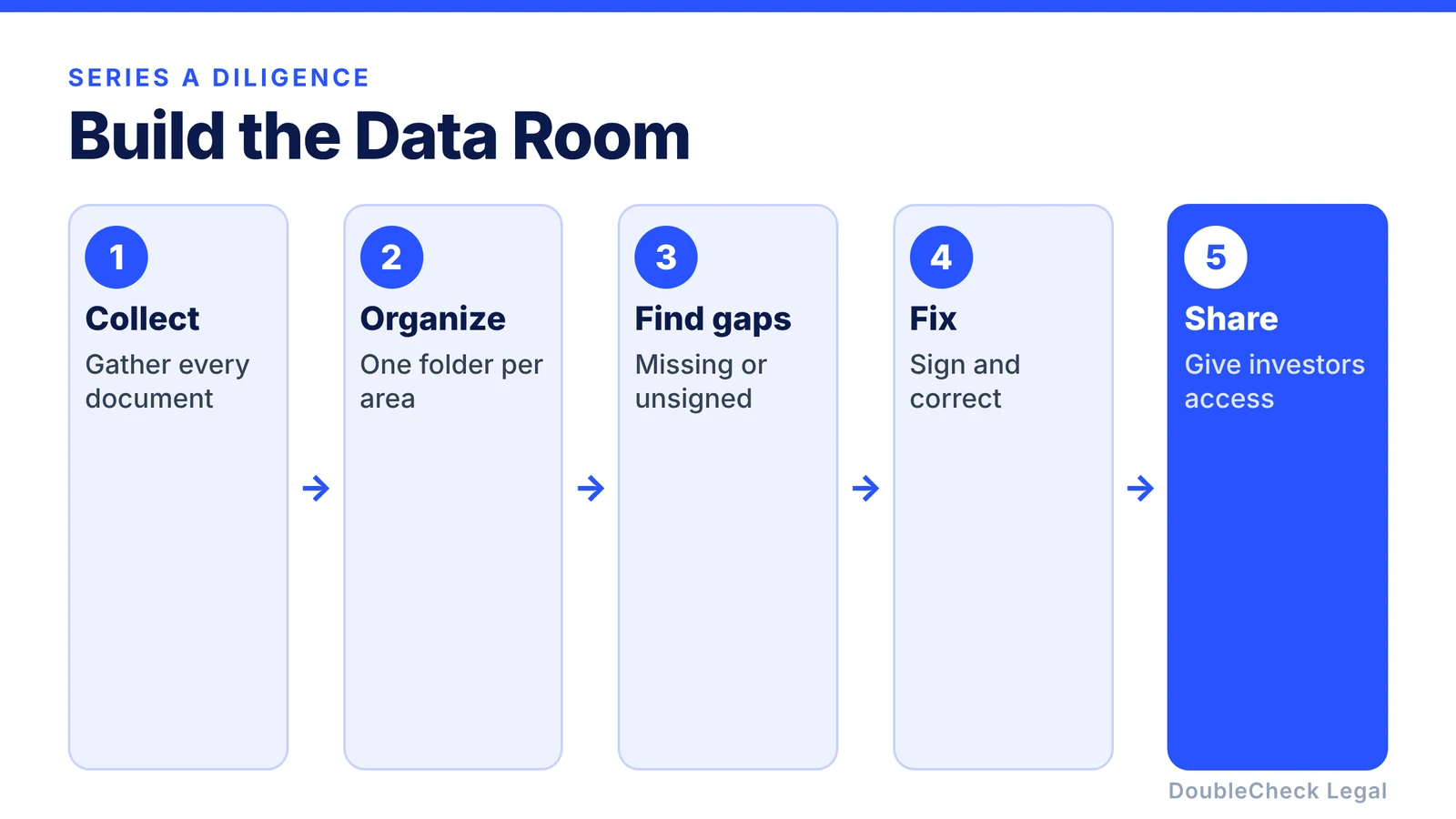
Collect every document, organize one folder per area, list what is missing or unsigned, fix the gaps, and only then give investors access. Allied VC’s guide notes that missing or incomplete documents are a major red flag.
7. Where DoubleCheck fits
DoubleCheck is built for businesses that start legal work with AI. Bring your question or draft, use an AI-first workflow to understand and verify it, and when professional advice is warranted, you can connect with an independent attorney. Attorneys on DoubleCheck are independent professionals; an attorney-client relationship forms only if an attorney accepts your engagement.
Source: Allied VC: Series A Funding Legal Checklist.
FAQ
What is legal due diligence in a funding round?
A review of your legal records and agreements by investors to confirm ownership, authority, and risk before they invest.
What documents do investors usually ask for?
Corporate records, cap table history, IP assignments, employment and contractor agreements, material contracts, and compliance documents.
What is a data room?
An organized, shared collection of documents for investors to review during diligence.
What if I find a missing document?
Fix it early. Get missing signatures or agreements in place and make sure your records match.
General information only. This article is not legal, tax, investment, or accounting advice.