Selling Your Company: A Sell-Side M&A Legal Checklist for Founders
Selling a company is a one-time event with real legal consequences. Here is how the process works and what to prepare.
Key takeaways:
- The process runs from preparation to marketing, a letter of intent, buyer diligence, and closing.
- Prepare cap table, corporate records, IP assignments, key contracts, and employee agreements early.
- Price is only one term; reps and warranties, indemnity, escrow, and earn-outs decide what you keep.
- Use experienced M&A counsel and keep deal information out of public AI tools.
The best time to prepare for a sale is before you have a buyer.
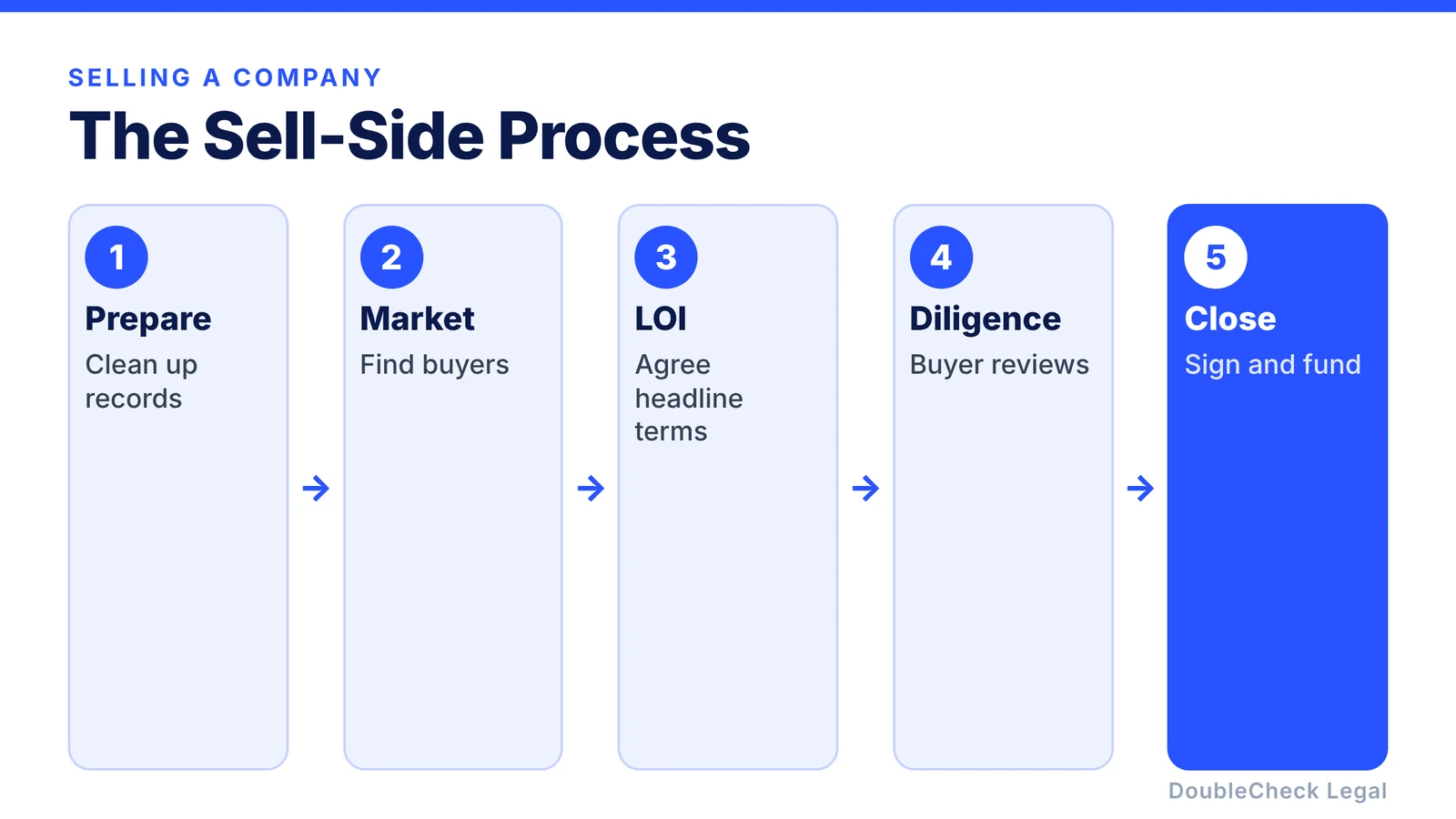
1. Selling your company: the shape of the process
If you are considering selling your company, the legal work is a long process with several distinct phases. This article is general information, and every deal differs.
Most of the value you protect comes from preparing early and from the terms you agree, not from the final signing.
2. Prepare early
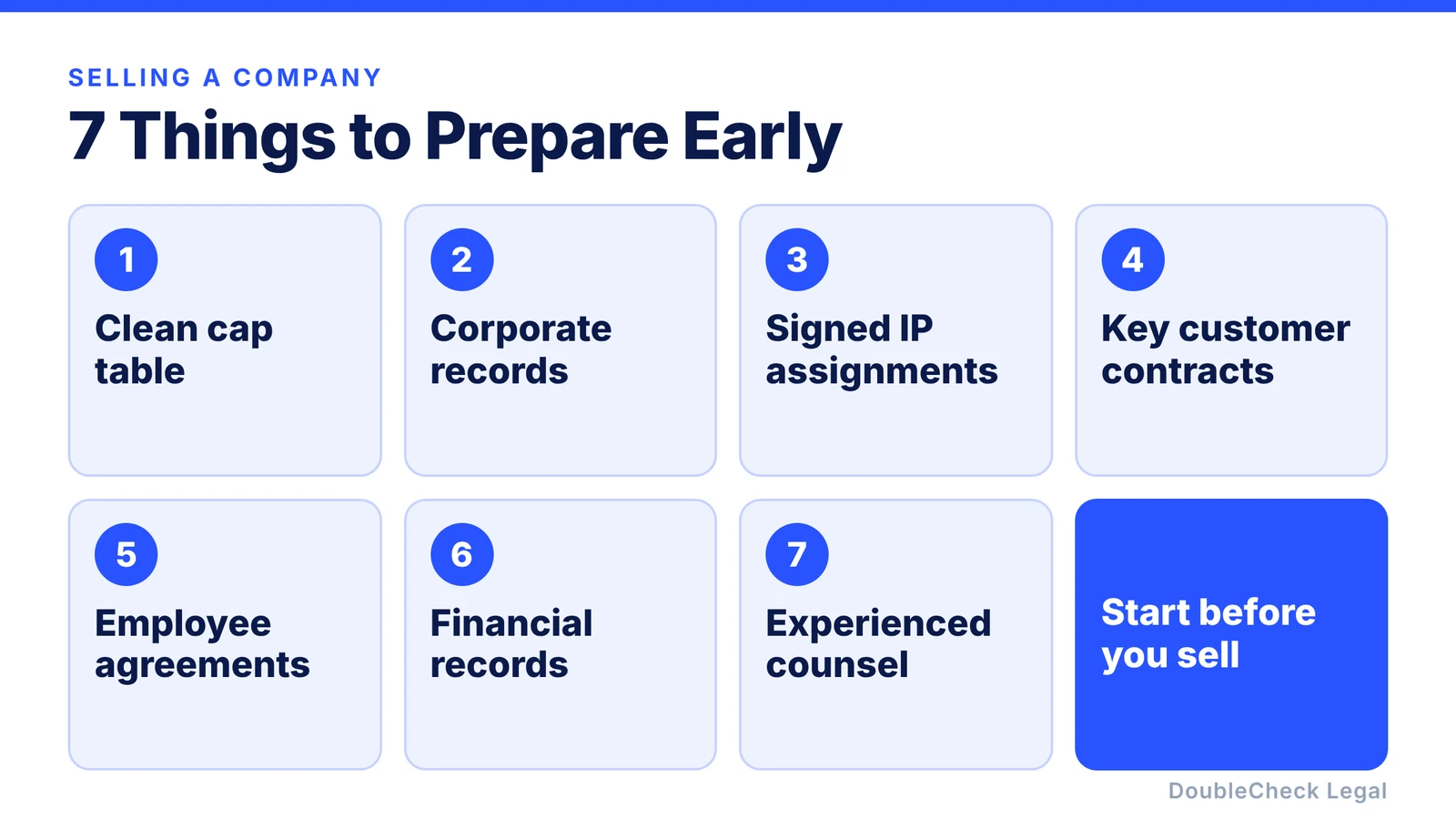
Buyers will run due diligence similar to what funding investors do. Our Series A legal due diligence checklist lists the areas, and the same housekeeping helps in a sale. Fix gaps in IP assignments and records first; see confidentiality and IP assignment agreements.
3. The letter of intent
A letter of intent (LOI) usually sets the headline terms before detailed documents. Some provisions, such as exclusivity, may bind you even if the rest is non-binding, so read the LOI carefully and have counsel look at it before you sign.
4. Terms that matter most
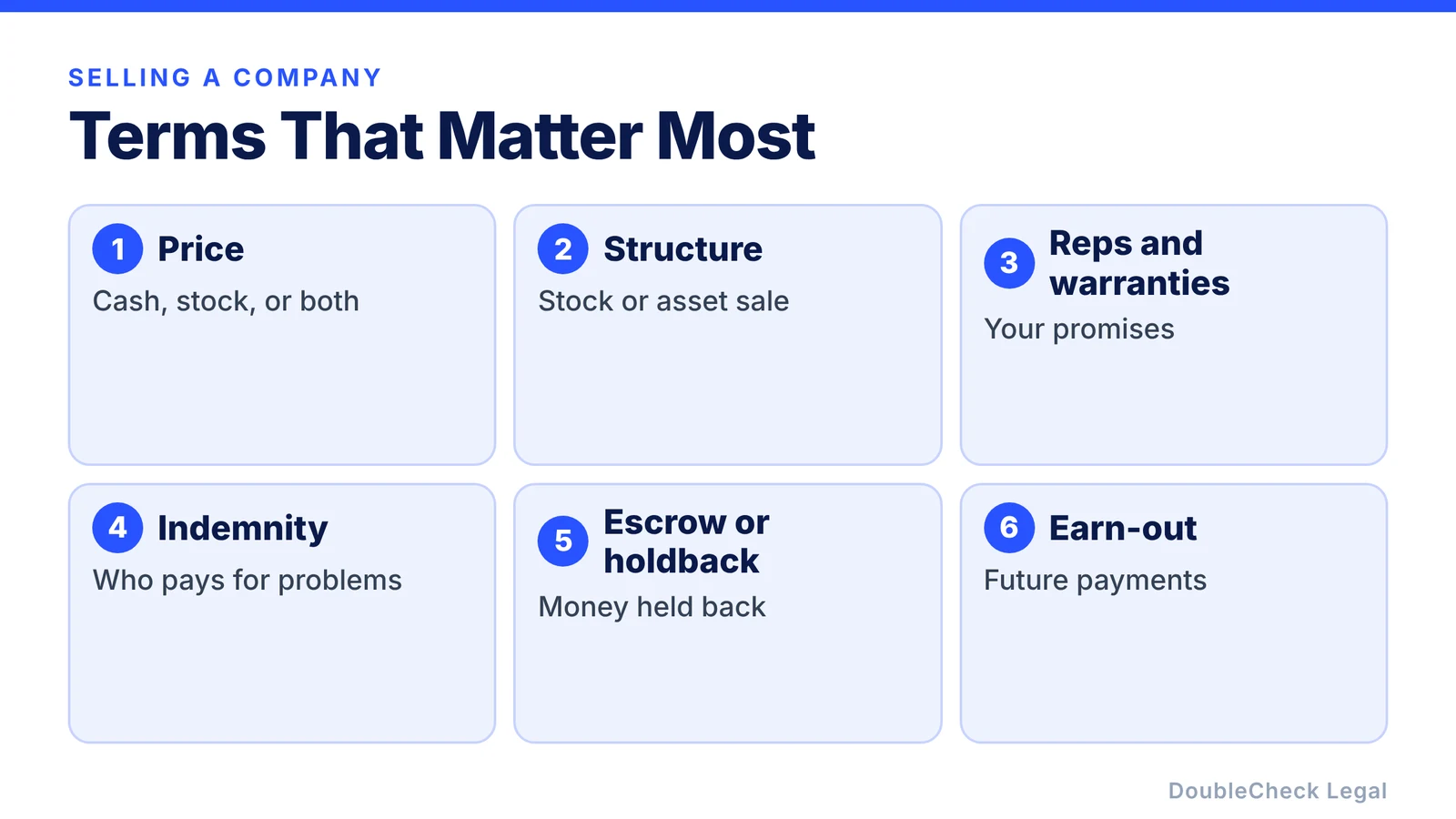
- Price and the form it takes (cash, stock, or both).
- Structure: stock sale or asset sale.
- Representations and warranties: your promises about the business.
- Indemnity: who pays if something turns out to be wrong.
- Escrow or holdback: money held back after closing.
- Earn-out: payments depending on future performance.
Price is only one number. The risk-allocation terms decide how much of it you actually keep.
5. Use AI carefully
AI can explain terms and prepare questions. In a sale, keep confidential deal information out of public AI tools unless you have checked the tool’s terms; see Heppner and AI chats and our AI policy template.
6. Get experienced counsel
A sale is a one-time, high-stakes transaction. Experienced M&A counsel is usually worth the cost. See how to choose a good lawyer.
7. Where DoubleCheck fits
DoubleCheck is built for businesses that start legal work with AI. Bring your question or draft, use an AI-first workflow to understand and verify it, and when professional advice is warranted, you can connect with an independent attorney. Attorneys on DoubleCheck are independent professionals; an attorney-client relationship forms only if an attorney accepts your engagement.
FAQ
What is a sell-side M&A process?
The process of a company’s owners selling the business: preparing, marketing, agreeing a letter of intent, buyer diligence, and closing.
What is a letter of intent?
A document that usually sets headline deal terms before detailed agreements, sometimes with binding provisions such as exclusivity.
What are representations and warranties?
Promises the seller makes about the business, which can create liability if they turn out to be wrong.
Do I need a lawyer to sell my company?
Experienced M&A counsel is generally worth considering given the stakes.
General information only. This article is not legal, tax, investment, or accounting advice.