Independent Contractor vs. Employee: Six Signals Business Owners Should Check
Calling someone a contractor does not make them one. Here is what to look at before you hire.
Key takeaways:
- Classification depends on how the work actually happens, and tests differ by state and by law.
- Common signals include control, schedule, tools, other clients, duration, and integration.
- A contract label helps, but it does not override reality.
- Write a fitting agreement, operate consistently, and get advice if unsure.
Worker classification is one of those topics where a small shortcut can become a large problem.
1. Why classification matters
Calling someone an independent contractor does not make them one. Agencies and courts look at how the relationship actually works, and the tests vary by state and by the law involved (wage, tax, benefits, or unemployment).
Getting it wrong can lead to back pay, tax, and penalty questions. That is why this belongs on your early checklist when you hire help.
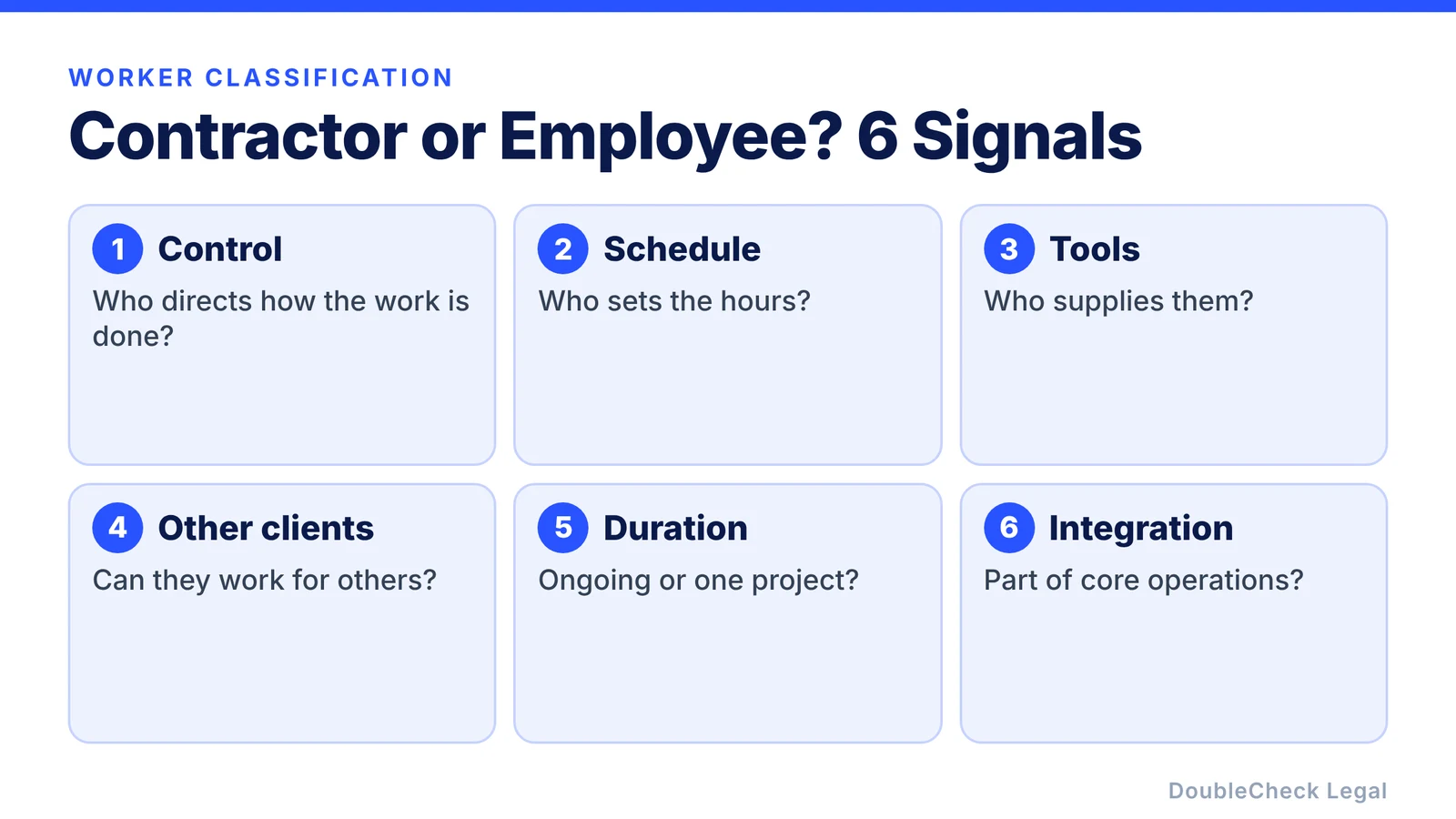
2. Six signals to look at
These factors commonly come up, though no single one decides:
- Control: who directs how the work is done?
- Schedule: who sets the hours?
- Tools: who supplies equipment and software?
- Other clients: can the person work for others?
- Duration: a defined project or ongoing work?
- Integration: is the work central to your daily operations?
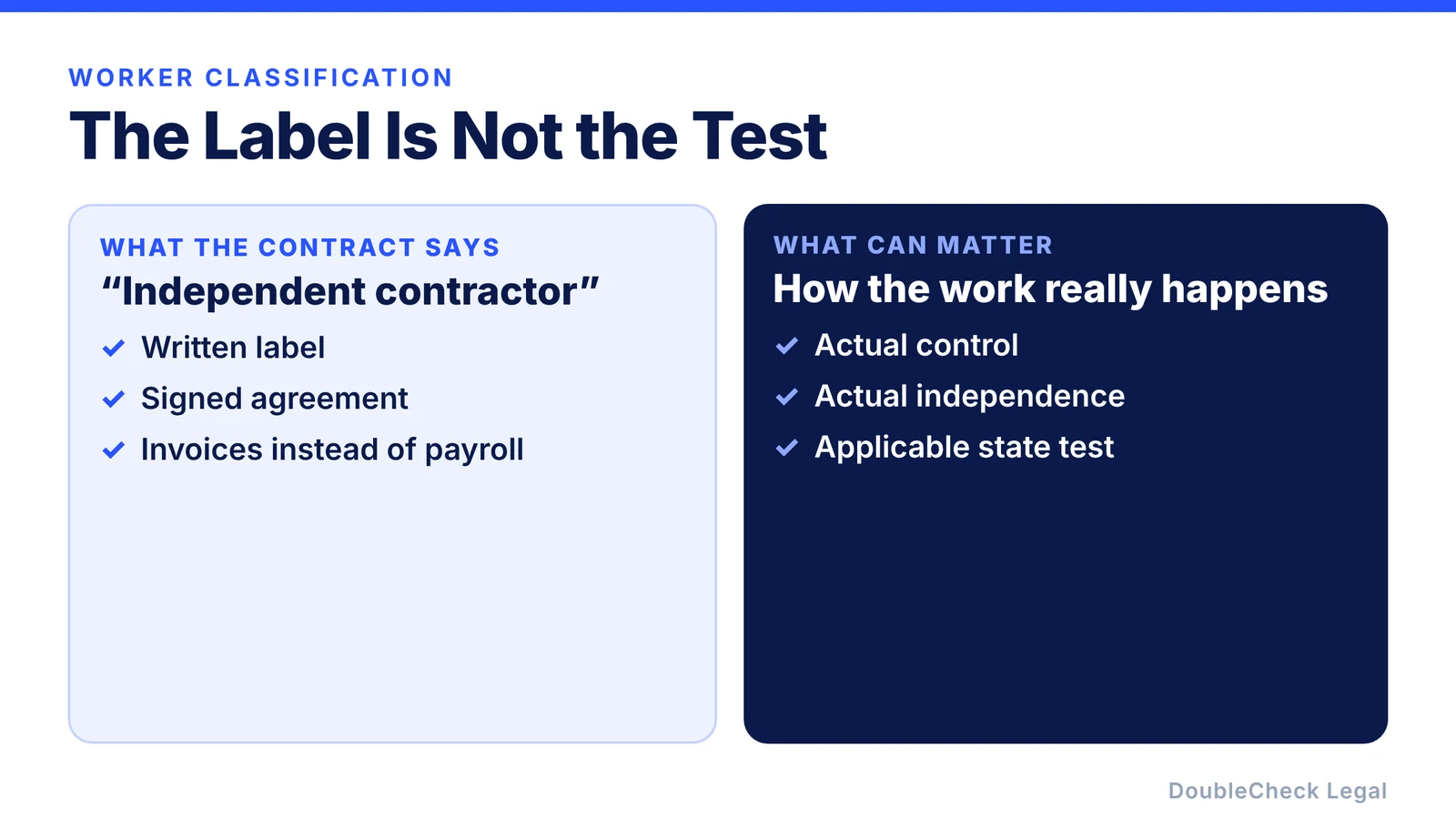
3. The label is not the test
A contract that says “independent contractor” helps document your intent, but it will not override reality.
Some states, such as California, use stricter tests than others. Check the rules where the worker is located.
4. Writing the agreement
A good contractor agreement describes the scope, deliverables, payment, ownership of work product, confidentiality, and termination. See our guide on how to write a freelance contract and, if the person will be an employee instead, drafting a job offer letter with AI.
5. A simple process
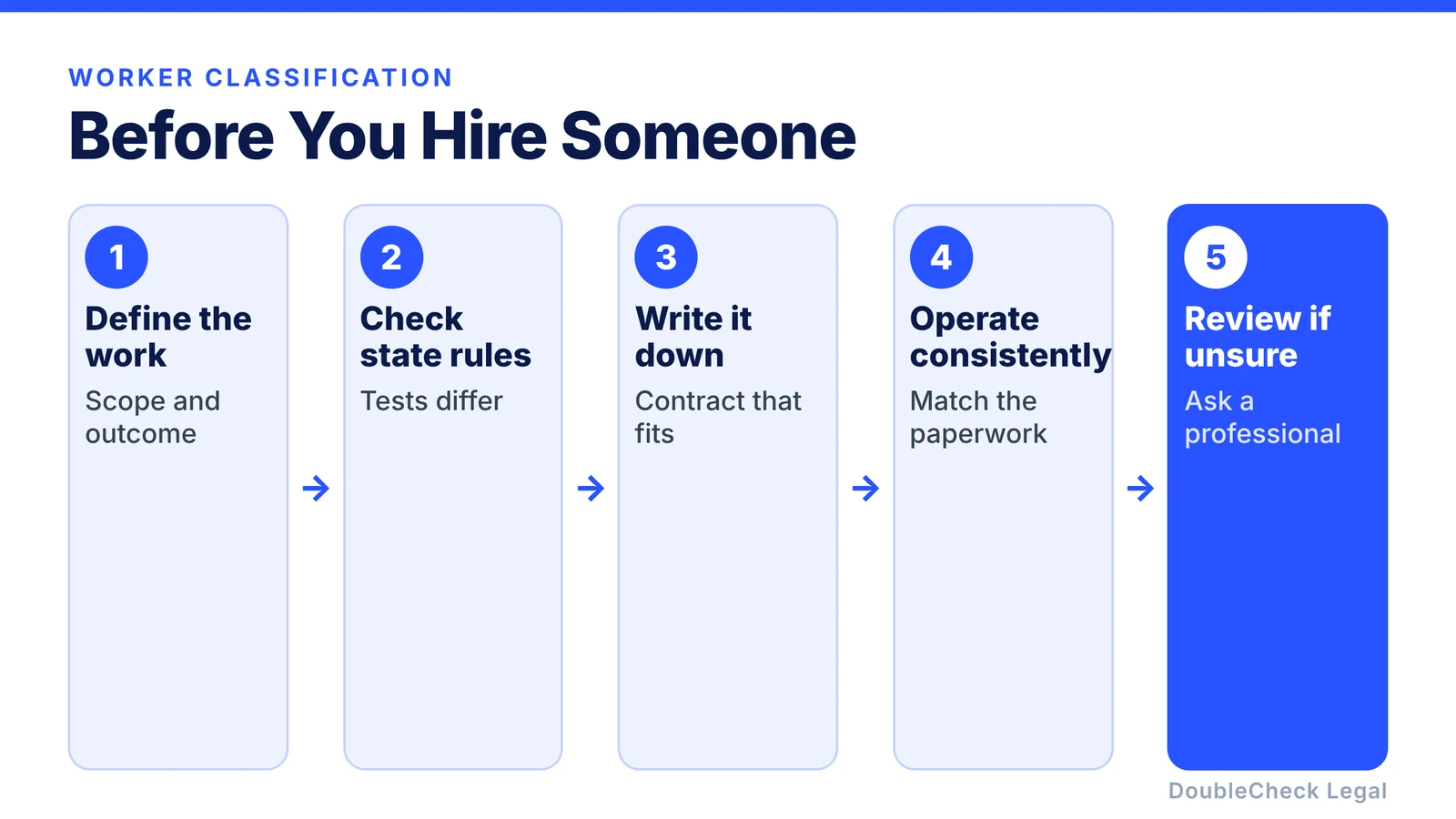
Then operate the way the paperwork says. A contractor agreement that is ignored in practice does not help. Using AI to draft the paperwork is fine if you verify it; see AI legal work mistakes businesses make.
6. Where DoubleCheck fits
DoubleCheck is built for businesses that start legal work with AI. Bring your question or draft, use an AI-first workflow to understand and verify it, and when professional advice is warranted, you can connect with an independent attorney. Attorneys on DoubleCheck are independent professionals; an attorney-client relationship forms only if an attorney accepts your engagement.
FAQ
What is the difference between an independent contractor and an employee?
Generally, a contractor runs their own work with more independence, while an employee works under the employer’s control. The exact test varies by state and by the law at issue.
Does a signed contractor agreement make someone a contractor?
No. It documents your intent, but agencies and courts look at the real working relationship.
Can AI decide how to classify a worker?
AI can explain the factors, but the answer depends on your state, facts, and applicable tests, so confirm with a professional.
What should a contractor agreement include?
Scope, deliverables, payment, ownership of work, confidentiality, and termination, among other terms.
General information only. This article is not legal, tax, investment, or accounting advice.