Separation Agreement Review Checklist: What to Read Before You Sign
A separation agreement can change what you are allowed to claim. Here is a checklist for reading one.
Key takeaways:
- A separation agreement sets the terms of leaving, often trading severance for a release of claims.
- Read payment, release, benefits, confidentiality, restrictions, and references.
- Note deadlines, and ask a lawyer about special timing rules rather than assume.
- Use AI to understand and prepare questions, not to decide what to waive.
Severance is attractive, and the release is the part that deserves your time.
1. What a separation agreement is
A separation agreement is an agreement between an employer and an employee on the terms of leaving, often offering severance in exchange for the employee giving up certain claims. This article is general information, not advice for a specific situation, and the rules vary by state and by the employee’s circumstances.
It applies to both sides: employers drafting one, and employees reviewing one.
2. The six areas to read
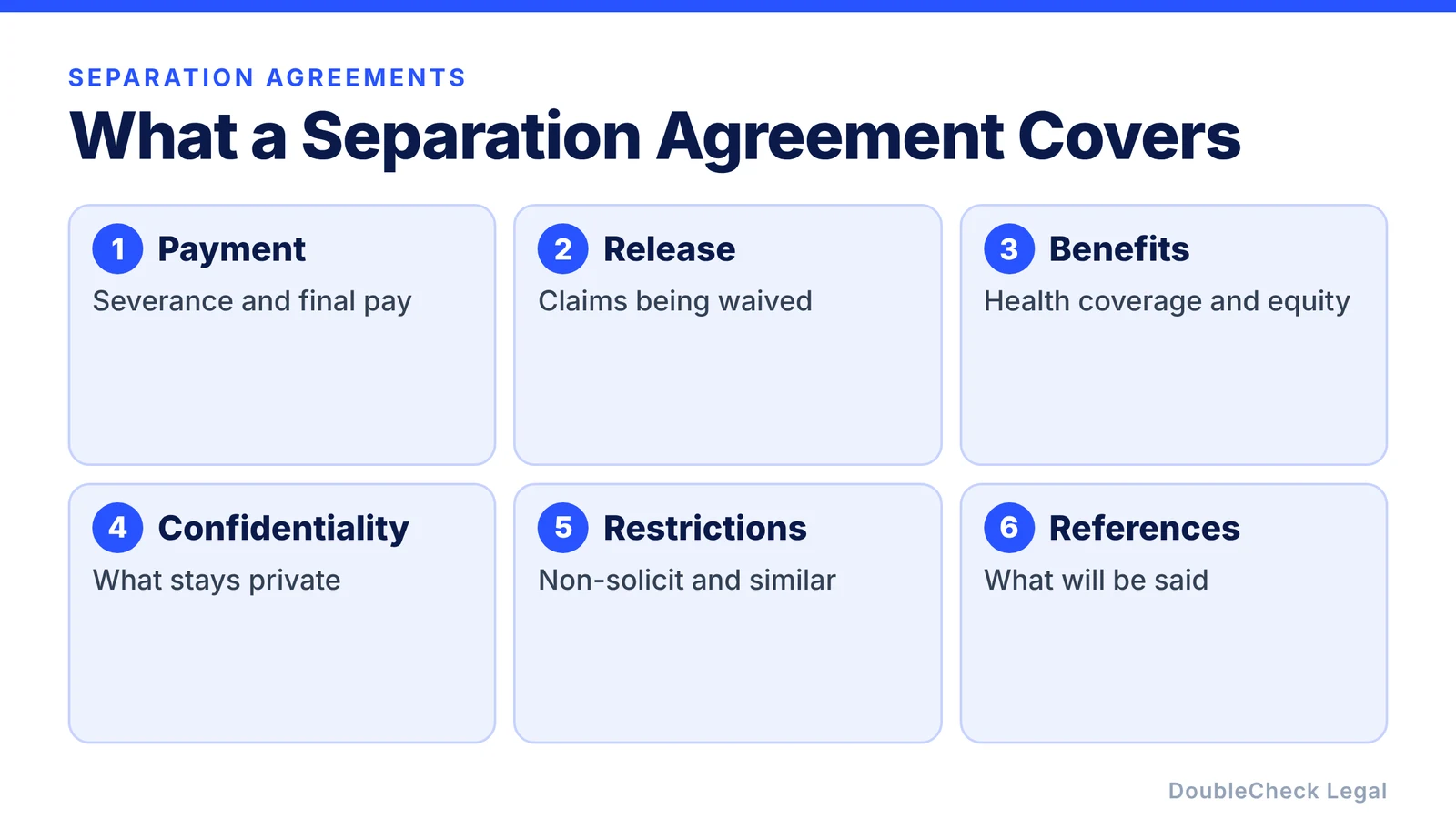
- Payment: severance and final pay, and when it is paid.
- Release: what claims are being waived. This is often the most important part.
- Benefits: health coverage and equity.
- Confidentiality: what must stay private.
- Restrictions: non-solicit and similar; see noncompete agreements in 2026.
- References: what the employer will say about you.
3. Before you sign
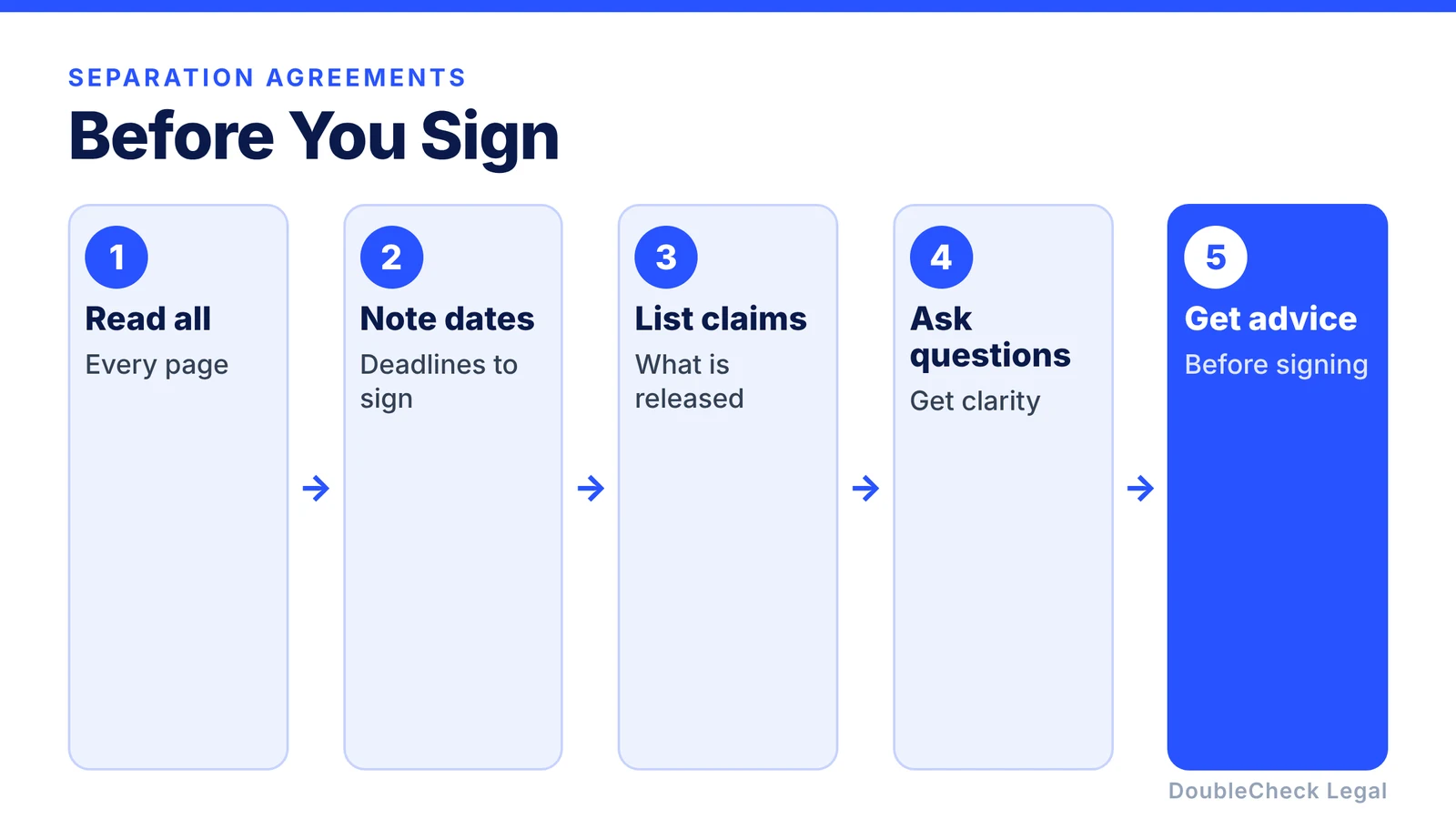
Read every page. Note any deadline to sign and whether you can change your mind afterward. Certain situations, including some involving older employees, come with special federal rules about timing, so ask a lawyer rather than assume.
4. What AI can and cannot do
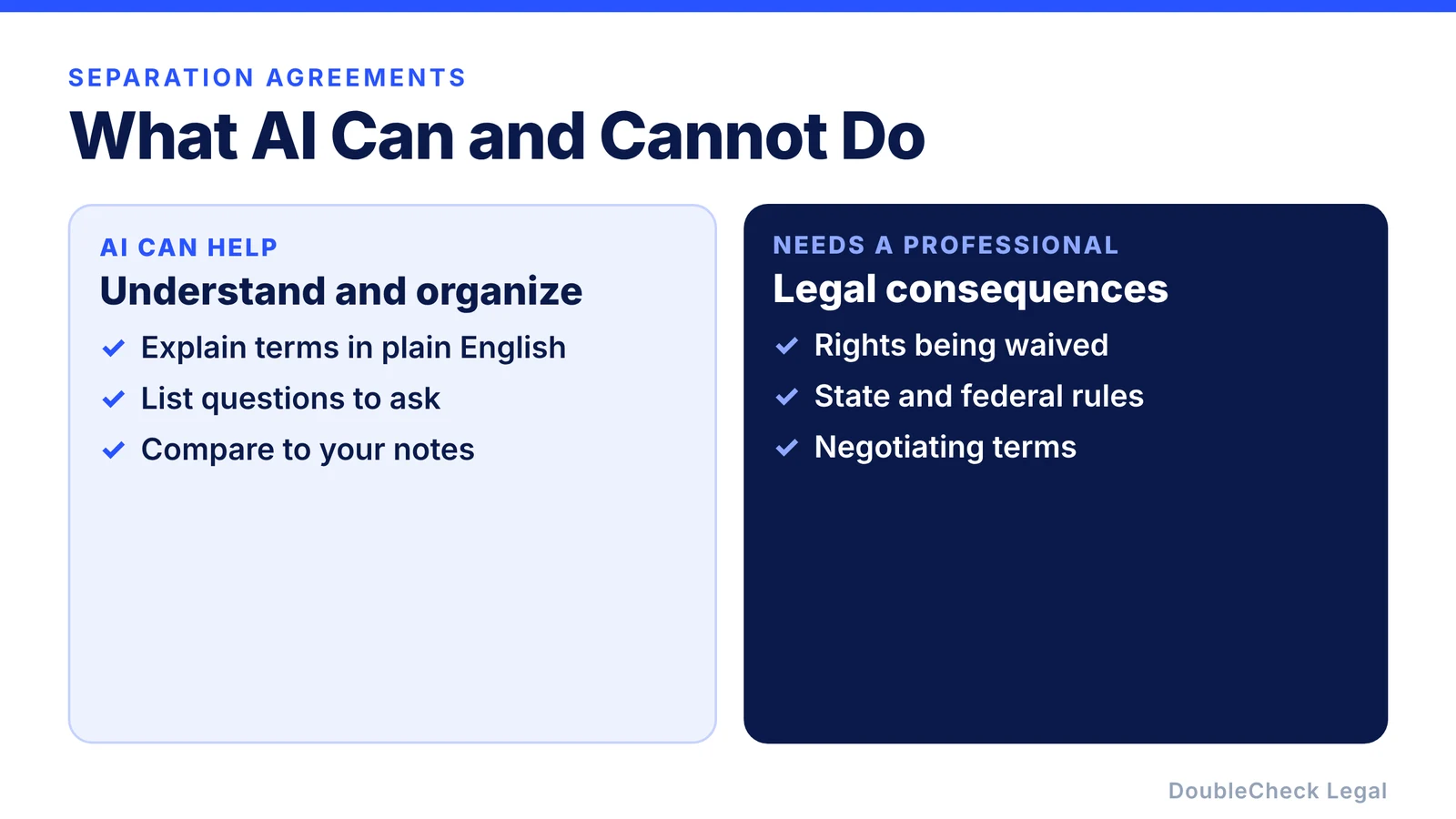
AI is good at explaining the document in plain English and preparing questions. It should not be the one deciding whether to waive your rights.
5. When to talk to a lawyer
A lawyer is worth considering if the release is broad, if there is a dispute behind the departure, if equity is involved, or if you are unsure what you are giving up. See how to choose a good lawyer and when to hire a lawyer.
6. Where DoubleCheck fits
DoubleCheck is built for businesses that start legal work with AI. Bring your question or draft, use an AI-first workflow to understand and verify it, and when professional advice is warranted, you can connect with an independent attorney. Attorneys on DoubleCheck are independent professionals; an attorney-client relationship forms only if an attorney accepts your engagement.
FAQ
What is in a separation agreement?
Typically payment, a release of claims, benefits, confidentiality, restrictions, and terms about references.
What is a release of claims?
A promise to give up certain legal claims against the employer, usually in exchange for severance.
Can I negotiate a separation agreement?
Often yes, especially on payment, scope of the release, and restrictions.
Should I have a lawyer review it?
If the release is broad, there is a dispute, or equity is involved, a lawyer’s review is worth considering.
General information only. This article is not legal, tax, investment, or accounting advice.